





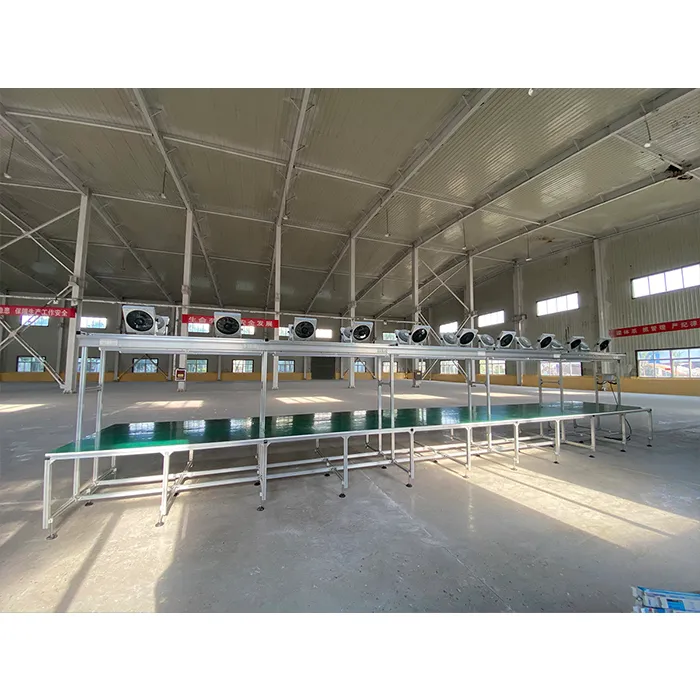
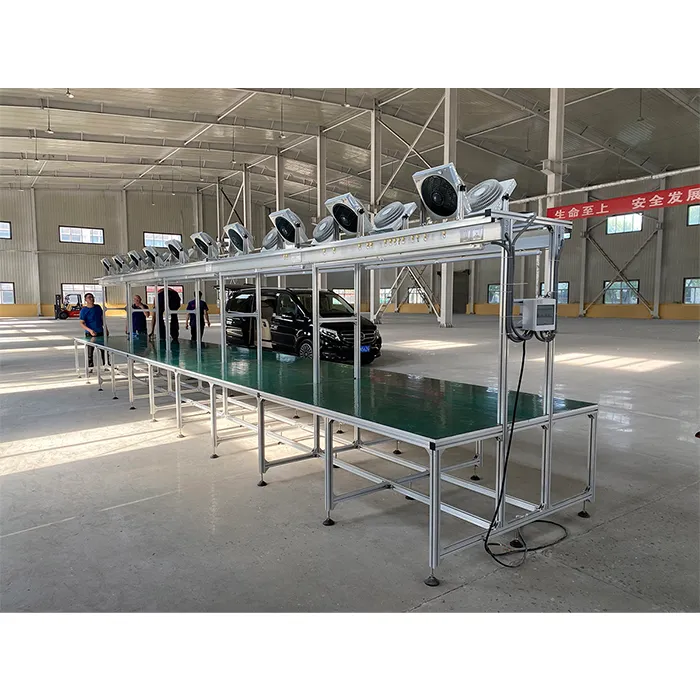
Aluminum Profile Workbench
SHUNNAI supplies customized modular workstations for electronics assembly, inspection, packaging, hardware processing and factory production lines. Each aluminum profile workbench can be configured with a suitable frame structure, tabletop material, working height and accessories according to the intended task. Buyers can specify load requirements, available floor space, ESD protection needs, storage arrangements and future expansion plans to obtain a workstation design that fits their workflow.
Modular Assembly
Rust-Free and Anti-Static
Preferred Choice for Workshop Workstation Upgrades
Rust-Free and Anti-Static
Preferred Choice for Workshop Workstation Upgrades
Tianjin Shunnai Conveyor Belt Manufacturing Co., Ltd. is a China-based manufacturer integrating R&D, design, production and sales. Established in 2007, SHUNNAI provides conveyor belts, specialty belts and supporting equipment for industrial applications. An aluminum profile workbench can serve as a standalone workstation or form part of a larger assembly, inspection or packing area.
Rather than choosing a workstation by appearance alone, buyers should consider the load distribution, workpiece size, operator posture, tabletop resistance and required accessories. These factors affect everyday usability and the suitability of the workstation for a particular production process. SHUNNAI supports customized configurations to help factories organize tools, materials and work areas more efficiently.
Choose the Right Tabletop
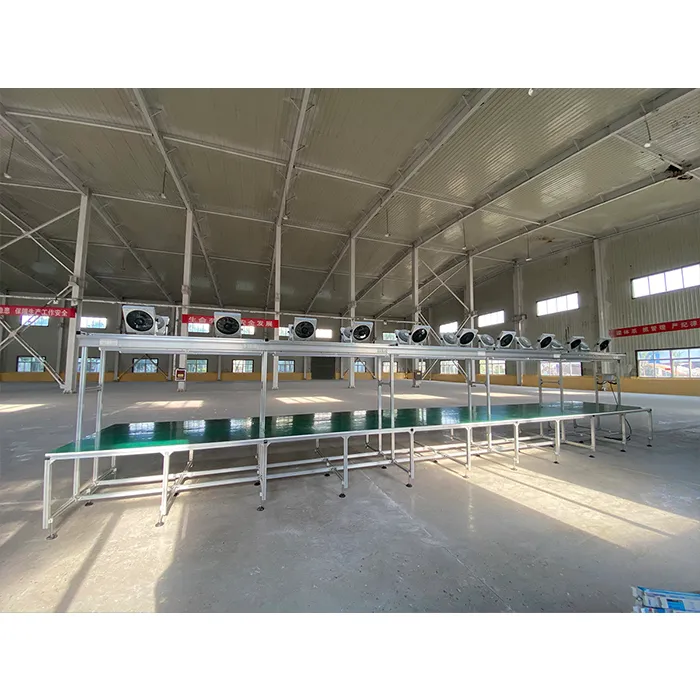
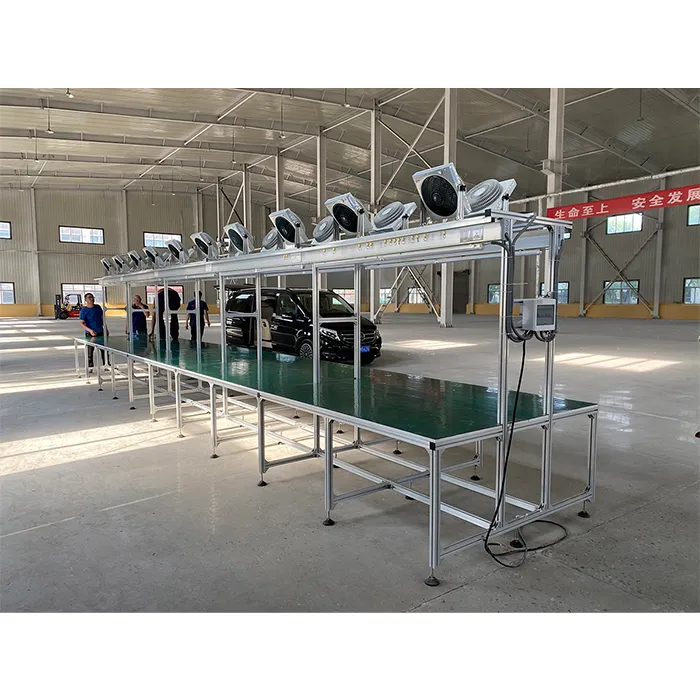
The tabletop directly affects how a workstation performs in daily use. The right option depends on the parts being handled, the tools used, the workshop environment and whether static control or frequent cleaning is required.
Anti-Static Rubber
For electronics assembly, testing and repair, an anti-static tabletop may be required to help control electrostatic discharge risks. Buyers should confirm the surface's electrical properties and specify any required grounding or bonding arrangements. An ESD tabletop should be used as part of a properly designed electrostatic control program rather than treated as a complete protection solution on its own.
Stainless Steel
A stainless steel surface may suit workstations that need a durable, wipeable working area or handle components that could stain other materials. The appropriate stainless steel grade and surface finish depend on exposure to moisture, cleaning agents and process materials. For regulated production areas, buyers should verify the complete workstation's suitability against their facility's hygiene and documentation requirements.
Density Board with Rubber
A density-board base with a rubber surface can provide a practical working area for general assembly, packing and handling tasks. The rubber layer may help reduce direct contact between workpieces and the tabletop. Buyers should check the surface's resistance to oils, solvents, abrasion and impact if these are part of the working environment.
Thickened Wood
A thickened wooden tabletop can be considered for selected hardware assembly and workshop applications. Its suitability depends on the workpiece weight, impact conditions, moisture exposure and required surface finish. If heavy parts or repeated hammering are involved, confirm the tabletop support structure and load rating before placing an order.
Size the Frame for the Load
Frame dimensions and connector design influence workstation stability. The required structure depends not only on the total weight placed on the table but also on how that weight is distributed and whether loads are applied dynamically during operation.
Before selecting a frame, buyers should identify the approximate weight of tools, fixtures, workpieces, storage bins and other equipment that will remain on the workstation. Concentrated loads, overhanging components and repeated impact may require a different structure from evenly distributed static loads.
Ask the supplier to confirm the proposed profile size, profile wall thickness, support arrangement, connector type and recommended load capacity for the complete configuration. A load rating should be based on the actual workstation design and stated test or calculation conditions, not inferred from the profile material alone.
For long workbenches or assembly stations with heavy equipment, additional legs, crossbars or intermediate supports may be needed. If casters are specified, confirm their individual load ratings, locking mechanism and effect on the stability of the complete workstation.
Set the Working Height
A workstation should suit the task being performed and the people using it. An unsuitable working height can make repetitive assembly, inspection and packing more difficult, particularly when operators handle small components or use precision tools for extended periods.
When specifying an aluminum profile workbench, consider whether the task is performed while sitting, standing or alternating between the two. The required height may also depend on workpiece dimensions, fixture thickness, tool position and the operator's viewing angle.
For shared workstations, adjustable feet or a height-adjustable design may help accommodate different working arrangements, depending on the available structure and accessories. Buyers should also leave sufficient knee clearance for seated tasks and consider the reach distance to frequently used tools and materials.
Arrange Tools and Materials
Accessories should be positioned according to the actual work sequence. Frequently used components are generally easier to access when they are placed within a comfortable reach zone, while less frequently used supplies can be stored elsewhere. A well-planned layout can reduce unnecessary movement and help keep the work surface available for the task itself.
Lighting: LED task lights can improve visibility for assembly, inspection and detailed work. Their position should minimize glare and avoid obstructing the operator's view.
Power access: Socket panels and cable routing can help organize tools and electrical equipment. Specify the required socket type, quantity, location and applicable electrical requirements for the destination market.
Parts storage: Hanging boards, bins, drawers and shelves can separate components and tools by operation. Confirm their dimensions and loading requirements, especially when storing heavy tools or metal parts.
Computer access: A keyboard tray or monitor support may be useful for inspection stations, production data entry and traceability tasks. Check the mounting position and available space before finalizing the frame layout.
Mobility: Casters can support flexible workshop layouts, while adjustable feet may be preferable where a stable, fixed position is required. Consider floor conditions, total loaded weight and whether the workstation must remain stationary during operation.
Customer Feedback
Section Chief Wang, equipment, an electronics factory in Guangdong:
“Our workshop originally used iron frame workbenches. After two years, they started to rust and lose paint, and could not be wiped clean. After switching to SHUNNAI aluminum profile workbenches, the surface has remained clean. The anti-static tabletop also solved the electrostatic breakdown problem. When the production line was adjusted, we directly disassembled and reassembled them, and the profiles could still be used, saving a lot of money.”
Production Manager Zhou, a pharmaceutical packaging company in Jiangsu:
“Pharmaceutical workshops have high cleanliness requirements. Iron frames rust and shed particles, so they cannot be used. SHUNNAI’s stainless steel tabletop aluminum profile workbench does not rust and is easy to wipe, meeting GMP requirements. We added sockets and hanging boards. Tools and materials are neatly arranged, and employee efficiency improved.”
Site Manager Zhang, a hardware processing plant in Shandong:
“Hardware parts are relatively heavy. The old wooden workbench wobbled after long use. SHUNNAI’s thickened wood tabletop aluminum profile workbench has very stable load capacity and does not deform even when knocked. Later, when the production line was extended, we directly disassembled the workbench and added a section of profile, finishing in half a day. Much more cost-effective than buying a new one.”
Plan for Future Changes
Production layouts often change when a factory introduces a new product, adjusts its assembly sequence or adds equipment. A modular frame can make these changes easier to manage because bolted connections allow compatible components to be removed and repositioned without cutting apart a welded structure.
Before ordering, consider whether the workstation may need to be lengthened, shortened, raised or fitted with additional storage in the future. Using compatible profile dimensions and connectors can simplify later modifications, provided the revised structure is checked for stability and load capacity.
Reusable profiles and accessories may reduce the need to replace the entire workstation when the layout changes. However, reuse depends on the condition of the components, connector compatibility and the requirements of the new configuration. Damaged profiles, worn connectors or structures carrying higher loads should be inspected before reassembly.
For assembly lines, buyers can also plan workstation dimensions around conveyor height, material presentation points and operator access. Coordinating the workstation with adjacent equipment early in the design stage can reduce the need for costly adjustments after installation.
Check the Specification Before Ordering
To help SHUNNAI prepare a suitable configuration, buyers should provide the following information where available:
Dimensions: Overall length, width and working height, along with any space restrictions or clearance requirements.
Load requirements: Approximate total load, heaviest individual item, load distribution and whether the workstation will experience repeated impact or vibration.
Working task: Assembly, testing, inspection, repair, packing, material preparation or another specific operation.
Tabletop: Preferred material, required surface properties, resistance to cleaning agents and any ESD requirements.
Accessories: Lighting, socket panels, hanging boards, parts bins, drawers, keyboard trays, monitor supports, casters or adjustable feet.
Workshop conditions: Exposure to moisture, oils, chemicals, dust, frequent cleaning or other environmental factors that may affect material selection.
Future requirements: Whether the workstation may need to connect with an assembly line, accommodate new tools or be reconfigured later.
Drawings, reference photos or an existing workstation specification can help clarify the design. If several workstations are required, a layout drawing showing operator positions and adjacent equipment can also support a more consistent quotation.
Quality and Customization
SHUNNAI provides customized industrial supporting equipment and identifies FDA, MA, CNAS and ISO 9001 among its certifications and quality credentials. These credentials have different scopes and should not be interpreted as universal certifications for every workstation or component. Buyers should request the relevant documents and verify their applicability to the product and intended use.
Workstation customization may include frame dimensions, profile specifications, tabletop materials, support structures, surface treatment and accessory placement. The final configuration should be reviewed against the intended load, working environment and any applicable electrical or ESD requirements.
For applications in electronics, pharmaceutical packaging or other controlled environments, buyers should specify the required surface properties, cleaning conditions and documentation before production. Suitability for a particular cleanroom, regulated process or hygiene standard should be confirmed for the complete workstation rather than assumed from the use of aluminum profiles or stainless steel alone.
Frequently Asked Questions
How do I know whether the frame can support my equipment?
Provide the weight and dimensions of the equipment, the location of each load and whether the load is static or dynamic. Ask for confirmation of the complete workstation's load rating, support arrangement and any restrictions on concentrated or overhanging loads.
Can I replace the tabletop without changing the whole frame?
In many modular designs, the tabletop can be replaced if its dimensions, mounting method and weight are compatible with the existing frame. Confirm the mounting details and whether the new tabletop requires additional support.
What should I specify for an ESD workstation?
State the required tabletop electrical properties and grounding arrangements, and identify the ESD control requirements of your process. Depending on the application, other elements such as floor mats, footwear, wrist straps and monitoring procedures may also be necessary.
Are casters suitable for heavy-duty workbenches?
They can be used when the caster ratings, mounting structure and total loaded weight are appropriate. For heavy equipment or tasks involving significant force, a fixed workstation or a design with adjustable feet may offer better stability.
Can the workstation be integrated with a conveyor line?
Yes, the layout can be planned around adjacent conveyor equipment, subject to the frame design and application requirements. Provide the conveyor height, direction of material flow, transfer position and operator access needs before finalizing the workstation dimensions.
Can I add accessories after installation?
Compatible accessories may be added later if the profile system, available mounting points and load capacity allow it. Sharing the existing frame specifications or photos can help confirm compatibility before purchasing additional components.
Contact SHUNNAI
If you are planning a new assembly station or upgrading an existing workshop, SHUNNAI can discuss frame dimensions, tabletop options, load requirements and accessory configurations based on your application. Share your workstation layout, working task and equipment details to help our team evaluate a suitable design.
For an aluminum profile workbench quotation, please include the required quantity, overall dimensions, tabletop material, expected load, accessories and destination market. For customized or multi-station projects, drawings and reference photos are especially helpful for confirming the configuration before production.
Send Inquiry
Contact Info
-
Address
No.129 Qingfeng Road, Jizhou District, Tianjin City, China
-
Tel
-
Email
If you have any inquiry about a quotation or cooperation, please feel free to email or use the following inquiry form. Our sales representative will contact you within 24 hours.
News Recommendations



