Wholesale Mesh Chain Conveyor for Efficient Material Handling
A Mesh Chain Conveyor uses an open mesh carrying surface to allow air and liquids to pass through while products move along the production line. Compared with a solid conveying surface, this structure is better suited to processes where moisture removal, heat dissipation, or product exposure to water and air is part of the workflow. Depending on the operating environment, buyers can select metal or engineering plastic mesh chains and configure the conveyor frame, mesh opening, width, drive system, and conveying path.
SHUNNAI supports conveying equipment selection and customization for food processing, fruit and vegetable washing, seafood handling, industrial drying, cooling, and heat treatment. Our manufacturing and engineering team considers product dimensions, load conditions, cleaning procedures, operating temperature, and line layout to help customers identify a suitable configuration.
Choose by Process Requirement
Washing and Liquid Drainage
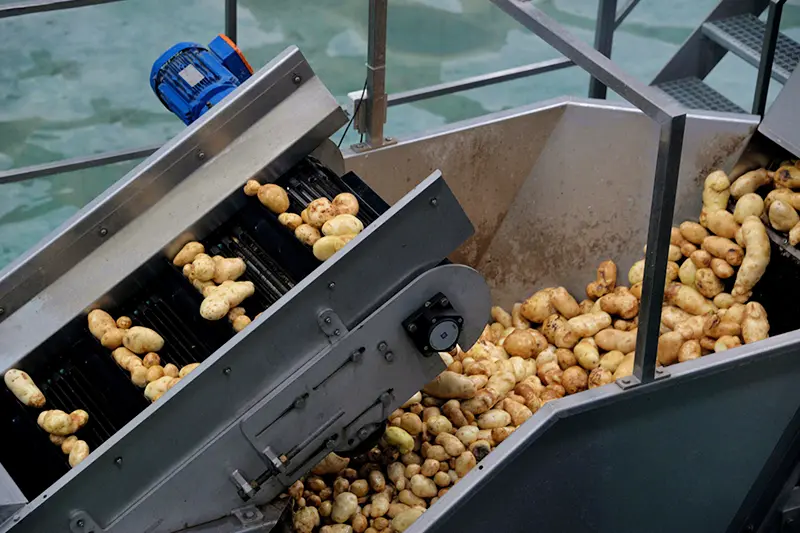
When products leave a washing tank or spray-cleaning station, residual water needs a clear path away from the carrying surface. An open mesh structure allows liquid to drain through during transport, helping reduce water accumulation on the conveyor. Plastic mesh chains or corrosion-resistant metal options can be considered according to detergent exposure, water temperature, cleaning frequency, and the materials being handled.
Drying and Cooling
Drying and cooling lines often require products to remain exposed to circulating air during transport. A mesh surface supports airflow around the conveyed material, although actual drying or cooling performance also depends on air temperature, airflow rate, residence time, product spacing, and equipment design. Conveyor speed and usable conveying length should therefore be evaluated together with the process requirements.
Inclined Transfer
For lines that need to raise products or move bulk materials between different elevations, flighted mesh chains can help limit backward movement and material spillage. Flight height, spacing, incline angle, and product characteristics need to be assessed together. For small, wet, or irregularly shaped items, the mesh opening and flight arrangement should also be checked to reduce the risk of product loss.
Compare the Carrying Surface
Metal Mesh Chains
Metal mesh chains are suitable for applications that require structural strength, wear resistance, or exposure to elevated temperatures. Stainless steel may be considered for suitable food-processing and wet-production environments, while carbon steel can be an option for selected general industrial applications. The correct grade, surface finish, and construction depend on the process environment, corrosion exposure, load, and cleaning method.
Typical applications include baking lines, industrial drying, selected heat-treatment processes, and conveying operations involving heavier products. For high-temperature service, confirm the chain's allowable operating temperature, the frame and bearing limitations, lubricant requirements, and the thermal expansion characteristics of the complete conveyor. Not every metal mesh assembly is suitable for temperatures above 300°C.
Plastic Mesh Chains
Engineering plastic mesh chains are generally lightweight and can offer low-noise operation and resistance to moisture or selected chemicals. Their open structure supports drainage and makes access for cleaning easier in appropriately designed systems. They are often considered for fruit and vegetable washing, seafood processing, food handling, and other wet production areas.
Plastic chain selection must account for operating temperature, chemical compatibility, impact, load, and cleaning agents. For food-contact applications, buyers should verify the specific material's food-contact documentation and applicable requirements rather than assuming that all plastic chains are approved for food use.
Flighted Mesh Chains
Flighted configurations combine a mesh carrying surface with raised sections that help control product movement. They are useful when a production line requires inclined conveying, elevation changes, or separation between product batches. The flight profile and spacing should match the product's shape and flow behavior so that the conveyor can move material without unnecessary accumulation or damage.
Check These Design Details Before Ordering
A suitable Mesh Chain Conveyor is selected by matching its structure to the actual process, not simply by choosing a standard width. Before requesting a quotation, buyers should confirm the following details with the equipment supplier.
| Design item | What to confirm | Why it matters |
|---|---|---|
| Product dimensions | Length, width, shape, and smallest item size | Helps determine mesh opening and reduce product loss or snagging. |
| Load conditions | Weight per item, total load, and loading pattern | Supports selection of the chain, frame, drive, and support structure. |
| Operating environment | Temperature, moisture, chemicals, and cleaning method | Helps identify suitable chain and frame materials. |
| Conveying route | Horizontal or inclined travel, height changes, and available space | Determines conveyor length, incline arrangement, and flight requirements. |
| Production speed | Required throughput and time spent in each process stage | Helps coordinate conveyor speed with washing, drying, or cooling equipment. |
| Hygiene requirements | Cleaning frequency, drainage needs, and applicable material standards | Guides the choice of surface finish, chain design, and cleaning access. |
Providing these details at the quotation stage can reduce design changes later. For lines connected to existing machinery, drawings, installation dimensions, connection heights, and available electrical specifications are also useful.
Applications Across Production Lines
Food and Bakery Processing
Metal mesh chains can be considered for suitable baking and thermal-processing lines, while plastic or stainless steel options may suit other food-handling stages. The appropriate configuration depends on product contact, temperature, cleaning procedures, and applicable food-safety requirements.
Fruit, Vegetables, and Seafood
Open mesh carrying surfaces support water drainage during washing and can expose products to air during drying. Plastic mesh chains are often evaluated for wet processing because of their low weight and potential corrosion resistance. Chain material and mesh openings should be matched to the product size and the cleaning chemicals used.
Industrial Drying and Heat Treatment
Metal mesh chains can be used in selected industrial drying, heating, and heat-treatment systems where temperature resistance and mechanical strength are important. Buyers should check the operating temperature of the complete assembly, including the chain, frame, bearings, drive components, and any installed accessories.
Pharmaceutical and Chemical Processing
In pharmaceutical and chemical applications, material compatibility, cleaning access, contamination control, and traceability may be critical. Stainless steel or other suitable materials can be evaluated against the actual process conditions. The conveyor's suitability should be confirmed against the facility's applicable validation, hygiene, and regulatory requirements.
Keep Performance Consistent During Operation
Routine inspection helps identify operating problems before they cause production interruptions. The maintenance plan should follow the conveyor manufacturer's instructions and reflect the working environment, duty cycle, and cleaning method.
Check chain tracking, tension, sprocket engagement, and drive operation at the recommended intervals. Look for damaged mesh sections, worn connecting parts, loose fasteners, unusual noise, or product buildup around the return path. After cleaning, confirm that the conveyor is properly reassembled and that any required lubrication has been applied according to the manufacturer's instructions.
For wet production lines, pay particular attention to drainage and areas where residue can accumulate. For high-temperature lines, inspect components for heat-related wear or deformation. Before maintenance, isolate the power supply and follow the site's lockout and safety procedures.
Manufacturing and Quality Support
Tianjin Shunnai Conveyor Belt Manufacturing Co., Ltd. integrates product development, manufacturing, and sales to support industrial conveying projects. With its own factory, processing equipment, and technical team, SHUNNAI works with buyers to evaluate conveying requirements and configure equipment for different production layouts.
The company states that it operates under an ISO 9001 quality management system and has FDA, MA, and CNAS-related credentials. These designations have different scopes and do not automatically apply to every conveyor model or intended use. Buyers should request the relevant certificates, verify the certificate holder and validity, and confirm that the documented scope matches the product and application being purchased.
SHUNNAI serves customers in North America, Western Europe, Oceania, South America, Southeast Asia, the Middle East, and Eastern Europe. Project support can include requirement assessment, configuration discussions, production coordination, and after-sales communication. Final specifications should be confirmed against the customer's process conditions and approved technical documentation.
Frequently Asked Questions
Can the mesh opening be customized for small products?
Mesh openings can be selected or configured according to the available chain design and product requirements. Buyers should provide the smallest product dimensions and explain whether products are wet, flexible, irregular, or likely to shift during transport. A sample test may be useful when product retention is critical.
Will an open mesh surface remove all water from products?
No. The mesh allows water to drain through the carrying surface, but the amount of water remaining on the product depends on its shape, surface properties, conveyor angle, travel time, and the upstream washing process. Additional air knives, blowers, or drying equipment may be needed to meet a specific moisture target.
How do I coordinate conveyor speed with a drying or cooling process?
Start with the required production throughput and the residence time needed for the process. These values help determine the effective conveying length and operating speed. Airflow, temperature, product spacing, and load distribution should also be considered before finalizing the design.
Can a single conveyor handle both wet and hot process stages?
That depends on the chain material, frame, drive components, temperature range, cleaning chemicals, and the transition between process stages. A configuration suitable for washing may not be suitable for high-temperature operation. When conditions differ significantly, separate conveyor sections or different materials may be more appropriate.
What information is needed for a customized quotation?
Provide the product being conveyed, maximum load, required throughput, conveyor width and length, conveying height, operating temperature, cleaning method, preferred chain material, and site layout. Photos, drawings, existing equipment dimensions, and applicable hygiene or material requirements can help the technical team assess the project more accurately.
Discuss Your Conveying Requirements
If your production line requires effective drainage, airflow, cooling, drying, or controlled product transfer, SHUNNAI can discuss a configuration based on your operating conditions. Share your product dimensions, load, target speed, temperature range, cleaning requirements, and installation layout to support a more accurate equipment recommendation.
Contact SHUNNAI to discuss mesh type, chain material, conveyor dimensions, flights, and other configuration options for your production line.
- View as
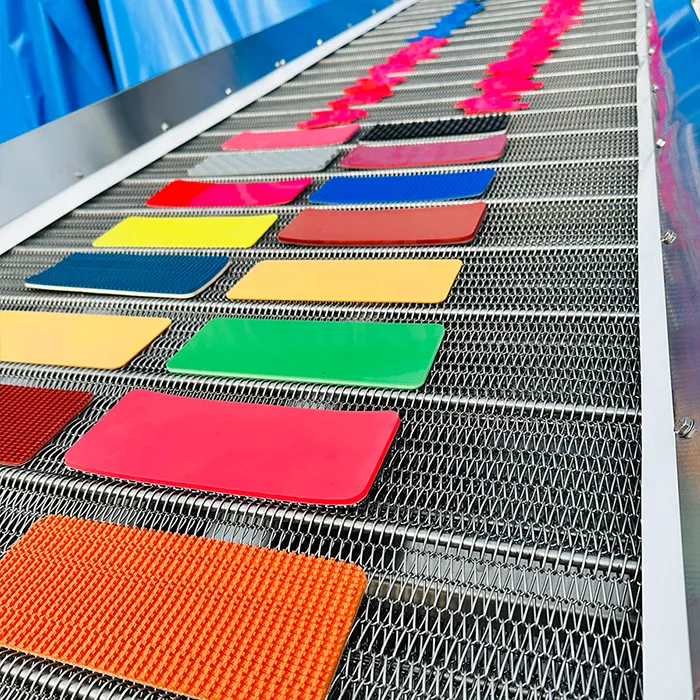
Metal Mesh Chain Conveyor
SHUNNAI Metal Mesh Chain Conveyor is designed for industrial conveying applications that require heat resistance, air permeability, drainage, or stable transport of heavy workpieces. Available with woven wire mesh or stamped plate chain structures, it can be configured with 304, 316, or 310S stainless steel and other suitable materials according to operating conditions.
High Temperature Resistant、Breathable and Permeable
Heavy-Duty and Impact-Resistant
For Baking and Heat Treatment
Heavy-Duty and Impact-Resistant
For Baking and Heat Treatment
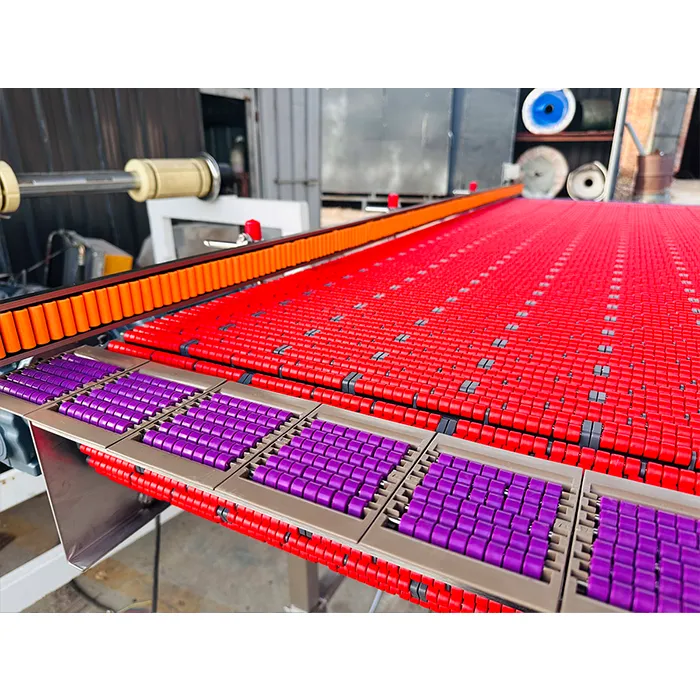
Plastic Mesh Chain Conveyor
SHUNNAI Plastic Mesh Chain Conveyor is designed for food processing and industrial production lines that require efficient drainage, air circulation, cooling, and flexible product transfer. Featuring modular plastic mesh chains made from POM, PP, or PE, it supports horizontal, inclined, curved, and combined layouts to suit different installation requirements.
Modular Mesh Chain for Draining
Oil Draining and Ventilation
For Food Clean Production Lines
Oil Draining and Ventilation
For Food Clean Production Lines
SHUNNAI is a professional Mesh Chain Conveyor manufacturer and supplier in China. We have an experienced sales team, professional technicians, and an after-sales service team.
News Recommendations