Wholesale Roller Conveyor for Efficient Material Handling
Tianjin Shunnai Conveyor Belt Manufacturing Co., Ltd. is a manufacturer of industrial conveying equipment based in Tianjin, China. With an in-house factory, mechanical processing equipment, and a professional technical team, SHUNNAI develops material handling solutions for logistics warehouses, manufacturing workshops, packaging lines, distribution centers, and other industrial environments.
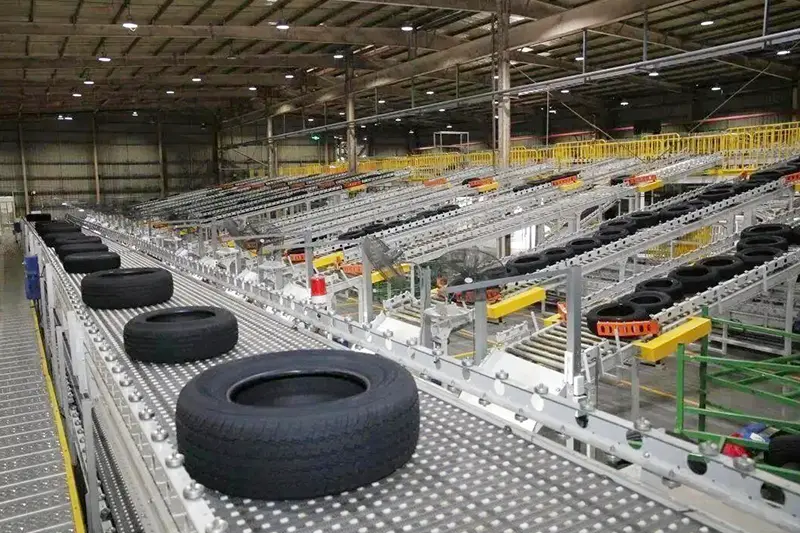
A Roller Conveyor moves products along a series of rotating rollers and is particularly suitable for items with a relatively flat, rigid bottom, such as cartons, plastic totes, pallets, and selected drum containers. Depending on the required conveying distance, load, operating speed, and automation level, buyers can choose gravity, powered, or accumulation configurations. Roller material, spacing, frame dimensions, and drive arrangements can also be matched to the working environment.
For procurement teams, the key is to select equipment that fits the actual products and production workflow. SHUNNAI considers load distribution, package dimensions, transfer points, operating conditions, and future expansion when discussing a suitable conveying solution.
Choose the Right Drive Method
Gravity Roller Systems
Gravity roller systems move products through a slight downward slope or manual pushing, without a powered drive for conveying. Their relatively simple construction makes them suitable for picking stations, packing areas, temporary transfer sections, and loading or unloading operations where the conveying distance and throughput are manageable.
When designing a gravity line, consider product weight, bottom flatness, roller diameter, roller spacing, and the available slope. Too little slope may prevent products from moving consistently, while excessive slope can cause packages to accelerate or collide. For manual handling stations, working height and operator access should also be considered.
Powered Roller Systems
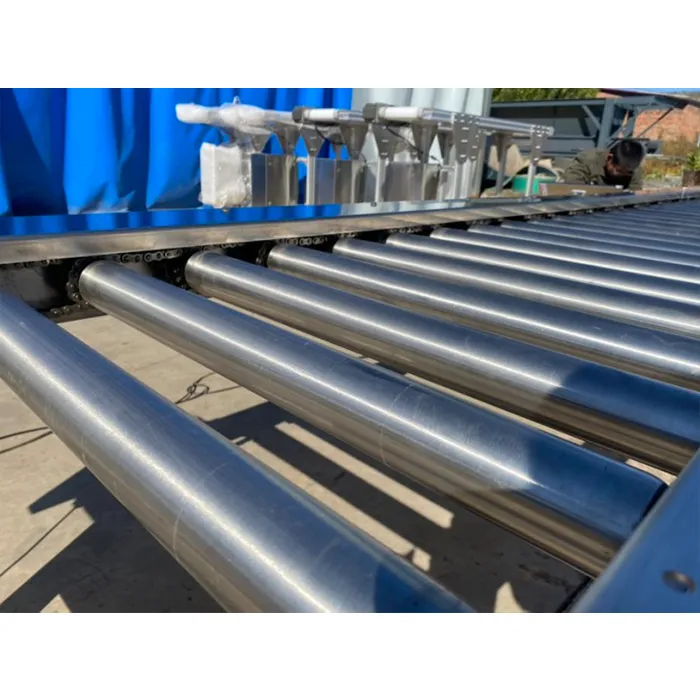
Powered systems use motors to drive the rollers through suitable transmission arrangements, such as chains, belts, or other drive mechanisms. They are useful when products need to move at a controlled speed or travel through longer, connected production sections. Speed control and sensor-based operation can be incorporated where the application requires them.
Drive selection depends on product weight, required throughput, start-stop frequency, conveying distance, and the number of transfer points. If products vary considerably in size or weight, the system should be assessed under the expected operating load rather than selected only by its maximum nominal capacity.
Accumulation Roller Systems
Accumulation systems provide temporary buffering between workstations. Depending on the design, rollers or conveyor zones can be controlled to let products wait without continuously pushing them into one another. This helps coordinate processes that run at different speeds, such as assembly, inspection, packing, and sorting.
Buyers should distinguish between zero-pressure accumulation and other accumulation arrangements. The appropriate method depends on the product's fragility, spacing requirements, throughput, control logic, and downstream equipment. Sensors, zone controls, and the selected roller mechanism must work together to deliver the intended result.
Match the Rollers to the Environment
Stainless Steel Rollers
Stainless steel rollers are often considered for wet areas, packaging operations, and applications where corrosion resistance and cleaning access are important. They may be suitable for selected food or pharmaceutical production environments, subject to the required material grade, surface finish, design, and applicable hygiene requirements.
For these applications, buyers should confirm whether the frame, bearings, fasteners, and other product-contact or splash-zone components also meet the required specifications. Stainless steel rollers alone do not establish that an entire conveyor is suitable for a regulated or hygienic process.
Galvanized Steel Rollers
Galvanized steel rollers provide a practical option for many general warehousing and material transfer applications. The protective coating helps resist corrosion under suitable conditions, while the steel construction supports routine industrial handling. This option is worth evaluating for dry warehouses, carton transfer lines, and distribution operations where extreme corrosion exposure is not expected.
Check the coating condition and suitability if the conveyor will be exposed to repeated washing, abrasive materials, or aggressive chemicals. The expected environment should guide the choice rather than price alone.
Carbon Steel and Plastic Rollers
Carbon steel rollers may be suitable for applications requiring a strong, economical conveying surface, particularly in dry industrial environments. Plastic or nylon rollers can be considered for selected light-duty applications where lower weight, reduced rolling noise, or resistance to certain chemicals is beneficial.
Material selection should account for load, impact, temperature, cleaning agents, and the product being transported. Plastic rollers are not automatically suitable for heavy pallets or high-temperature service; confirm the load rating and operating limits for the specific roller design.
Set Roller Spacing and Conveyor Dimensions
Roller spacing is one of the most important design considerations for a Roller Conveyor. The rollers must support the product throughout its movement, including when it enters the conveyor, crosses a joint, or transfers to another section.
For cartons and totes, the product base should remain supported by enough rollers to prevent tipping, sagging, or unstable movement. For pallets, consider the direction of the pallet runners, their contact area, the total load, and how the load is distributed. Drum containers may require additional attention to rolling stability and orientation.
Before confirming the layout, review these dimensions and operating details:
| Design factor | Information to provide | Design purpose |
|---|---|---|
| Product base | Length, width, shape, and bottom condition | Helps determine roller spacing and stable support. |
| Load capacity | Maximum product weight and load distribution | Supports selection of rollers, shafts, bearings, and frame strength. |
| Conveyor dimensions | Overall length, working width, and installation height | Helps the system fit the available floor space and workstation positions. |
| Transfer points | Gaps, turns, elevation changes, and connection details | Reduces the risk of products catching or becoming unstable between sections. |
| Operating rate | Required throughput, speed, and start-stop frequency | Guides drive selection and control requirements. |
| Site environment | Moisture, dust, temperature, and cleaning method | Helps determine roller, frame, and component materials. |
For projects that connect several machines, a layout drawing with product dimensions, line direction, and transfer heights can help the supplier identify potential gaps and space constraints before manufacturing.
Plan the Flow Between Workstations
A conveying line must do more than move products from one point to another. It should also coordinate the working pace of connected processes. A well-planned Roller Conveyor layout can include straight conveying sections, powered transfer areas, accumulation zones, and interfaces with inspection or packing equipment.
Receiving and Dispatch
Gravity sections may be appropriate for short transfer distances where products can move safely under gravity or manual pushing. Powered sections can be considered when the line requires more consistent movement or must connect with automated handling equipment.
Assembly and Packaging
Production stations may operate at different speeds. Accumulation zones can provide a buffer when one station pauses or completes work more slowly than the previous stage. The buffer capacity should be based on actual cycle times and the amount of space available.
Sorting and Distribution
Sorting and distribution lines may require controlled product spacing, barcode scanning, weighing, or connection to other handling equipment. Confirm product orientation, maximum package dimensions, sensor positions, and the control interface before specifying the conveyor.
Inspect the System Before Handover
Before a new line enters regular operation, the equipment should be checked against the approved specifications and intended operating conditions. The following points can help buyers organize a practical acceptance review.
Mechanical checks: Confirm frame alignment, roller rotation, fastener security, transfer gaps, and the stability of the installed conveyor. Verify that the rollers and frame are rated for the intended load.
Drive and control checks: For powered equipment, test the drive direction, operating speed, emergency stop arrangements, sensor response, and accumulation logic where applicable. Confirm that connected machines exchange signals correctly.
Product trials: Run representative products through the line, including the expected size and weight range. Observe whether cartons remain stable, pallets transfer correctly, and products accumulate or release as intended.
Documentation: Request the relevant operating instructions, maintenance recommendations, component information, and approved technical drawings. These records support operator training, troubleshooting, and future replacement-part planning.
Where These Systems Are Used
Warehousing and E-Commerce
Roller systems support carton transfer, order picking, packing, dispatch, and selected sorting operations. Gravity sections can suit manual work areas, while powered or accumulation configurations can support higher-throughput workflows.
Manufacturing and Assembly
In manufacturing workshops, roller conveyors can move containers, components, and finished products between workstations. Drive control and buffering can help coordinate stations that have different cycle times.
Food and Beverage Packaging
Roller conveyors can transfer suitable cartons, cases, and rigid-bottom containers through packaging and distribution areas. Stainless steel components may be considered in wet or hygiene-sensitive environments, but the complete equipment specification must match the applicable cleaning and material requirements.
Parcel and Distribution Centers
Powered and accumulation systems can help organize parcel movement between receiving, scanning, sorting, and dispatch stages. Product size range, package weight, throughput, and integration with sorting equipment should be established before selecting the system configuration.
Manufacturing and Quality Support
Tianjin Shunnai Conveyor Belt Manufacturing Co., Ltd. integrates development, manufacturing, and sales, supported by in-house production resources and a technical team. SHUNNAI works with buyers to assess conveying requirements, discuss suitable configurations, and coordinate equipment specifications for warehouse and industrial projects.
The company states that its operations follow an ISO 9001 quality management system and that it holds FDA, MA, and CNAS-related credentials. These credentials have different meanings and scopes; they should not be interpreted as blanket product approvals for every conveyor configuration. Buyers should verify the certificate holder, validity, documented scope, and relevance to the specific equipment and intended application.
SHUNNAI serves international markets including North America, Western Europe, Oceania, South America, Southeast Asia, the Middle East, and Eastern Europe. Project discussions can cover standard equipment, customized dimensions, drive arrangements, accumulation requirements, and coordination with existing production lines. Final technical details should be confirmed in the approved drawings and specifications before production.
Frequently Asked Questions
Can roller conveyors move products with uneven bottoms?
It depends on the shape and stability of the product base. Products with uneven, flexible, or very narrow contact surfaces may not move reliably on standard rollers. A different roller arrangement, carrier, pallet, or alternative conveyor type may be needed. Providing product photos and base dimensions helps determine whether a roller system is appropriate.
How do I prevent small cartons from getting stuck between rollers?
Check the carton length relative to roller spacing, the gap between conveyor sections, and the transition to downstream equipment. The roller layout should support the carton continuously enough to prevent the leading edge from dropping into a gap. For very small packages, a different spacing arrangement or an alternative conveying surface may be more suitable.
Can different product sizes use the same line?
Yes, if the conveyor width, roller spacing, load rating, transfer points, and control settings accommodate the full product range. The smallest package often determines the minimum support requirements, while the largest and heaviest products affect usable width and structural capacity. Buyers should provide both minimum and maximum product dimensions when requesting a design.
What should be considered when integrating with existing equipment?
Confirm conveying height, travel direction, available installation space, product handover points, electrical requirements, and control signals. The speed and cycle time of adjacent machines should also be reviewed. Drawings and photographs of the existing line can help identify interface issues before installation.
What maintenance is required for regular operation?
Inspect rollers for restricted rotation, unusual noise, damage, or excessive wear. For powered systems, also check the drive components, bearings, fasteners, sensors, and safety devices according to the manufacturer's maintenance schedule. Cleaning methods and lubrication requirements should follow the specifications for the installed components and operating environment.
Request a Conveyor Configuration
If you are planning a warehouse transfer line, packaging area, assembly workstation, or automated distribution system, SHUNNAI can discuss a configuration based on your products and site conditions. Share the maximum load, product dimensions, required throughput, conveying distance, installation height, and operating environment to support a more accurate technical assessment.
Contact SHUNNAI to discuss roller materials, spacing, conveyor dimensions, drive methods, accumulation functions, and integration requirements for your project.
- View as
Powered Roller Conveyor
SHUNNAI Powered Roller Conveyor is designed for automated transportation of cartons, totes, pallets, and other compatible goods in warehouses, logistics centers, and industrial production lines. Available with chain, timing-belt, or other suitable drive configurations, it can be customized with galvanized steel, stainless steel, plastic, or rubber-coated rollers to meet different load and operating requirements.
Motor-Driven Roller Transmission
Core Conveying Equipment for Heavy-Duty
Long-Distance Automated Production Lines
Core Conveying Equipment for Heavy-Duty
Long-Distance Automated Production Lines
SHUNNAI is a professional Roller Conveyor manufacturer and supplier in China. We have an experienced sales team, professional technicians, and an after-sales service team.
News Recommendations