Factory Price Anti-Static Workbench for Electronics Assembly
An Anti-Static Workbench is more than a table with an ESD mat. Effective static control depends on the tabletop's electrical properties, grounding connections, operator protection, and the way equipment and materials are used at the workstation. SHUNNAI offers configurable workbench structures, tabletop materials, and accessories to help businesses establish work areas suited to their assembly procedures, available floor space, and operating requirements.
Build a Workstation Around the Task
Different production activities require different work surfaces, storage arrangements, and operator access. Before selecting a workbench, buyers should consider what employees handle, how frequently tools are changed, and whether the workstation needs to connect with an existing production line.
Electronics Assembly Stations
For circuit board assembly, electronic component handling, and product testing, aluminum profile frames can support modular accessories such as tool panels, lighting, power outlets, and material racks. The layout can be adjusted to suit the operator's workflow and the equipment used at the station.
Cleanable Laboratory Work Areas
Stainless steel workbenches are worth considering for laboratory testing, pharmaceutical research, and other environments where surface cleaning and corrosion resistance are important. Buyers should confirm that the selected tabletop, joints, and accessories meet the cleaning procedures and hygiene requirements of the intended facility.
Heavy-Duty Assembly Tables
Carbon steel frames paired with a suitable antistatic tabletop provide a practical option for general assembly and inspection work. Frame dimensions, reinforcement, and load capacity should be matched to the weight and distribution of the tools, components, and equipment placed on the workbench.
Independent Repair and Inspection Stations
Compact workstations suit component repair, sample preparation, instrument debugging, and inspection tasks that do not require a full production-line installation. Storage trays, tool holders, and task lighting can be selected according to the operator's daily work.
Choose the Right Frame and Surface
The frame determines the workstation's structural arrangement, while the tabletop influences cleaning, wear resistance, and compatibility with the required ESD control process. The most suitable combination depends on the application rather than material alone.
| Configuration | Main Characteristics | Typical Applications |
|---|---|---|
| Stainless Steel | Corrosion resistance and convenient cleaning | Laboratories, testing areas, and hygiene-sensitive workspaces |
| Aluminum Profile | Modular structure, relatively low weight, and flexible accessory installation | Electronics assembly and adjustable production stations |
| Carbon Steel | Rigid frame construction and cost-conscious configuration options | General assembly, inspection, and workshop operations |
| Antistatic Laminate | Work surface designed for static-sensitive applications | Electronic component handling and assembly |
| Antistatic Multilayer Board | Alternative tabletop construction, subject to specified electrical and mechanical properties | ESD-controlled work areas requiring a dedicated work surface |
Stainless steel or aluminum does not automatically make a complete workstation ESD-compliant. Buyers should verify the electrical properties of the selected surface and the effectiveness of the entire grounding arrangement. A suitable material combination should also account for chemical exposure, cleaning agents, abrasion, and the expected working load.
Check the Complete ESD Protection Path
Static protection depends on a coordinated system rather than a single component. When evaluating an Anti-Static Workbench, buyers should review the following points with the supplier and their ESD control team.
Tabletop Electrical Properties
Confirm the required surface resistance or resistance-to-ground range for the application. The commonly referenced range of 10⁶–10⁹ ohms may be relevant to some ESD work surfaces, but it should not be treated as a universal requirement for every facility. Acceptance criteria should follow the applicable ESD control program and test method.
Grounding Connections
Check how the tabletop, grounding points, and any conductive accessories are connected. Grounding wires, terminals, or other specified components should be installed and verified according to the workstation design and site procedures. A grounding chain should not be assumed to provide adequate protection without confirming its intended function and electrical connection.
Operator and Equipment Protection
Depending on the task, the workstation may need to work alongside wrist straps, ESD footwear, grounding points, ESD chairs, or other protective equipment. These items should be selected as part of the facility's overall ESD control plan rather than treated as interchangeable accessories.
Inspection and Maintenance
Dust, contamination, wear, cleaning products, and loose connections can affect workstation performance. Establish a testing and inspection schedule based on the site's ESD requirements, usage intensity, and environmental conditions. Record test results and investigate any readings outside the specified acceptance range.
Configure Dimensions and Accessories
A well-planned workstation helps operators reach frequently used tools, keep components organized, and maintain a consistent assembly process. SHUNNAI can discuss customized configurations based on the customer's work method and available installation space.
| Configuration Item | What Buyers Should Specify |
|---|---|
| Tabletop dimensions | Required length, width, usable work area, and equipment footprint |
| Working height | Operator posture, seated or standing work, and adjustment requirements |
| Load capacity | Total equipment weight, component loads, and load distribution |
| Lighting and power | Task visibility, electrical equipment needs, and outlet positions |
| Storage and tooling | Drawers, shelves, tool panels, hooks, and material racks |
| Mobility and layout | Fixed or mobile installation, aisle clearance, and connection to nearby equipment |
For assembly-line projects, buyers should also provide workstation quantities, line arrangement drawings, equipment interfaces, and any requirements for standardized workstation dimensions. These details help reduce layout changes during installation and make it easier to coordinate multiple stations.
Applications Across Technical Work Environments
SHUNNAI workbench configurations can be considered for a range of industrial and technical operations, subject to the selected materials and required ESD controls.
Electronics manufacturing: Circuit board assembly, electronic component inspection, device testing, and small-part handling.
Precision instrumentation: Optical component assembly, instrument calibration, precision repair, and equipment debugging.
Laboratory operations: Sample preparation, controlled testing, and research tasks where the work surface must meet defined cleaning and static-control requirements.
Aerospace and specialized electronics: Assembly and inspection of static-sensitive electronic modules, subject to the customer's applicable industry and facility standards.
Production and repair workshops: Bench assembly, rework, tool organization, and quality inspection at individual or line-side workstations.
What to Confirm Before Ordering
To help assess a suitable configuration, buyers should prepare the following information before requesting a quotation:
Application: Describe the products handled, the work performed, and whether static-sensitive components are exposed.
Dimensions and loading: Provide the required tabletop size, working height, equipment footprint, and expected load.
ESD requirements: Specify the required electrical resistance criteria, grounding arrangement, applicable standards, and any facility acceptance tests.
Environment: Identify cleaning procedures, humidity conditions, possible chemical exposure, and any cleanliness requirements.
Accessories and quantity: List lighting, power outlets, tool panels, shelves, drawers, mobility requirements, and the planned order quantity.
These details allow the supplier to evaluate the frame, tabletop, and accessory combination against the actual working conditions instead of relying on a generic workstation specification.
Manufacturing and Quality Support
Tianjin Shunnai Conveyor Belt Manufacturing Co., Ltd. provides workstation design coordination, manufacturing, and sales support for customers in China and overseas markets, including North America, Western Europe, Oceania, South America, Southeast Asia, the Middle East, and Eastern Europe.
The company reports ISO 9001, FDA, MA, and CNAS-related credentials. Because these credentials have different scopes and do not necessarily apply to every workbench, buyers should confirm the certificate holder, validity, scope, and relevance to the product or service being purchased. For ESD-critical applications, request the applicable material data, grounding details, and inspection or test documentation required by your project.
Frequently Asked Questions
Can an existing workbench be upgraded for ESD use?
In some cases, an existing table can be fitted with an appropriate antistatic mat and grounding components. However, suitability depends on the tabletop material, frame arrangement, electrical connections, and the facility's ESD requirements. The upgraded station should be tested before being used for static-sensitive work.
Does a stainless steel tabletop eliminate the need for an ESD system?
No. Although stainless steel is electrically conductive, conductivity alone does not establish that a workstation provides the required static protection. Grounding, the properties of any insulating layers, operator protection, and the intended ESD control method must also be evaluated.
What information is needed to verify the workbench load capacity?
Provide the total weight of the equipment and materials, the location of concentrated loads, and whether the load is static or involves movement or vibration. The supplier should confirm the rated capacity for the proposed frame and tabletop configuration.
Can several workbenches be configured to the same production standard?
Yes. Buyers can specify consistent dimensions, tabletop materials, accessory positions, and grounding arrangements across multiple stations. For larger projects, provide a workstation layout or reference drawing so the configurations can be reviewed before production.
How should ESD performance be checked after installation?
Follow the facility's ESD control plan and applicable test procedures. Depending on the design, verification may include tabletop resistance, resistance to ground, grounding continuity, and checks of operator grounding equipment. Keep records and repeat testing at intervals defined by the site's risk assessment and operating requirements.
Contact SHUNNAI for Workbench Selection
Whether you are equipping a single inspection station or planning multiple work areas for electronics assembly, SHUNNAI can discuss the required dimensions, tabletop materials, frame structure, accessories, and ESD control arrangements. Send your application details, quantity, layout requirements, and applicable specifications to request a suitable configuration and quotation.

- View as
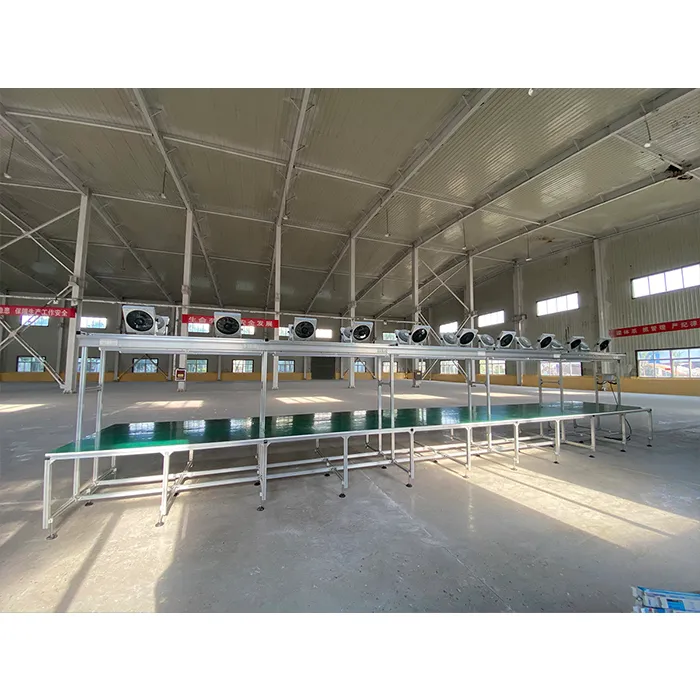
Aluminum Profile Workbench
SHUNNAI supplies customized modular workstations for electronics assembly, inspection, packaging, hardware processing and factory production lines. Each aluminum profile workbench can be configured with a suitable frame structure, tabletop material, working height and accessories according to the intended task. Buyers can specify load requirements, available floor space, ESD protection needs, storage arrangements and future expansion plans to obtain a workstation design that fits their workflow.
Modular Assembly
Rust-Free and Anti-Static
Preferred Choice for Workshop Workstation Upgrades
Rust-Free and Anti-Static
Preferred Choice for Workshop Workstation Upgrades
SHUNNAI is a professional Anti-Static Workbench manufacturer and supplier in China. We have an experienced sales team, professional technicians, and an after-sales service team.
News Recommendations