





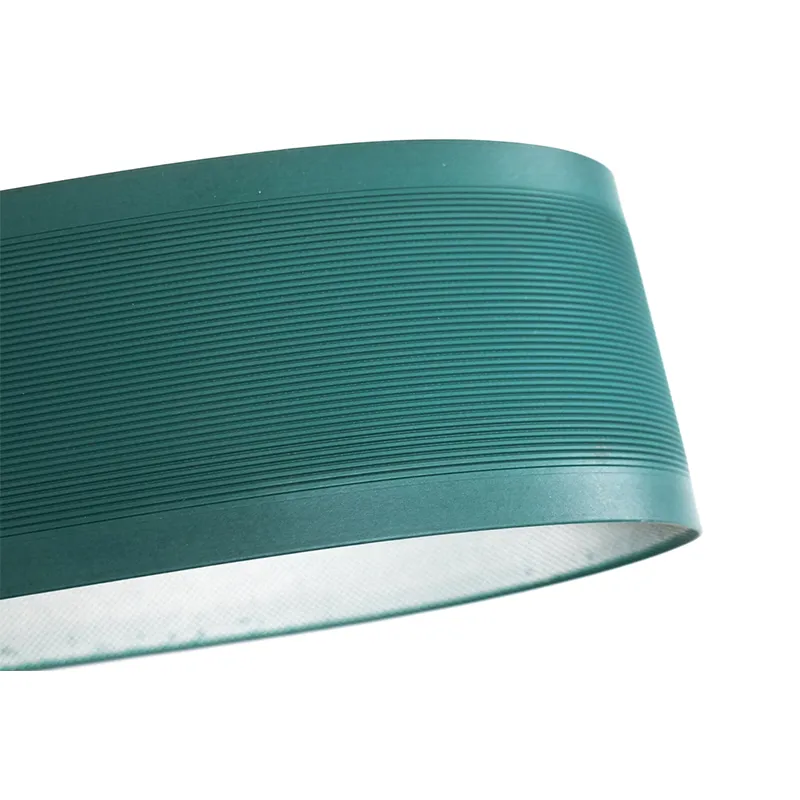
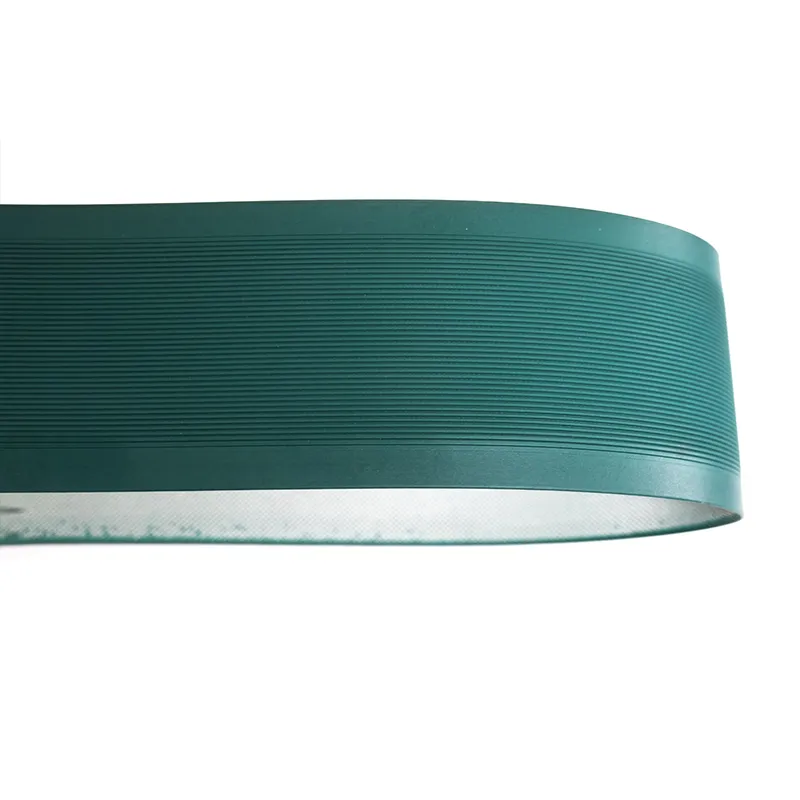
Food Grade Conveyor Belt with Sealed Edges
SHUNNAI Food Grade Conveyor Belt with Sealed Edges is designed for industries requiring cleaner operation, longer belt life and improved edge protection. Through professional heat sealing and edge wrapping technology, the belt edges become smoother, stronger and more resistant to moisture, wear and contamination.
1.Completely eliminates delamination
2.Smooth, burr‑free edges
3.Water, oil & chemical resistant
2.Smooth, burr‑free edges
3.Water, oil & chemical resistant
The Food Grade Conveyor Belt with Sealed Edges developed by SHUNNAI adopts advanced heat sealing and edge wrapping technologies to protect the vulnerable cutting edges of PVC, PU, polyester mesh and rubber conveyor belts. By sealing exposed fibers and internal layers, the belt edge becomes smooth, dense and resistant to water, oil and chemical penetration, reducing contamination risks and extending service life.
SHUNNAI has established a complete quality management system certified with GB/T 19001-2016 / ISO 9001:2015. Raw materials, sealing temperature, bonding strength, edge flatness and finished belt performance are strictly controlled. Products are also available with FDA, MA and CNAS related certification support to meet different food processing and industrial hygiene requirements.
Why Belt Edges Fail
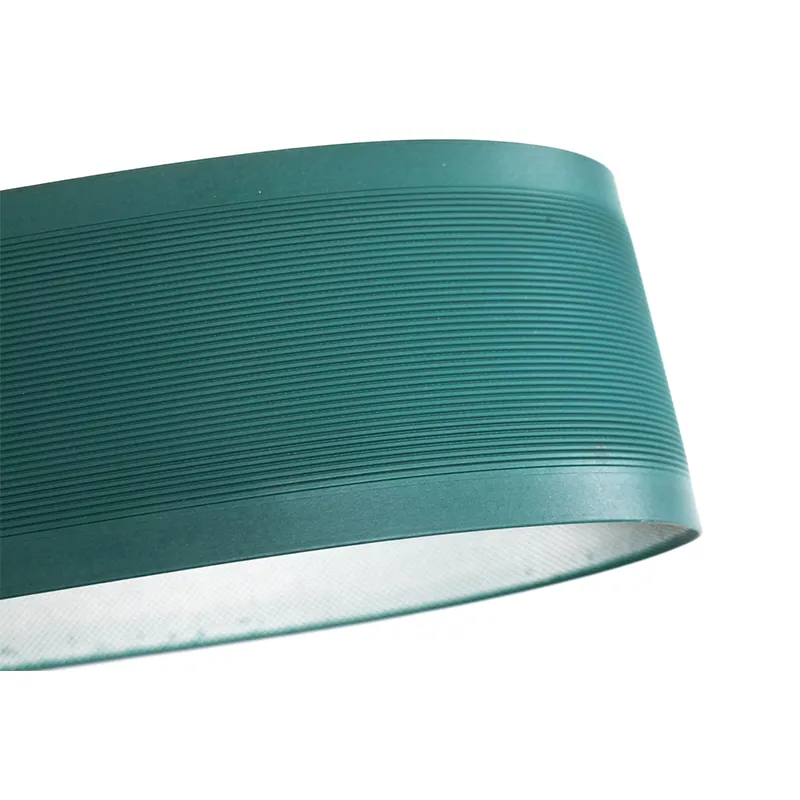
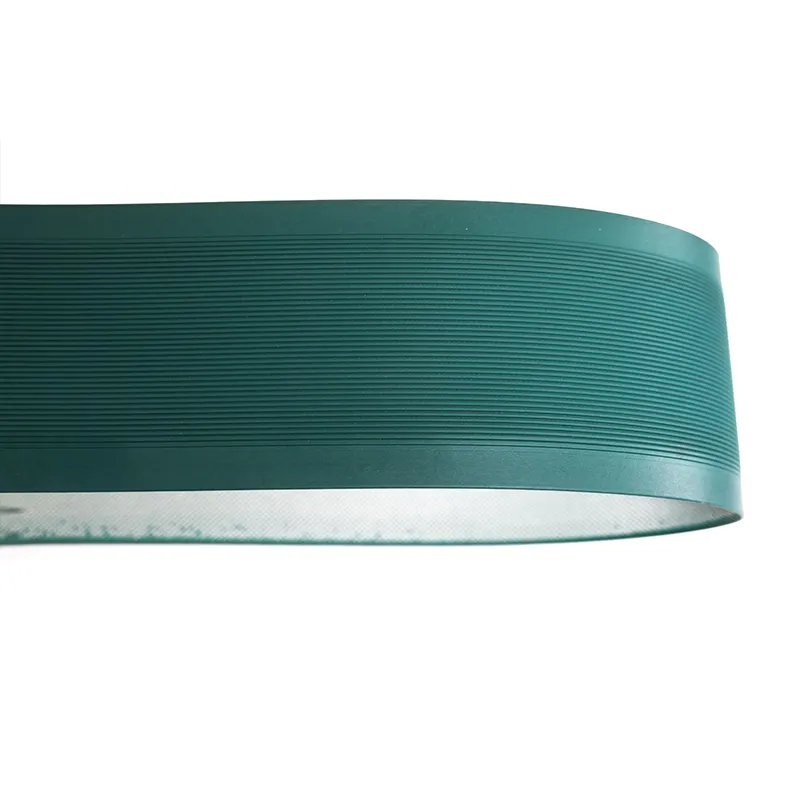
In continuous conveying applications, the belt surface is not always the first damaged area. The cut edges are usually exposed to more mechanical stress, cleaning chemicals and environmental moisture. Once the edge structure is damaged, problems can quickly spread to the whole belt.
Water And Liquid Penetration
For multi-layer PVC and PU belts, untreated edges contain exposed fabric structures and microscopic gaps. During food washing, frozen processing or chemical cleaning, water and liquid can penetrate into these layers, weakening the bonding strength and causing swelling or separation.
SHUNNAI sealing technology closes these exposed areas and creates a protective barrier. The sealed edge reduces liquid absorption and prevents internal layer damage caused by repeated wet operation.
Fiber Shedding Problems
During high-speed operation, untreated polyester fabric edges may rub against conveyor frames, guides or rollers. Over time, loose fibers can appear, affecting product cleanliness and creating additional maintenance work.
The sealed edge structure provides a smooth contact surface, reducing friction between the belt edge and machine components. This design is especially suitable for food, pharmaceutical and precision manufacturing environments where foreign particles are strictly controlled.
Hidden Contamination Risk
Food processing lines require frequent cleaning because small gaps at belt edges can collect flour, meat residue, vegetable particles and moisture. These hidden areas are difficult to clean completely and may increase sanitation management pressure.
By forming a closed and smooth edge surface, SHUNNAI reduces material accumulation points and improves cleaning efficiency. The design supports hygienic production environments that follow GMP and HACCP management concepts.
Sealing Technology Options
Different belt materials and working conditions require different edge protection methods. SHUNNAI selects sealing solutions according to belt structure, operating temperature, cleaning method and load conditions.
Heat Sealed Edge
Heat sealing is mainly used for thermoplastic belts such as PU and PVC. Controlled heating melts and compresses the belt edge to form a smooth integrated layer without adding extra materials.
This method maintains belt flexibility and bending performance while improving edge density. It is widely used in food washing, packaging, sorting and pharmaceutical conveying applications where cleanliness is important.
Wrapped Edge Protection
For polyester mesh belts, woven belts and applications with higher mechanical friction, SHUNNAI provides wrapped edge protection. A wear-resistant PU or PVC layer is bonded onto the belt edge to create additional reinforcement.
The thickness and material of the wrapping layer can be adjusted according to operating conditions, making it suitable for heavy-duty conveying, frozen food lines and industrial applications.
Testing And Validation
Before delivery, SHUNNAI performs multiple inspection procedures to ensure sealing reliability and long-term operation performance.
|
Test Item |
Testing Method |
Purpose |
|
Peel Strength Test |
Bonding force inspection after edge sealing |
Verify sealing layer stability |
|
Water Immersion Test |
Long-term soaking simulation |
Check resistance against moisture penetration |
|
Cleaning Resistance Test |
Repeated high-pressure washing and disinfectant exposure |
Ensure stable performance during sanitation cycles |
|
Friction Test |
Continuous edge contact simulation |
Evaluate wear resistance during operation |
Selection Guide
Belt Material Matching
Different industries require different edge sealing methods. SHUNNAI selects the sealing process according to belt material, working environment and cleaning requirements.
For PU and PVC conveyor belts used in food processing, heat sealing is preferred because it directly melts and closes the exposed edge structure, maintaining flexibility while preventing moisture penetration. For mesh belts, polyester belts and woven structures, edge wrapping provides additional reinforcement and improves resistance against friction and tearing.
For high-temperature applications, SHUNNAI combines heat-resistant sealing materials with PTFE, silicone or special fabric belts. For wet and frequent cleaning environments, sealed edges are optimized for water resistance, chemical resistance and hygiene requirements.
Application Condition Assessment
Before production, SHUNNAI evaluates belt speed, tension, cleaning method, temperature range and material characteristics. This ensures the sealed edge design matches actual operating conditions instead of applying a standard solution to every application.
In food processing lines, where belts contact water, oil, salt or organic residue every day, sealed edges help prevent liquid penetration and reduce hidden contamination risks. In precision industries such as electronics and pharmaceuticals, sealed edges minimize fiber shedding and maintain cleaner conveying conditions.
Manufacturing Process
Edge Treatment Control
SHUNNAI applies strict process control during edge sealing production. The edge temperature, pressure and sealing speed are adjusted according to belt thickness and material characteristics. Each finished belt is checked for edge smoothness, bonding strength and dimensional accuracy before shipment.
The complete manufacturing process includes raw material inspection, belt cutting, edge sealing, joint processing, surface inspection and final performance testing. SHUNNAI follows a quality management system certified to GB/T 19001-2016 / ISO 9001:2015, with testing support from professional laboratories including FDA, MA and CNAS related requirements.
Quality Verification
Every Food Grade Conveyor Belt with Sealed Edges undergoes practical inspection before delivery. Testing items include edge peel strength, wear resistance, water absorption resistance, cleaning compatibility and running stability.
Through continuous improvement of sealing technology, SHUNNAI reduces common problems such as edge cracking, layer separation and contamination accumulation, helping customers lower unexpected replacement costs during production.
Maintenance Recommendations
Daily Cleaning
For food and pharmaceutical applications, regular cleaning is essential. The sealed edge structure reduces residue accumulation, allowing operators to remove particles and liquids more efficiently during routine washing.
High-pressure water cleaning, food-grade disinfectants and common sanitation procedures can be applied according to belt material requirements. Avoid sharp tools during cleaning to protect the sealing layer.
Regular Inspection
Although edge sealing improves durability, regular inspection helps maintain long-term performance. Operators should check edge appearance, joint condition, tracking status and surface wear during scheduled maintenance.
If abnormal friction, edge damage or belt deviation occurs, SHUNNAI can provide technical guidance and recommend suitable repair or replacement solutions according to operating conditions.
Application Industries
SHUNNAI sealed edge conveyor belts are widely used in industries requiring clean conveying and reliable belt protection.
Food processing applications include meat processing, seafood handling, fruit and vegetable washing, bakery cooling, ready-to-eat food packaging and frozen food production. The sealed edge structure helps maintain hygiene during frequent washing cycles.
Pharmaceutical, medical and laboratory industries use sealed belts where dust control and contamination prevention are important. Electronics, battery and precision manufacturing lines benefit from reduced fiber shedding and cleaner operation.
Chemical, powder and logistics industries choose sealed edge solutions for improved resistance against moisture, particles and mechanical wear.
Product Comparison
|
Item |
Standard Conveyor Belt |
SHUNNAI Sealed Edge Belt |
|
Edge protection |
Exposed fabric layers, easy fraying |
Closed edge structure, improved protection |
|
Cleaning performance |
Particles and liquid may enter edge gaps |
Smooth sealed edges reduce residue accumulation |
|
Service environment |
Suitable for general dry conveying |
Suitable for wet, hygienic and high-frequency cleaning conditions |
|
Maintenance frequency |
Higher replacement risk from edge damage |
Longer service cycle with reinforced edges |
FAQ
What is the purpose of sealed edges on a conveyor belt?
Sealed edges close the exposed belt layers after cutting, preventing moisture, oil and particles from entering the belt structure. This reduces delamination, edge wear and contamination risks, especially in food processing environments.
Is this Food Grade Conveyor Belt with Sealed Edges suitable for food contact applications?
Yes. SHUNNAI provides food-grade conveyor belt solutions using compliant materials and manufacturing processes. Products can meet FDA food contact requirements and related hygiene standards depending on material selection and application conditions.
Can sealed edges be added to existing conveyor belts?
The possibility depends on belt material, thickness and current condition. SHUNNAI evaluates the belt structure first and recommends suitable heat sealing or edge wrapping solutions.
How long can a sealed edge conveyor belt last?
Service life depends on operating speed, load, temperature, cleaning frequency and material selection. Compared with unsealed belts, sealed edge designs can significantly reduce edge-related failures and extend replacement intervals.
What information is needed for customization?
Customers can provide belt width, length, thickness, material type, conveyor structure, operating temperature, cleaning method and application environment. SHUNNAI will recommend the suitable sealing method and belt specification.
Send Inquiry
Contact Info
-
Address
No.129 Qingfeng Road, Jizhou District, Tianjin City, China
-
Tel
-
Email
If you have any inquiry about a quotation or cooperation, please feel free to email or use the following inquiry form. Our sales representative will contact you within 24 hours.
News Recommendations



