





Plastic Chain Plate Conveyor
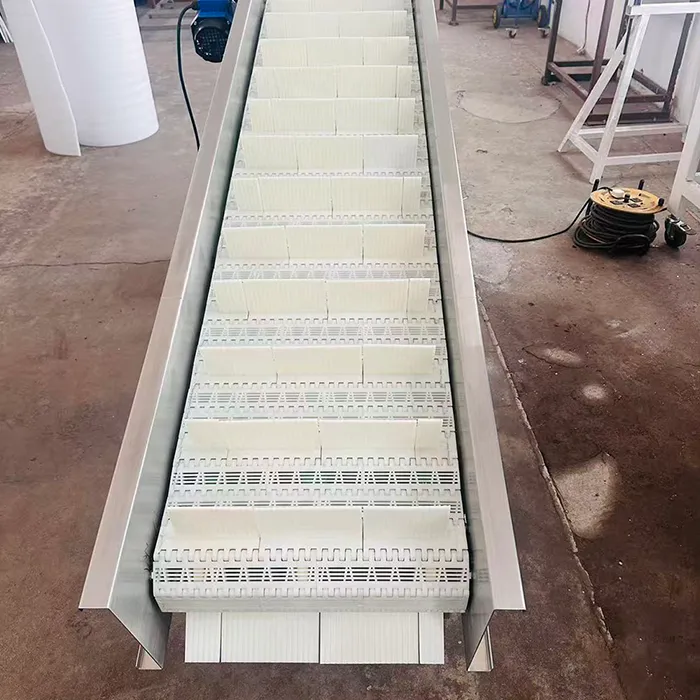
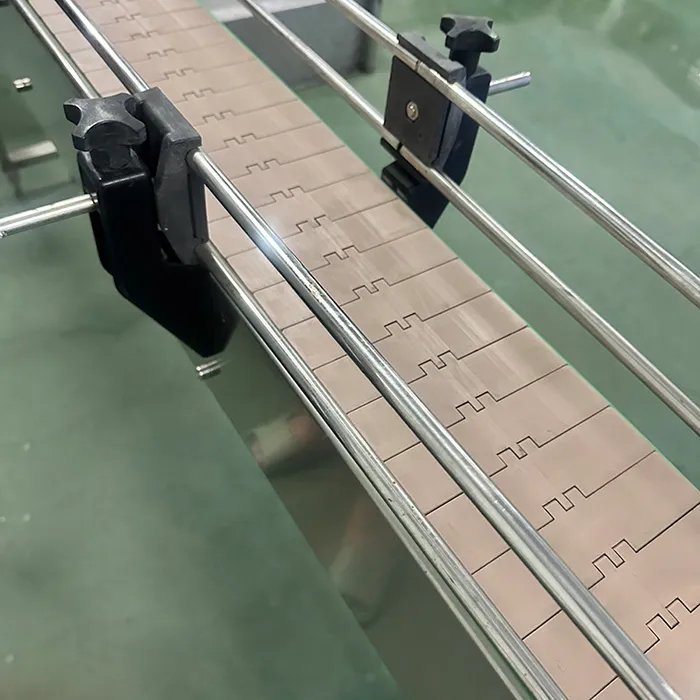
SHUNNAI Plastic Chain Plate Conveyor is designed for stable and efficient product transfer in beverage, food processing, pharmaceutical, and packaging production lines. With options for POM, PP, and PE chain plates, flexible conveyor layouts, and modular components, the system can be customized to suit different load capacities, operating conditions, and production requirements.
Modular Solid Plate Surface
Washable and Low Noise
For Bottle, Can and Whole-Item Conveying
Washable and Low Noise
For Bottle, Can and Whole-Item Conveying
Tianjin Shunnai Conveyor Belt Manufacturing Co., Ltd. is a China-based conveyor equipment manufacturer integrating R&D, design, production and sales. Since 2007, SHUNNAI has specialized in conveyor belts, specialty belts and supporting conveying equipment for customers in different industries. Our plastic chain plate conveyor is designed to transport complete products such as bottles, cans, cartons and medicine boxes between filling, packaging, inspection, sorting and transfer stations.
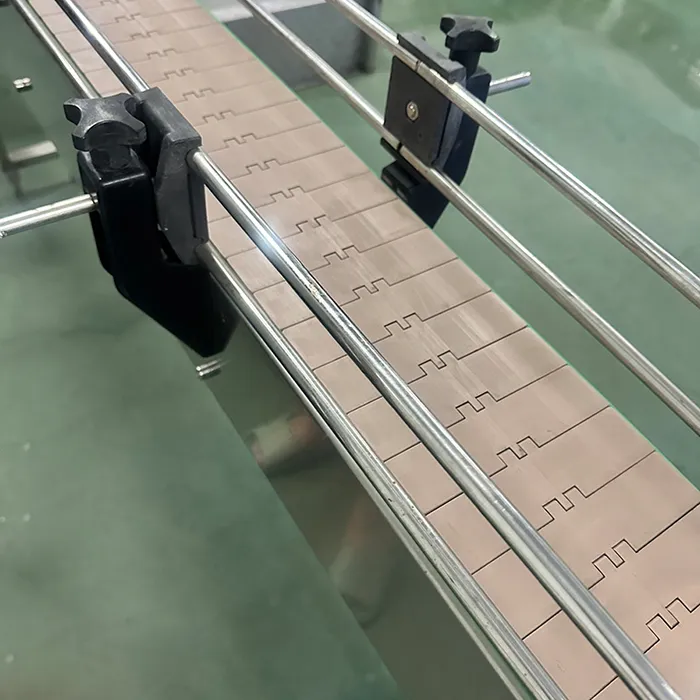
The system uses injection-molded engineering plastic chain plates connected by stainless steel pins, with PP, POM and PE options for different operating conditions. A solid conveying surface helps support individual products, while sprocket engagement provides positive drive transmission. Horizontal, inclined, curved and diverting or merging layouts can be configured according to the production line. 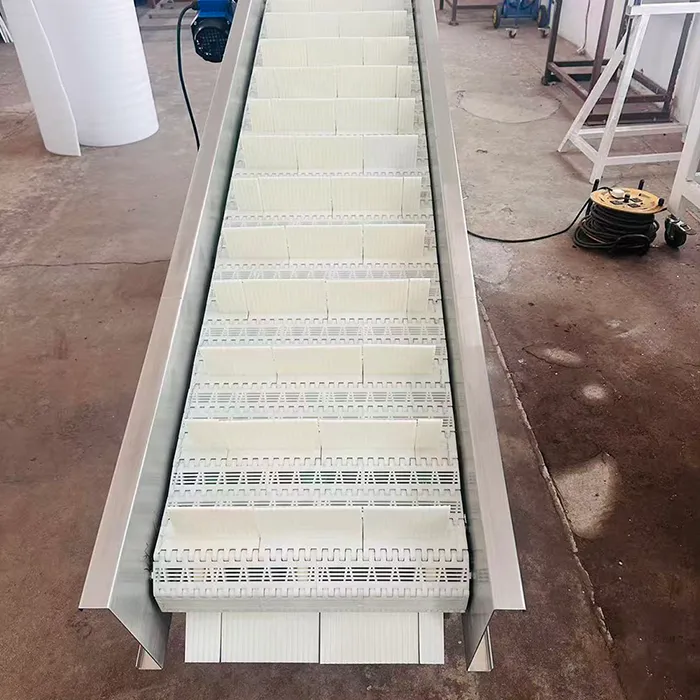
Keep Bottles, Cans and Boxes Stable
In automated production, products often pass through several stations before reaching final packaging. Bottles may move from filling to labeling, cartons may travel between inspection and packing, and medicine boxes may need to maintain a consistent position during transfer. The conveying surface must support the product without creating unnecessary gaps, tipping points or interruptions.
A plastic chain plate conveyor provides a continuous plate surface for compatible whole-item products. Compared with an open mesh structure, a solid chain plate reduces the chance of small items dropping through the conveying surface. The plate width, surface finish, guide spacing and transfer gap should be matched to the dimensions and base shape of the product.
For cylindrical bottles and cans, side guides can help maintain alignment along straight sections. For cartons and medicine boxes, the conveyor width should provide sufficient support without allowing excessive lateral movement. If the line handles products with different dimensions, the guide system and transfer points should be checked against the full product range rather than one standard size.
Connect Filling, Inspection and Packaging
A conveyor is often one part of a larger automated line. Its performance depends not only on the chain plates but also on how products enter, leave and move between connected machines. Differences in conveyor height, line speed or transfer direction can cause products to collide, rotate or accumulate at connection points.
Filling and Capping Lines
Bottles and containers may need to move at a consistent pace between filling, capping and labeling equipment. The conveyor width, guide arrangement and speed should suit the container dimensions and the output requirements of the connected machines. For lightweight or tall bottles, acceleration and transfer gaps deserve particular attention.
Inspection and Labeling Stations
Products passing through inspection or labeling equipment may require stable orientation and predictable spacing. Suitable side guides and transfer arrangements help maintain the product path. Where precise positioning is required, the conveyor should be evaluated together with the inspection or labeling equipment rather than selected as an isolated component.
Carton and Case Packing
After products are packed into cartons, a chain plate system can transfer them toward case packing, weighing, sorting or palletizing stations. The plate surface and drive configuration should be selected according to carton weight, bottom condition and required line speed.
Plan Curves, Inclines and Product Routing
Not every production line can be arranged in a straight line. Existing factory layouts may require conveyors to turn around equipment, move products between different heights or direct items toward more than one destination. SHUNNAI systems can be designed around different conveying paths, subject to the selected chain type, layout and product requirements.
Horizontal sections are suitable for routine transfer and buffering. Inclined sections may use cleats or other suitable surface features to help limit product movement. Curved sections require a compatible chain design and appropriate guidance to maintain the intended path. Diverting and merging arrangements may be used to distribute products to different stations or bring products from separate lines together.
Before ordering a plastic chain plate conveyor, provide the proposed route, turning direction, elevation changes and available installation space. Also identify whether products must remain upright, maintain a particular orientation or arrive at a fixed position. These details help determine the appropriate chain configuration and guide arrangement.
Select the Plate Material and Surface
The chain plate material affects rigidity, wear behavior, chemical compatibility and performance under different temperatures. Selection should reflect the conveyed product, operating environment and cleaning procedure.
| Material | General Characteristics | Selection Considerations |
|---|---|---|
| POM | Good rigidity, wear resistance and mechanical strength. | Consider for applications requiring stable support and regular movement of heavier compatible products. |
| PP | Suitable for many wet environments and offers resistance to a range of chemicals. | Consider for compatible washing or humid production conditions; verify temperature and chemical exposure. |
| PE | Good toughness and low-friction characteristics in suitable operating conditions. | Consider for applications where impact behavior and smooth product movement are important. |
These materials are not interchangeable in every application. Actual performance depends on the polymer grade, load, temperature, chemical exposure and operating speed. Buyers should also specify the plate surface. A flat surface may suit cartons and medicine boxes, while a textured or specially formed surface may be considered where additional product control is needed. Any special groove, cleat or surface feature should be evaluated against product stability and cleaning requirements.
Reduce Unplanned Stops with Modular Repairs
Chain plates are connected through pins, allowing compatible modules to be removed and replaced individually. If a plate becomes damaged, the maintenance team may be able to replace the affected section without replacing the complete conveying surface. This modular structure can help reduce spare-part use and shorten repair time.
The actual repair process depends on the chain design, accessibility and availability of matching replacement parts. Before purchase, ask how the chain is disassembled, which tools are required and whether replacement plates can be supplied separately. Confirming these details in advance helps maintenance teams prepare for routine wear and unexpected damage.
Regular inspection should cover the chain plates, connecting pins, sprocket teeth, wear strips and chain tension. Product debris should be removed according to the operating environment, and the drive system should be checked for abnormal noise or wear. Before restarting after maintenance, verify that the chain is correctly assembled and properly engaged with the sprockets.
Configure the Conveyor Around Your Line
A well-matched conveying system begins with the actual production requirements. SHUNNAI can discuss customized chain plate dimensions, conveyor width and length, curve radius, frame materials and additional components according to project needs.
For a more accurate quotation, buyers should prepare the following information:
- Product details: Product dimensions, weight, base shape and whether items must remain upright or in a fixed orientation.
- Production capacity: Required throughput, operating hours, line speed and the output of connected machines.
- Layout: Conveyor length and width, installation height, curves, inclines, transfer points and available floor space.
- Operating environment: Ambient and product temperatures, moisture, cleaning chemicals and sanitation procedures.
- Special requirements: Side guides, cleats, guardrails, accumulation zones, diverting points and control interfaces.
If the equipment will replace an existing conveyor, photographs, layout drawings and current chain specifications can help clarify the project. This information also makes it easier to identify potential issues involving transfer gaps, product alignment and integration with upstream or downstream equipment.
Customer Feedback from Production Lines
Equipment Supervisor Liu, Beverage Filling Company in Guangdong
“Our bottled water line originally used flat belts. Bottles kept mis-tracking and jamming on the guardrails, requiring several stops per day. After switching to SHUNNAI plastic chain plate conveyors, the sprocket engagement is very stable. Bottles run neatly in line and no longer mis-track. The chain plates are water-resistant and easy to wash, and the workshop floor is no longer flooded.”
Production Manager Zhou, Pharmaceutical Packaging Company in Jiangsu
“Medicine box conveying requires cleanliness and no particle shedding. SHUNNAI’s PP chain plate solid surface is very flat. Medicine boxes run smoothly without jamming in gaps. After more than a year, no chain plate has fallen off or mis-tracked. Maintenance is also simple. Last time one chain plate was damaged, the worker removed the pin and replaced it in ten minutes.”
Maintenance Worker Wang, Food Canning Factory in Shandong
“Cans are relatively heavy. Metal chain plates were noisy and rusted. SHUNNAI’s POM chain plates have no problem with the load and run much quieter. After more than half a year, the chain plates show no obvious wear, and the guide rails have not been replaced. During workshop washing, we spray directly – no rust, worry-free.”
What Determines Conveying Stability?
Stable conveying depends on the relationship between product geometry, chain plate dimensions, drive components and line speed. A chain that is suitable for small cartons may not provide the same performance with tall bottles or heavy cans. Similarly, a guide arrangement designed for one container diameter may cause friction or congestion when a different product is introduced.
For bottles and cans, check the center of gravity, base diameter and distance between guide rails. For medicine boxes and cartons, confirm the bottom surface, box dimensions and transfer gap. Where several products share one line, evaluate the most demanding product and determine whether adjustable guides or separate operating settings are necessary.
Sprockets and chain plates must also be compatible. Incorrect engagement, worn guide strips or unsuitable tension can affect movement and accelerate component wear. When production speed changes or new products are introduced, review the line configuration rather than assuming the existing settings will remain suitable.
Why Work with SHUNNAI?
Tianjin Shunnai Conveyor Belt Manufacturing Co., Ltd. has been involved in conveyor belts and supporting equipment since 2007. SHUNNAI provides conveying solutions for different production environments, with attention to chain plate materials, product dimensions, drive compatibility, layout requirements and maintenance access.
Rather than selecting equipment by price alone, SHUNNAI can review the application and discuss a configuration suited to the products and production process. Options may include PP, POM or PE chain plates, compatible curved or inclined sections, side guides, cleats and frame materials selected according to the project.
SHUNNAI holds ISO 9001 certification and has FDA-, MA- and CNAS-related credentials. The scope of each credential should be verified against the relevant company, material or project documentation. Customers can provide production requirements and equipment drawings for technical discussion before quotation.
Frequently Asked Questions
Can the same conveyor handle both bottles and cartons?
It may be possible if the chain plate width, surface, guide arrangement and load capacity suit both product types. Differences in base dimensions, height and stability should be checked. Adjustable guides or changes to operating settings may be needed when switching between products.
How do I prevent bottles from tipping or jamming?
Check the conveyor speed, guide spacing, bottle base diameter, transfer gaps and alignment between connected machines. Tall or lightweight bottles may require more careful guide design and smoother transitions. The actual line should be evaluated under the intended operating conditions.
Can the conveyor be extended or reconfigured later?
Modular chain construction can simplify certain adjustments, but extending the conveyor may also require changes to the frame, drive system, chain length, supports and controls. Confirm the planned future layout and required capacity before modifying an existing line.
What should I check when replacing a chain plate?
Confirm the replacement module matches the original chain series, dimensions, material and connecting-pin arrangement. Inspect adjacent plates and connecting components for wear, follow the manufacturer's installation procedure, and check chain engagement before restarting the equipment.
Is a plastic chain plate conveyor suitable for wet production areas?
It can be suitable for compatible wet environments when the chain material, frame, bearings, motor and electrical components are selected for the actual conditions. The cleaning chemicals, water exposure and required sanitation procedure should be confirmed before ordering.
Contact SHUNNAI for Your Project
Planning a bottle conveying line, pharmaceutical packaging system or food canning production line? Contact SHUNNAI with your product specifications, required throughput and equipment layout. Our team can review the application and discuss a suitable plastic chain plate conveyor configuration, including chain plate material, conveying path, guide arrangement and maintenance requirements.
Send Inquiry
Contact Info
-
Address
No.129 Qingfeng Road, Jizhou District, Tianjin City, China
-
Tel
-
Email
If you have any inquiry about a quotation or cooperation, please feel free to email or use the following inquiry form. Our sales representative will contact you within 24 hours.
News Recommendations



