





Powered Roller Conveyor
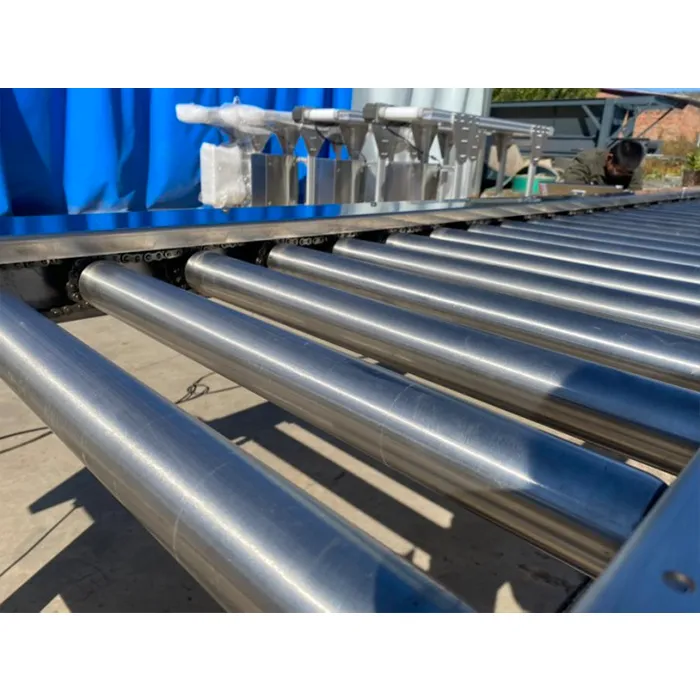
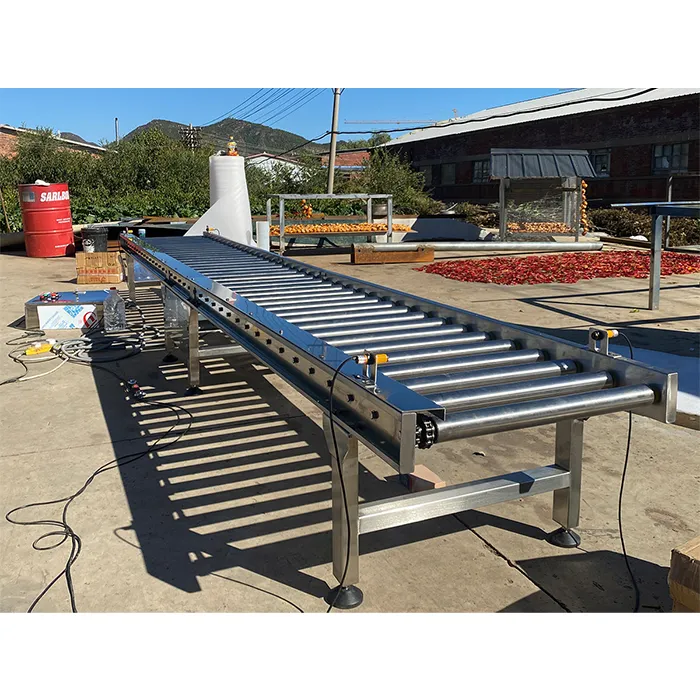
SHUNNAI Powered Roller Conveyor is designed for automated transportation of cartons, totes, pallets, and other compatible goods in warehouses, logistics centers, and industrial production lines. Available with chain, timing-belt, or other suitable drive configurations, it can be customized with galvanized steel, stainless steel, plastic, or rubber-coated rollers to meet different load and operating requirements.
Motor-Driven Roller Transmission
Core Conveying Equipment for Heavy-Duty
Long-Distance Automated Production Lines
Core Conveying Equipment for Heavy-Duty
Long-Distance Automated Production Lines
A Powered Roller Conveyor uses motor-driven rollers to move cartons, totes, pallets, and other compatible goods without relying on manual pushing. Depending on the load and operating environment, the system can be configured with galvanized carbon steel, stainless steel, plastic, or rubber-coated rollers.
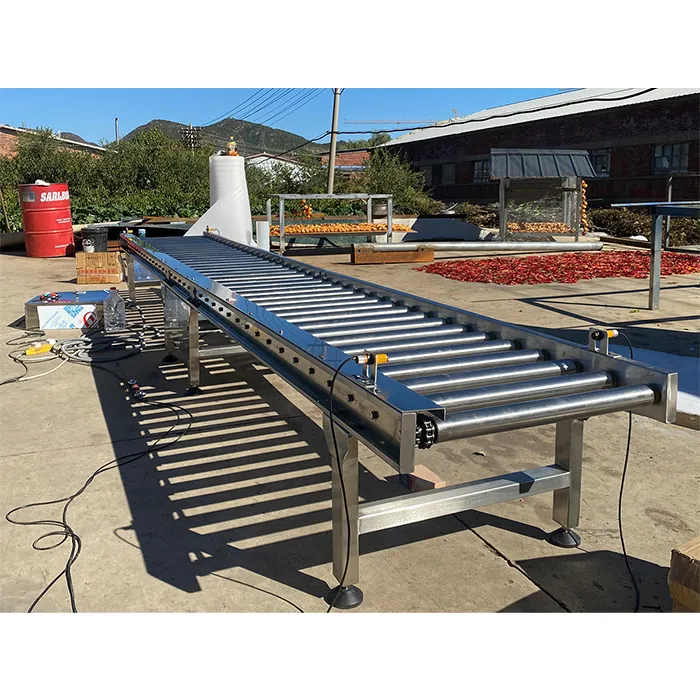
Drive options, roller diameter, roller spacing, frame dimensions, and electrical controls can be selected according to the products being conveyed and the required throughput. SHUNNAI provides configurable systems for warehousing, parcel handling, packaging, and manufacturing lines, with connection options for other conveying and sorting equipment.
Match the Drive to the Load
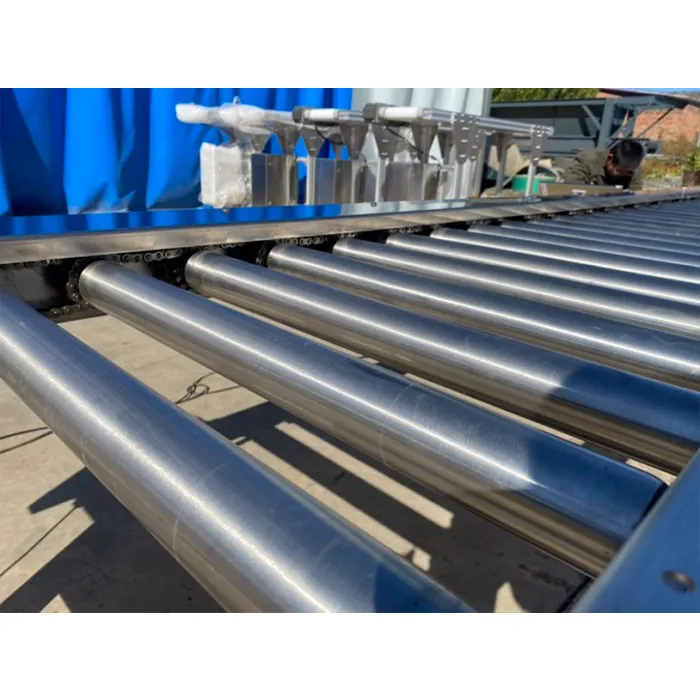
The transmission system determines how motor power reaches the rollers and affects load handling, noise, speed control, and maintenance. Selecting a drive method according to the application helps avoid unnecessary complexity and supports more consistent conveying performance.
Chain-driven rollers
Chain transmission is commonly considered for heavier loads, pallets, and industrial containers that require dependable torque transfer. The motor drives the rollers through chains and sprockets. Buyers should confirm the rated load, roller arrangement, chain protection, and maintenance access, particularly when the conveyor will operate for long shifts or handle frequent load changes.
Timing-belt transmission
Timing-belt-driven rollers can be suitable for applications where relatively smooth, quieter conveying is important, such as selected packaging and light-to-medium-duty handling lines. The final selection should consider the load, conveying speed, operating cycle, and required service life of the transmission components.
Gear-driven arrangements
Gear-based drive arrangements may be considered where the application requires a specific drive layout or coordinated movement. If products need to stop at defined positions or move between processing stations, buyers should also confirm the control method, sensors, stopping accuracy, and integration requirements rather than relying on the transmission type alone.
Check the Product Base and Roller Spacing
A roller conveyor works best when the goods have a suitable base for contact with the rollers. Cartons with flat bottoms, rigid totes, and compatible pallet loads are common candidates. Flexible packages, very small items, or products with uneven bases may need a different conveying surface or additional support.
Roller pitch should be selected in relation to the length and rigidity of the product base. As a practical design principle, the product should normally contact several rollers at the same time to maintain stable support. The exact spacing depends on the product dimensions, weight distribution, roller diameter, and required operating conditions.
Roller diameter and wall thickness also affect performance under load. A roller that is too small or insufficiently supported may deflect under concentrated loads, while an unsuitable surface can allow goods to slip or become damaged. For pallet or heavy-part applications, the design should consider the load per roller, load distribution, frame strength, and drive capacity together.
Select a Surface for the Working Environment
The roller surface should suit both the conveyed product and the conditions around the equipment. SHUNNAI offers several material options for different applications.
Galvanized carbon steel: A practical option for many dry indoor logistics and packaging environments. It can offer an economical balance of durability and wear resistance, but prolonged moisture exposure and cleaning conditions should be considered when assessing corrosion risk.
304 stainless steel: Worth considering for environments with frequent washing or moisture exposure, including selected food and beverage handling areas. Confirm the required material grade, cleaning chemicals, and any applicable hygiene documentation for the intended use.
Plastic rollers: May suit light-duty handling or applications where corrosion resistance and reduced roller weight are important. Their load capacity and temperature limits must be checked against the actual operating conditions.
Rubber-coated rollers: A coating can improve traction and provide a more protective contact surface for certain products. The coating material, hardness, wear resistance, and compatibility with the conveyed goods should be specified when surface protection or slip control is important.
Plan Stops, Buffers, and Transfers
In automated facilities, goods do not always travel continuously from the first conveyor to the last. Products may need to accumulate before packing, stop for scanning, transfer to another line, or wait for a downstream machine. These operating steps should be considered when designing the conveyor system.
A Powered Roller Conveyor can be configured as part of a larger handling system with suitable sensors, drive controls, transfer equipment, and sorting devices. Depending on the control design, the system may use separate conveying sections to manage product flow and reduce unnecessary movement when downstream equipment is not ready.
Before ordering, clarify whether goods should move continuously or stop at defined stations, whether multiple products may occupy one section, and whether accumulation is required. Also identify the desired start/stop frequency, emergency-stop arrangements, guarding requirements, and control signals needed to communicate with upstream and downstream equipment.
Applications Across Logistics and Manufacturing
Different industries place different demands on powered roller systems. The following applications illustrate common use cases, with the final configuration determined by product specifications and site conditions.
E-commerce and parcel distribution: Move cartons and compatible parcels between receiving, scanning, sorting, buffering, and dispatch areas. Roller pitch and transfer arrangements should suit the range of package sizes handled.
Food and beverage packaging: Convey compatible bottles, cases, and packaged products between filling and packing processes. Roller material and equipment construction should be selected according to moisture exposure, cleaning routines, and the applicable hygiene requirements.
Automotive and industrial assembly: Transfer heavy containers, fixtures, and compatible components between workstations. Load ratings, frame strength, drive torque, and any need for positioning or controlled stopping should be confirmed before installation.
Warehousing and distribution: Support carton and pallet movement, buffer zones, and connections to lifts or other material-handling equipment. The layout should account for traffic flow, operator access, and the maximum expected load.
Pharmaceutical and daily chemical packaging: Convey suitable boxes and finished packages between production stages. Buyers should confirm the required cleaning compatibility, materials documentation, and equipment controls for the intended environment.
Customer Feedback from Operating Sites
E-commerce distribution center in Zhejiang
“Our distribution center handles hundreds of thousands of parcels daily. We used belt conveyors before, and mis-tracking was a daily problem. After switching to SHUNNAI powered roller conveyors, chain transmission is very stable. Parcels run neatly, and sorting efficiency improved significantly. The rollers are galvanized – after nearly two years, no rust, and maintenance is simple.”
Beverage filling company in Guangdong
“This bottled water line requires daily washing. Carbon steel rollers rusted within half a year and contaminated bottles. SHUNNAI recommended 304 stainless steel rollers with timing belt transmission – no rust when washed, quiet operation. Bottles run smoothly from filling to packing without jamming.”
Auto parts plant in Shandong
“Engine blocks are heavy. Flat belts often slipped. SHUNNAI’s powered rollers are equipped with rubber-coated rollers and chain transmission – high friction, the blocks run very stably. After more than a year, the rollers have not deformed, and the chains have not loosened.”
Maintenance Access and Spare Parts
Maintenance planning affects equipment availability over the life of the conveyor. Before installation, check whether operators can safely access the drive motor, transmission components, rollers, sensors, and control cabinet for inspection and service.
Routine checks may include inspecting roller rotation, unusual noise, chain or timing-belt wear, fasteners, sensor alignment, and electrical connections. Remove accumulated debris where necessary and follow the manufacturer's instructions for lubrication, tension adjustment, and component replacement.
Modular construction can make it easier to service individual sections or replace selected components, depending on the equipment design. Buyers should ask for recommended spare parts, maintenance intervals, and replacement procedures. For a Powered Roller Conveyor installed in a high-throughput facility, planned maintenance and suitable spare-part availability can help reduce the impact of unexpected stoppages.
Quality Documents and Compliance
SHUNNAI identifies FDA, MA, CNAS, and ISO 9001 among its company credentials or relevant documentation. Buyers should verify the issuing organization, certificate holder, validity, and scope of each document before using it to support procurement or compliance decisions. These credentials should not be interpreted as automatic product-level approval for every conveyor model or configuration.
For projects serving food, pharmaceutical, or export markets, clarify whether material declarations, cleaning compatibility information, quality-management documentation, or other records are required. Electrical controls, emergency stops, guarding, and machinery safety should also be checked against the regulations applicable to the destination market and the complete installed system.
Frequently Asked Questions
Can the conveyor handle cartons of different sizes?
It may be possible if the roller spacing, conveyor width, and load rating suit the full range of carton dimensions. Share the smallest and largest carton sizes, weights, and base conditions so the design can be assessed for stable support.
How do I choose the right roller pitch?
Roller pitch should reflect the length and rigidity of the product base, its weight distribution, and the required conveying conditions. Products with short or flexible bases may need closer roller spacing or a different conveyor type. Confirm the design using the actual product dimensions.
Can powered rollers be used for accumulation?
Yes, if the conveyor and control system are designed for the intended accumulation method. The project should define whether products may contact one another, how each section starts and stops, and how downstream congestion is detected. Accumulation requirements can affect drive zoning, sensors, and control logic.
What information is needed for a quotation?
Provide the product or pallet dimensions, maximum weight, required throughput, conveying distance, roller material preference, operating environment, and layout drawing if available. Also specify any incline, transfer, sorting, stopping, or accumulation requirements.
Can it connect to an existing conveyor line?
A connection may be feasible if the conveying height, width, product flow, speed, and transfer arrangement are compatible. The supplier should also check electrical interfaces, sensors, and control signals when the new equipment must communicate with existing machinery.
Configure Your System with SHUNNAI
With conveyor manufacturing experience dating back to 2007, SHUNNAI provides conveying equipment configured around product characteristics, operating conditions, and production-line requirements. Choosing a suitable system involves more than selecting a roller material: the load, roller spacing, drive arrangement, control sequence, and connection points all affect how reliably goods move through the facility.
When requesting a proposal, share the goods being conveyed, their dimensions and weight, required throughput, conveying distance, working environment, and any stop, buffer, or sorting requirements. SHUNNAI can use this information to evaluate roller specifications, transmission options, frame dimensions, and integration details for your application.
Contact SHUNNAI to discuss your conveying requirements and request a configuration tailored to your production or logistics line.
Send Inquiry
Contact Info
-
Address
No.129 Qingfeng Road, Jizhou District, Tianjin City, China
-
Tel
-
Email
If you have any inquiry about a quotation or cooperation, please feel free to email or use the following inquiry form. Our sales representative will contact you within 24 hours.
News Recommendations



