





Cleated Conveyor Belt
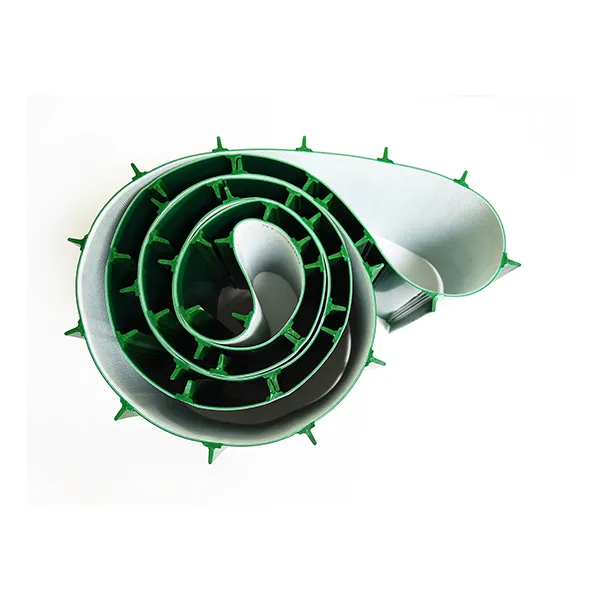
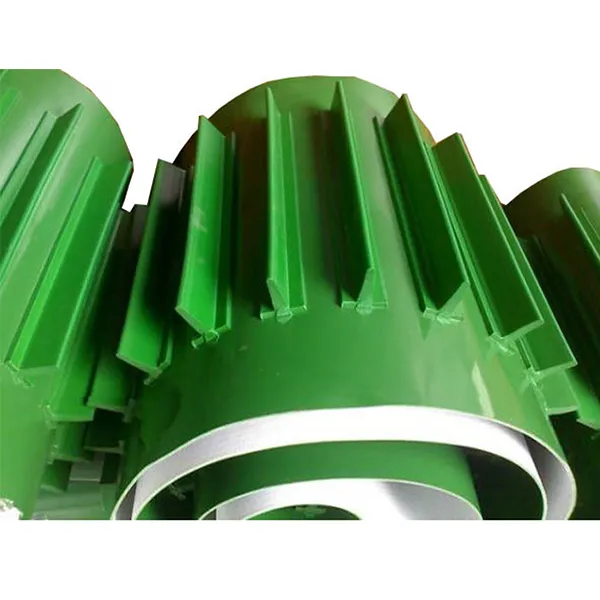
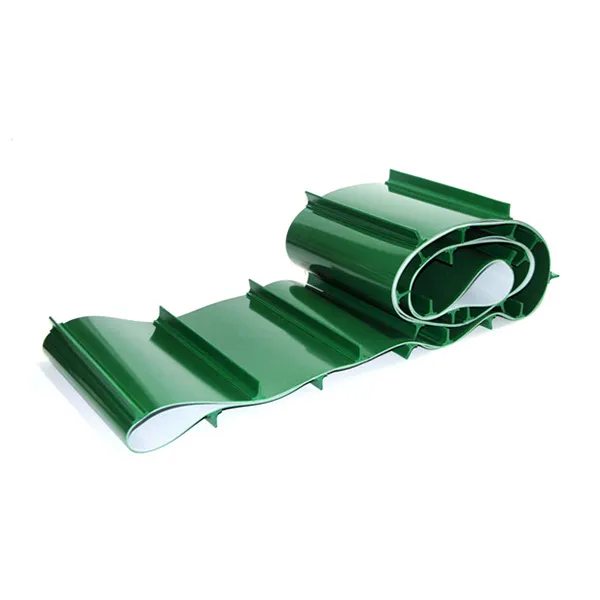
SHUNNAI Cleated Conveyor Belt is designed for inclined conveying, bulk material lifting, and product positioning in industrial production lines. With customizable cleat profiles, heights, spacing, and belt materials, it helps improve material retention, reduce rollback, and support stable conveying under different operating conditions. Rubber, PU, and PVC options are available for applications in mining, aggregate processing, grain handling, fertilizer production, and food ingredient transport.
No Material Jamming
No Backflow, Secure Connection Without Detachment
Steep-Angle Lifting Without Backflow or Spillage
No Backflow, Secure Connection Without Detachment
Steep-Angle Lifting Without Backflow or Spillage
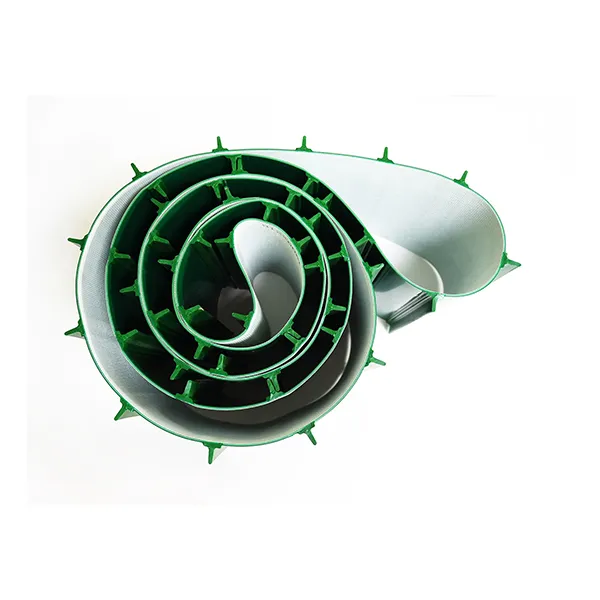
A cleated conveyor belt uses raised transverse profiles attached to the belt surface to help retain materials as they move along an inclined or horizontal conveying route. Cleat shape, height, pitch, and material influence how the belt handles different particle sizes, loads, and discharge conditions. SHUNNAI offers rubber, polyurethane (PU), and PVC options, with configurations customized to the equipment layout and material characteristics.
What Do the Cleats Need to Control?
The main purpose of a cleat is to improve how material stays in position during belt movement. On an inclined conveyor, the cleats provide support against gravity and help reduce material rollback. On a horizontal or slightly inclined line, they can separate products, maintain intervals, or assist with positioning during transfer.
The right configuration depends on the material and the conveying task. Loose powder behaves differently from coarse granules, irregular aggregates, or packaged products. A design suitable for grain may not provide enough support for heavy mineral particles, while an oversized cleat may interfere with small-product handling or discharge.
When selecting a cleated conveyor belt, buyers should therefore evaluate more than belt width and price. Material size, bulk density, moisture, loading method, conveyor angle, belt speed, and discharge arrangement all influence the required cleat design.
Choose a Cleat Profile for the Job
Different cleat profiles provide different levels of material support and belt flexibility. SHUNNAI can customize the profile according to the conveying conditions and the equipment design.
Straight Cleats for Firm Material Support
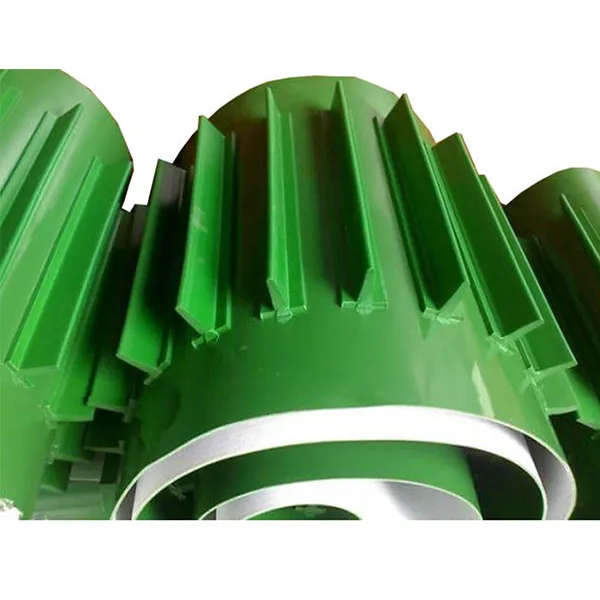
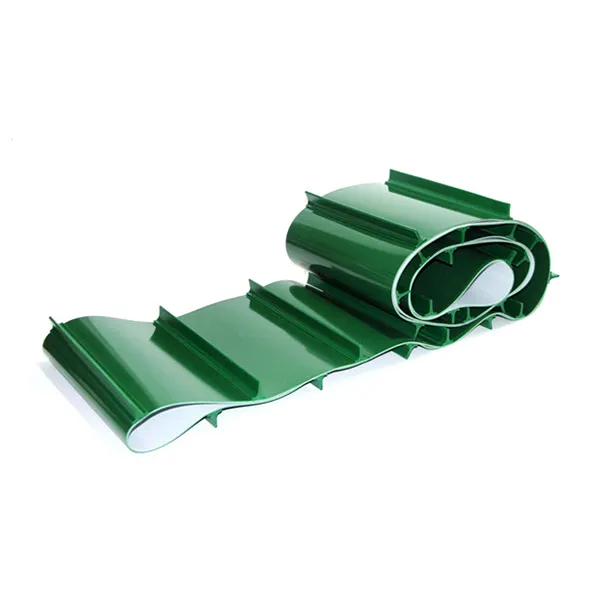
Straight cleats have a near-vertical working face that helps hold material in place. They may be suitable for coarse granules, larger particles, and applications that require a distinct barrier between successive loads. The cleat height and spacing should be matched to the material size and conveyor incline to prevent excessive accumulation or interference at discharge.
Angled Cleats for Inclined Conveying
Angled cleats can provide a more gradual material-support surface and may help material release at the discharge point. They are an option for fine particles, powders, sand, and wood chips when the conveyor operates at a moderate or steep incline. The final angle should be selected according to the material's flow behavior and the required discharge performance.
Reinforced T or TC Cleats for Demanding Cycles
T or TC-style cleats can be designed with a wider base or reinforced root to improve resistance to repeated bending and loading. These profiles may be considered for frequent start-stop cycles, continuous production, or existing conveyors where cleat damage has been a recurring maintenance concern. Actual durability depends on the belt material, cleat dimensions, bonding method, and operating conditions.
Low L-Shaped Cleats for Light Products
Low L-shaped cleats provide a smaller barrier for applications that need limited product separation or help preventing slight movement. They may suit lightweight products, small components, and assembly lines where a tall cleat is unnecessary. Buyers should also consider product stability and transfer clearance when specifying a low profile.
Set Cleat Height and Pitch Together
Cleat height determines how much material the profile can help retain, while cleat pitch affects the space available for each load. These two dimensions should be selected together rather than independently.
The following ranges can serve as preliminary reference points for material sizing. They are not universal design limits; the appropriate dimensions should be confirmed against the actual material, conveyor angle, belt speed, and required capacity.
| Material Size | Initial Cleat Height Reference | Key Selection Consideration |
|---|---|---|
| Fine powder or particles up to 5 mm | 20–40 mm | Check flow behavior, buildup, and discharge cleanliness. |
| Particles around 5–20 mm | 40–60 mm | Match the profile to the incline and loading volume. |
| Particles around 20–60 mm | 60–100 mm | Allow sufficient support without obstructing material transfer. |
| Particles larger than 60 mm | 100–150 mm | Evaluate impact loads, cleat strength, and available clearance. |
As an initial design reference, the source specifications suggest considering an effective cleat height of at least 1.5 times the maximum particle size. This ratio should be treated as a starting point, not a substitute for application testing or engineering review.
Cleat pitch also affects the amount of material carried in each section. The original reference ranges are 200–400 mm for fine powder, 400–600 mm for ordinary particles, and 600–1,000 mm for large or heavy materials. Actual pitch should be checked against loading volume, belt speed, cleat height, and the space needed for material to discharge cleanly.
Match the Belt Material to the Operating Environment
The belt and cleat materials must tolerate the material being conveyed as well as the surrounding operating conditions. SHUNNAI offers rubber, PU, and PVC constructions for different industrial requirements.
Rubber for Abrasive and Heavy Materials
Rubber is commonly considered for applications involving coal, ore, sand, gravel, and other heavy or abrasive materials. Its suitability depends on the required wear resistance, impact exposure, operating temperature, and belt construction. Buyers handling sharp or heavy particles should provide details of the loading point and expected impact conditions.
PU for Selected Hygiene-Sensitive Applications
Polyurethane may be suitable for food ingredient handling and other applications that require a smooth, cleanable belt surface, as well as specific oil-resistance or low-temperature properties. Food-contact suitability must be confirmed for the exact material grade and intended use. FDA-related credentials alone should not be treated as proof that every belt configuration is approved for every food application.
PVC for General Industrial Conveying
PVC can be an option for grain, feed, selected chemical powders, and other applications operating under compatible temperature and load conditions. It is often considered where a relatively lightweight belt and straightforward cleaning are important. Chemical compatibility should be checked before use with corrosive substances.
SHUNNAI has FDA-, MA-, and CNAS-related credentials and an ISO 9001 quality management system. Buyers should confirm the scope of each certification or credential and its relevance to the selected product, material grade, and intended application before placing an order.
Where These Belts Fit into a Production Line
A cleated conveyor belt can be used wherever material needs additional support during transport or elevation. Its final design depends on the material flow and the layout of the complete conveying system.
In mining and aggregate processing, reinforced profiles may help move ore and aggregate between processing stages. Grain elevators and feed mills use cleated belts to move corn, wheat, and similar materials toward storage or processing equipment. Fertilizer and chemical facilities may require cleat arrangements suited to granules or powders, while food-processing lines may use appropriate PU or PVC constructions to transfer ingredients between floors or production stages.
The conveyor layout matters as much as the industry. Buyers should check the incline, transition points, loading height, discharge location, and available installation space before finalizing the belt dimensions.
Troubleshooting Common Conveying Problems
Repeated conveying issues may indicate that the cleat configuration, belt material, or operating conditions need adjustment. Reviewing the symptom before ordering a replacement can help buyers specify a more suitable belt.
| Observed Problem | Possible Contributing Factor | What to Review |
|---|---|---|
| Material slides backward on an incline | Cleat height or profile may not provide sufficient support for the material and angle. | Check material size, moisture, incline, cleat shape, and spacing. |
| Material accumulates between cleats | Pitch, cleat geometry, or discharge conditions may not suit the material's flow behavior. | Review the discharge transition, particle size, and cleat spacing. |
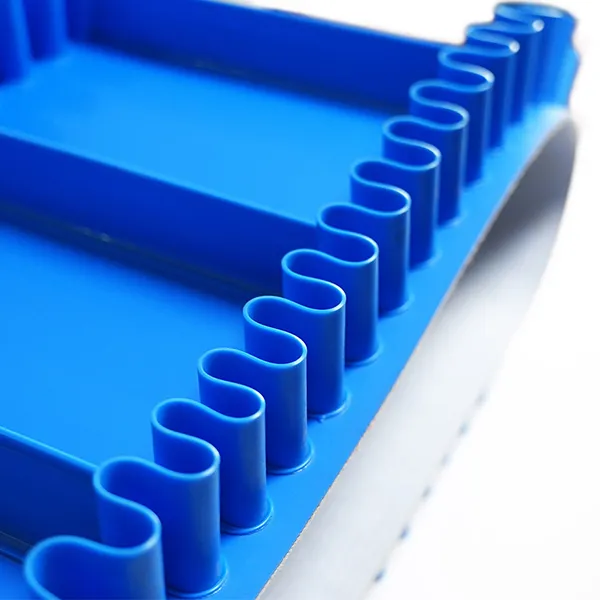
| Cleats crack or detach | Repeated bending, impact, unsuitable material, or inadequate bonding may contribute. | Inspect the cleat root, pulley diameter, loading point, and bonding process. |
| Products spill at transfer points | The cleat arrangement may not align with the loading or discharge geometry. | Check transfer height, belt speed, product stability, and chute clearance. |
| Belt flexing or tracking becomes unstable | The belt construction, pulley arrangement, or guide setup may be unsuitable. | Review belt thickness, cleat dimensions, pulley diameter, and conveyor alignment. |
These checks are a starting point for troubleshooting rather than a diagnosis of every failure. If the problem persists, provide photos of the installation and damaged area, together with the operating parameters, so the belt configuration can be reviewed more accurately.
How the Cleats Are Attached
Cleat bonding is an important part of belt reliability. SHUNNAI uses integral vulcanization or high-frequency heat fusion where appropriate for the selected belt material and construction. The process should be matched to the base belt and cleat materials to support a secure connection during normal conveying and repeated belt flexing.
Before production, buyers should confirm the cleat profile, root dimensions, height, spacing, belt thickness, and pulley arrangement. These details help assess whether the finished belt can pass through the conveyor's bending and transfer sections without excessive stress on the cleat attachment.
For demanding applications, it is also useful to discuss the expected load, start-stop frequency, operating temperature, and cleaning method. These factors can affect the material and bonding requirements, so the complete operating condition should be considered rather than relying on a single strength value.
Information to Prepare Before Requesting a Quote
To help SHUNNAI recommend a suitable configuration, buyers can provide the following information:
Material details: Material name, particle-size range, bulk density, moisture level, abrasiveness, and whether the material is sticky or oily.
Conveyor dimensions: Belt width and length, conveyor incline, pulley diameter, belt speed, and available installation space.
Cleat requirements: Preferred profile, height, pitch, cleat orientation, and whether side containment is required.
Operating conditions: Required throughput, loading method, start-stop frequency, operating temperature, cleaning method, and discharge arrangement.
Customization and delivery: Drawings or existing belt samples, required material, order quantity, destination market, and any applicable compliance requirements.
With these details, SHUNNAI can assess the requested dimensions and recommend a configuration for the specific conveying task instead of relying on a generic belt specification.
Frequently Asked Questions
Can a cleated belt replace a bucket elevator?
It may be an alternative for some bulk-material elevation systems, depending on the material, required capacity, vertical height, available footprint, and transfer layout. The complete conveying route should be evaluated before deciding whether a cleated belt can replace existing equipment.
Can cleat height and spacing be made to order?
Yes. SHUNNAI can customize cleat height, pitch, shape, belt width, and related dimensions according to the application requirements and available equipment drawings. The final combination should be checked against the material size and operating conditions.
Which cleat profile is best for powder?
There is no single profile for every powder. Flowability, moisture, particle size, conveyor incline, and discharge requirements all affect the choice. Angled cleats may be suitable in some applications, but the configuration should be confirmed against actual material behavior.
What information is needed to select a belt for a steep incline?
Provide the incline angle, vertical lift, material type and particle size, required throughput, belt speed, available pulley diameter, and discharge layout. These details help determine the cleat profile, height, pitch, and belt material.
How can cleat detachment be reduced?
The bonding process must suit the belt and cleat materials. Cleat dimensions, pulley diameter, impact loading, belt flexing, and operating temperature should also be reviewed. Correct material and process selection can help reduce the risk, although service life depends on actual operating conditions.
Discuss Your Belt Requirements with SHUNNAI
SHUNNAI provides customized conveyor belt solutions based on material characteristics, conveyor layout, and production requirements. Whether you need to improve material retention, reduce rollback, adjust product spacing, or replace a belt with recurring cleat damage, our team can review your application details and discuss suitable profile, material, and dimensional options.
Contact SHUNNAI with your belt dimensions, material information, conveyor angle, and equipment drawings to request a tailored recommendation and quotation.
Send Inquiry
Contact Info
-
Address
No.129 Qingfeng Road, Jizhou District, Tianjin City, China
-
Tel
-
Email
If you have any inquiry about a quotation or cooperation, please feel free to email or use the following inquiry form. Our sales representative will contact you within 24 hours.
News Recommendations



