





Corrugated Sidewall Conveyor Belt
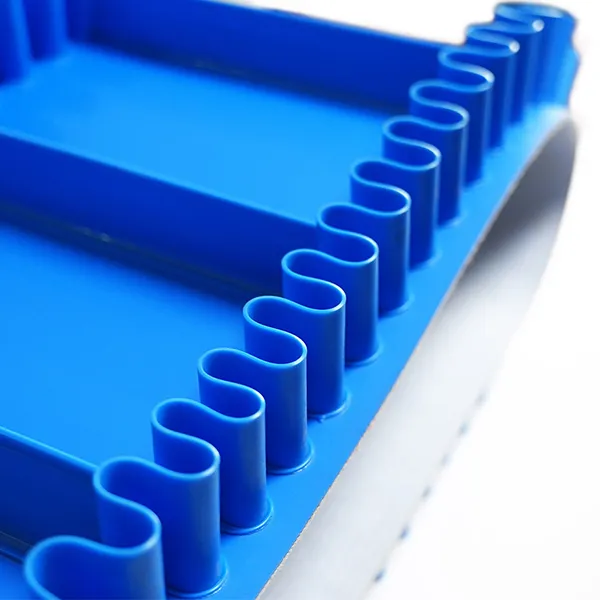
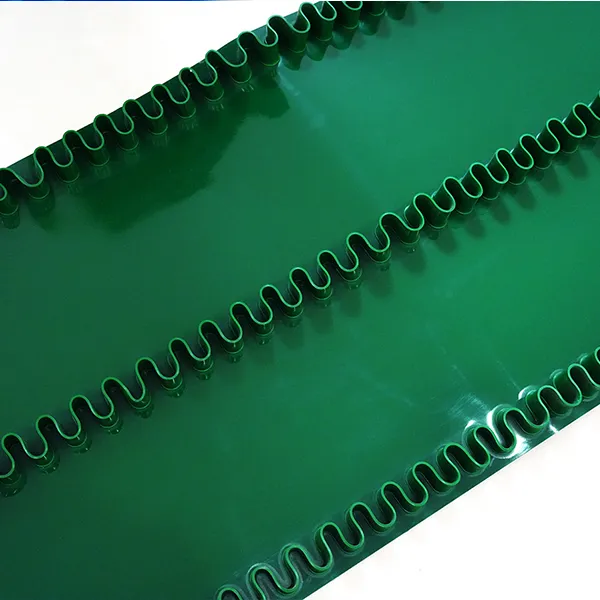
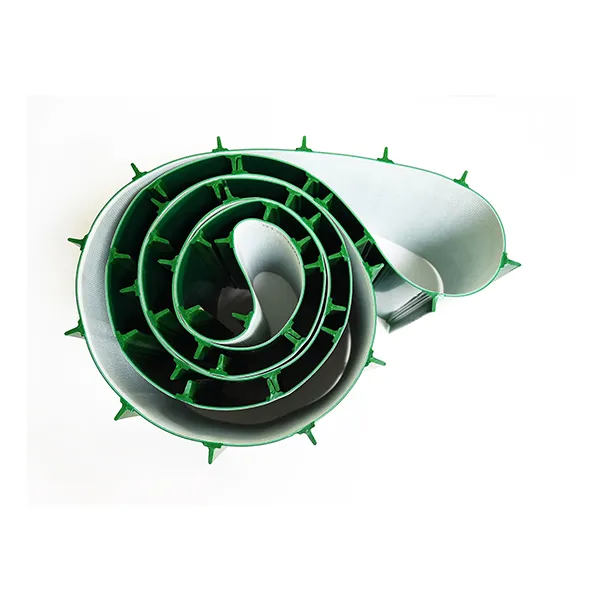
SHUNNAI Corrugated Sidewall Conveyor Belt is designed for steep-angle bulk material conveying where space efficiency and reliable material retention are important. Its integrated structure combines a base belt, flexible corrugated sidewalls, and transverse cleats to help reduce side spillage and material rollback during elevation. Available with suitable PU, PVC, or rubber components, it can be customized for applications involving grain, fertilizer, food ingredients, mining materials, and aggregates.
Flexible Sidewall Material Retention
Steep-Angle Lifting Without Side Leakage
Mobile Pocket for Bulk Material Conveying
Steep-Angle Lifting Without Side Leakage
Mobile Pocket for Bulk Material Conveying
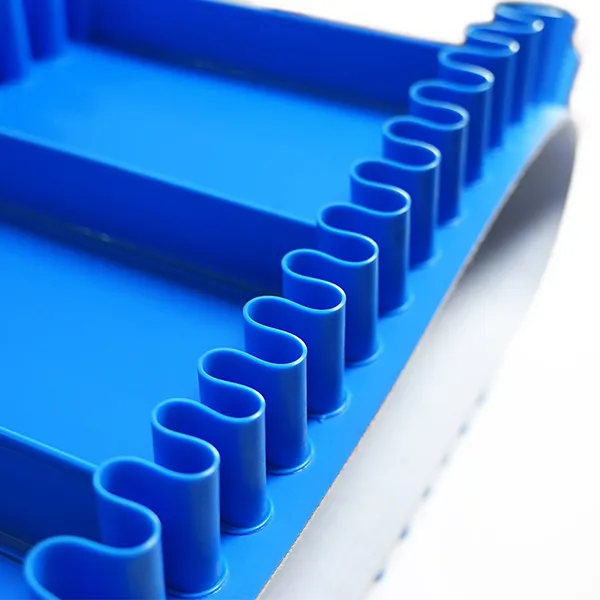
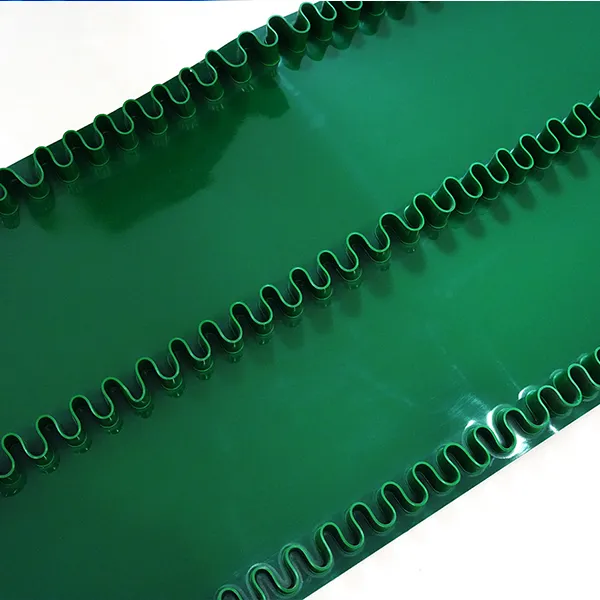
A Corrugated Sidewall Conveyor Belt is designed to transport bulk materials at steep inclines where a conventional flat belt may allow material to slide backward or spill over the edges. Its main components include a base belt, corrugated sidewalls, and transverse cleats. The base belt supports the load, the sidewalls help contain material laterally, and the cleats divide the conveying surface into sections that support material during elevation.
By combining these components, SHUNNAI helps equipment manufacturers and industrial buyers design compact lifting systems for applications involving grain, fertilizer, aggregates, food ingredients, and other bulk materials. Depending on the material, temperature, loading conditions, and equipment design, the belt can be configured with suitable PU, PVC, or rubber components.
How the Three Components Work Together
Base Belt
The base belt carries the material and withstands the longitudinal forces generated during operation. Its width, tensile properties, flexibility, and compatibility with the pulley arrangement must match the conveyor design and expected load.
Corrugated Sidewalls
The sidewalls form flexible barriers along both edges of the belt, helping prevent material from spilling sideways. Their folded structure allows the sidewalls to accommodate bending as the belt travels around compatible pulleys and transition sections. Correct sidewall dimensions and bonding quality are important for long-term performance.
Transverse Cleats
Cleats are attached across the belt surface to support the material as it moves uphill. Together with the sidewalls, they create material-retaining sections. Cleat height, shape, and spacing should be selected according to particle size, bulk density, incline, and required throughput.
The performance of a Corrugated Sidewall Conveyor Belt depends on the complete assembly rather than any single component. The base belt, sidewalls, cleats, pulley diameters, and loading arrangement must work together to maintain stable conveying.
Choosing the Right Incline and Layout
One of the main reasons to select a sidewall belt is to raise bulk materials where floor space is limited. Depending on the material and belt configuration, sidewall systems can be designed for steep-angle conveying, including applications approaching vertical lifting. However, the achievable incline is not the same for every material or cleat arrangement.
Fine powders, free-flowing granules, irregular aggregates, and damp materials behave differently during elevation. Material may roll backward, accumulate against cleats, or spill if the sidewall height, cleat spacing, loading rate, or incline is unsuitable. SHUNNAI therefore recommends evaluating the actual material and operating conditions before confirming the belt configuration.
The conveyor layout also matters. Head and tail pulley diameters, transition lengths, belt tension, and the available space for loading and discharge affect belt flexibility and component life. For routes with multiple pulleys or changes in direction, the belt path should be reviewed to ensure that the sidewalls and cleats can pass through the transitions without interference.
Material Options for Different Industries
PU for Selected Food Applications
Polyurethane (PU) components may be suitable for certain food ingredient and clean-processing applications where flexibility, wear properties, and resistance to water or oil are important. Buyers should confirm the exact material grade, temperature range, cleaning chemicals, and applicable food-contact documentation before specifying the belt for direct food contact.
PVC for General Bulk Conveying
Polyvinyl chloride (PVC) can be considered for selected room-temperature applications involving grain, feed, powders, and compatible chemical materials. Chemical compatibility must be checked against the actual substance, concentration, temperature, and exposure time rather than assumed from a general acid- or alkali-resistance claim.
Rubber for Heavy-Duty Materials
Rubber belts and sidewalls may be appropriate for applications involving abrasive or impact-prone materials, including certain mining, aggregate, and building-material handling lines. The rubber compound, belt strength, and sidewall construction should be matched to the material size, drop height, load, and working environment.
When selecting a Corrugated Sidewall Conveyor Belt, buyers should evaluate the base belt and attached components as a compatible system. The material used for the belt, sidewalls, and cleats must suit the working conditions and the selected bonding process.
Where Sidewall Belts Are Used
Mining and Aggregate Handling
Sidewall belts can lift suitable ores, sand, gravel, and crushed materials between processing stages where a steep conveying route helps reduce floor-space requirements. Abrasion, impact at the loading point, particle size, and material drop height should be considered during design.
Grain Storage and Feed Production
Grain elevators and feed mills may use sidewall systems to move corn, wheat, and other bulk ingredients to elevated storage or processing equipment. Sidewall height and cleat spacing should suit the grain size and required feed rate while limiting spillage during elevation.
Fertilizer and Chemical Processing
Fertilizer granules and compatible chemical materials can be conveyed using a belt configured for the relevant chemical and mechanical conditions. Buyers should verify chemical resistance and inspect the belt and bonded components periodically for wear or deterioration.
Food Ingredient Handling
Flour, sugar, and other compatible ingredients may require enclosed material retention during transfer between floors or processing stations. The selected belt material, cleaning method, and finished-product compliance documentation should meet the requirements of the specific facility.
Customer Applications
National Grain Reserve, Hebei
“Corn entering the silo needs to be lifted from the ground to a 10-meter-high silo top. We previously used a bucket elevator with high breakage, then switched to a steep-angle sidewall belt. SHUNNAI’s corrugated sidewalls have been installed for nearly two years – no cracking around pulleys, and not a single corn kernel has leaked from the sides. We used to sweep the floor daily; now almost no attention is needed.”
Food Ingredient Company, Guangdong
“We convey flour and sugar powder from the first floor to the second-floor mixer. Ordinary belts always leaked powder from the sides, leaving a white layer on the workshop floor. After switching to SHUNNAI food-grade PU sidewall belts, the powder is locked tightly by the sidewalls – the workshop is much cleaner. The PU material is water-resistant; a weekly rinse keeps it mold-free.”
Fertilizer Plant, Shandong
“Urea granules are highly corrosive. The old rubber sidewalls aged and cracked within six months. SHUNNAI recommended corrosion-resistant PVC sidewalls – after more than a year they are still intact, with no side leakage. The cleats and sidewalls are firmly welded – no detachment. Maintenance work is much easier.”
What Determines Belt Capacity?
A sidewall belt's conveying capacity cannot be determined from belt width alone. The volume of material carried in each section and the number of sections passing a point per unit of time both influence throughput. Material characteristics and the conveyor's incline also affect how much can be transported reliably.
Material properties: Particle size, bulk density, moisture content, flowability, and abrasiveness influence loading behavior and the risk of spillage or rollback.
Sidewall and cleat dimensions: Sidewall height controls lateral containment, while cleat height and spacing affect the amount of material each section can support. Dimensions should be chosen together rather than independently.
Belt width and speed: These parameters influence the available conveying area and the rate at which material moves through the system. Higher speed is not automatically the best way to increase output, since loading stability and discharge conditions must also be considered.
Incline and discharge: A steeper route changes material-retention requirements. The belt must also release material effectively at the discharge point without excessive carryback or accumulation.
For a Corrugated Sidewall Conveyor Belt quotation, SHUNNAI recommends providing the required throughput, conveying height, horizontal distance, incline, and material details. These inputs help the technical team evaluate a suitable belt width, sidewall height, cleat arrangement, and drive configuration in coordination with the conveyor equipment designer.
Installation and Maintenance Checks
Before installation, verify the belt direction, pulley arrangement, loading position, and discharge layout. Check that the sidewalls and cleats have adequate clearance throughout the conveyor path and do not interfere with the frame, rollers, or surrounding equipment.
During commissioning, begin with a controlled test run and check belt tracking, material distribution, cleat loading, discharge behavior, and any unusual rubbing or vibration. Increase the load gradually while monitoring whether material is retained properly at the intended incline.
Routine inspection should focus on sidewall cracking, separation at bonded edges, cleat damage, surface wear, and material buildup. Pay particular attention to loading and transition areas, where impact or bending stress may be higher. Cleaning and maintenance intervals should reflect the conveyed material and operating environment.
Hot vulcanization or high-frequency welding may be used for suitable belt and component combinations. The correct process depends on material compatibility and belt construction. The bonding method should be confirmed before manufacture or repair instead of treating the two processes as interchangeable for every belt type.
Frequently Asked Questions
Can this belt replace a bucket elevator?
In some applications, a sidewall belt system can provide an alternative for steep-angle bulk lifting. Whether it can replace a bucket elevator depends on the required capacity, lifting height, material properties, footprint, loading and discharge arrangement, and maintenance requirements. A system-level comparison is recommended before making a decision.
How high should the sidewalls be?
The required sidewall height depends on material volume, particle size, cleat geometry, belt width, and incline. Buyers should provide the material characteristics and target throughput so the sidewall and cleat dimensions can be evaluated together.
Can the belt convey wet or sticky materials?
Potentially, but moisture and adhesion can affect loading, material retention, and discharge. The material grade, cleat arrangement, cleaning method, and risk of buildup should be assessed before confirming suitability.
What causes sidewall or cleat separation?
Possible causes include incompatible materials, unsuitable bonding parameters, excessive bending stress, impact loading, abrasion, or interference with conveyor components. Inspect the affected area and review the operating conditions to identify the cause before choosing a repair or replacement.
Can the belt dimensions and cleat spacing be customized?
Customization may be available according to the conveyor design and manufacturing requirements. Provide a drawing or specification showing belt width, conveying route, sidewall height, cleat shape and spacing, pulley details, and required throughput for evaluation.
SHUNNAI Custom Belt Support
Since 2007, Tianjin Shunnai Conveyor Belt Manufacturing Co., Ltd. has supplied conveyor belts and accessories for industrial conveying projects. SHUNNAI can assess material characteristics, conveying height, incline, required throughput, and equipment layout to help determine an appropriate sidewall belt configuration.
SHUNNAI maintains an ISO 9001 quality management system and has FDA-, MA-, and CNAS-related credentials. Certification and compliance documents should be checked for their exact scope and applicability to the selected product. For food-processing projects, buyers should confirm the requirements for the specific material grade and intended contact conditions.
If your conveying project requires steep-angle lifting, reduced side spillage, or a more compact material-handling layout, share your equipment drawing, material specifications, conveying height, incline, and target throughput with SHUNNAI. These details help the team evaluate the base belt, sidewall profile, cleat arrangement, and suitable joining process.
Contact SHUNNAI to discuss customized belt dimensions, material options, technical requirements, and a quotation for your application.
Send Inquiry
Contact Info
-
Address
No.129 Qingfeng Road, Jizhou District, Tianjin City, China
-
Tel
-
Email
If you have any inquiry about a quotation or cooperation, please feel free to email or use the following inquiry form. Our sales representative will contact you within 24 hours.
Related Products
News Recommendations



