





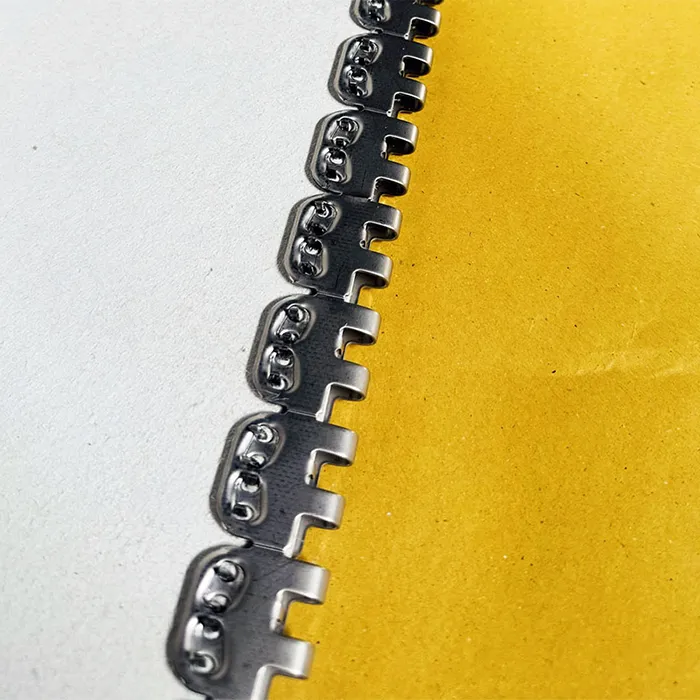
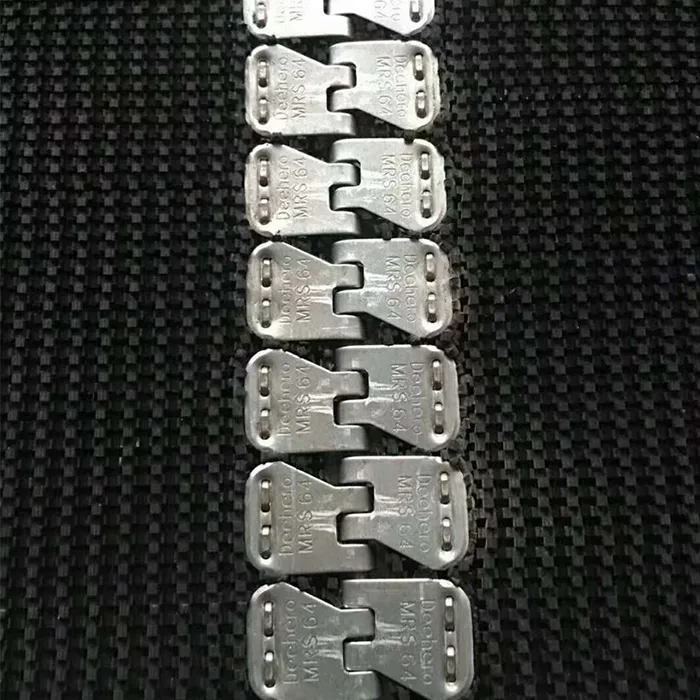
Conveyor Belt Alligator Fastener
SHUNNAI provides metal mechanical splicing solutions for conveyor systems that require efficient belt maintenance and reduced repair delays. Featuring a combination of a metal fastener body, rivets, and locking components, Conveyor Belt Alligator Fasteners are designed to connect prepared belt ends without hot vulcanization equipment or adhesive curing. They can be considered for selected mining auxiliary conveyors, port material-handling lines, cement plants, and temporary belt repairs.
Quick Emergency Repair
High-Strength Connection
Repeatable Disassembly and Assembly
High-Strength Connection
Repeatable Disassembly and Assembly
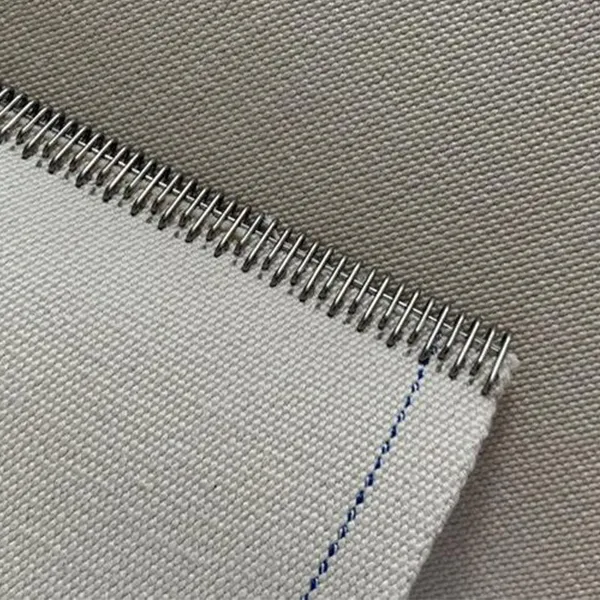
Conveyor Belt Alligator Fasteners are mechanical belt connectors made from metal components, including a fastener body, rivets, and clips. The fastener body has a hinged, alligator-style structure that holds the prepared belt ends together. With a dedicated installation tool, the rivets are driven into position to secure the fastener to the belt, while the clips help maintain the connection according to the selected design.
For maintenance teams, the main benefit is that installation does not require a hot vulcanizing machine or adhesive curing process. This makes the fasteners worth considering for certain belt repairs, auxiliary conveyors, and temporary production arrangements. However, selection must account for belt thickness, working tension, pulley diameter, conveyor speed, material characteristics, and the required service life. SHUNNAI helps buyers assess these conditions before choosing a suitable mechanical splice.
Understand the Fastener Structure
The connection depends on the fit between the fastener body, rivets, clips, and belt. Each component has a specific role, so selecting a fastener by appearance or nominal belt width alone may lead to an unsuitable connection.
Fastener Body
The metal body holds the belt ends in position and provides the main mechanical connection. Its dimensions and shape must match the intended belt thickness and fastener specification. A correctly fitted body helps distribute the connection forces across the fastening points.
Rivets
Rivets secure the fastener body to the belt. Their size, position, and installation quality affect how the connection holds during operation. Incorrect hole alignment, uneven riveting, or damage to the belt ends can compromise the splice.
Clips and Pin Components
Depending on the fastener design, clips or pin components help secure the joint. Buyers should confirm the exact component configuration supplied with the selected model and follow the manufacturer's installation instructions rather than assuming that every alligator fastener uses the same locking arrangement.
Choose the Right Metal and Finish
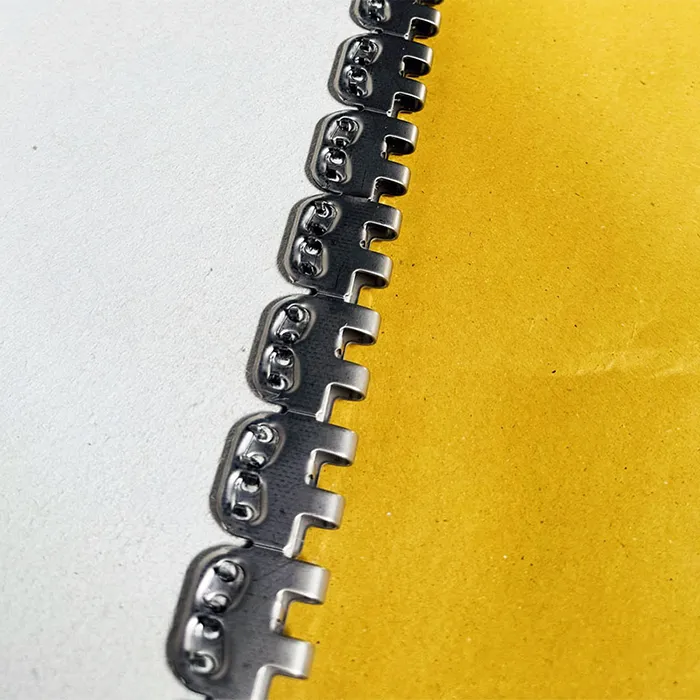
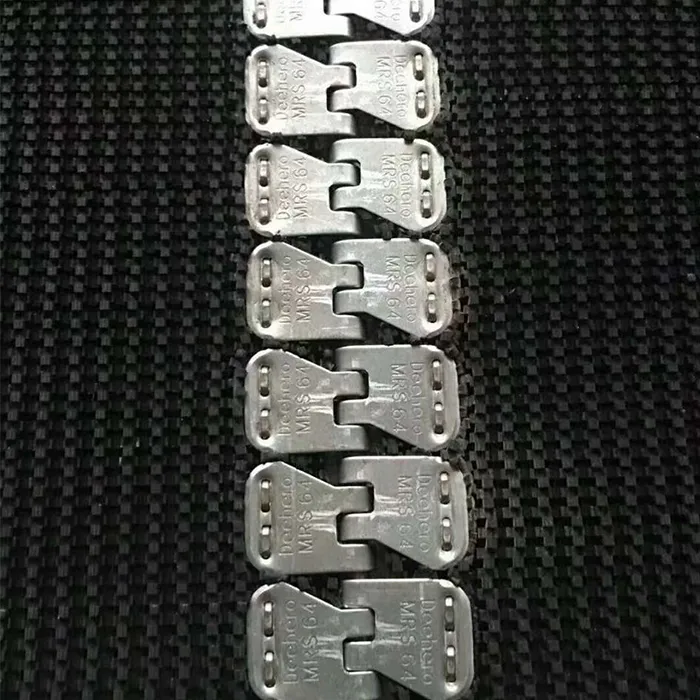
The operating environment is an important factor when choosing a metal fastener. Carbon steel can be a practical option for general industrial use, while stainless steel may be considered where moisture or corrosion exposure is a concern. The appropriate choice depends on the specific material grade, surface treatment, chemicals present, and maintenance conditions.
For outdoor conveying, ports, and humid production areas, confirm the corrosion resistance required for the full fastener assembly, including its small components. A stainless steel option should not automatically be assumed to resist every saltwater, chemical, or cleaning environment.
For food or pharmaceutical facilities, also check the requirements for metal contact, contamination control, cleaning, and product-surface protection. The use of a metal fastener does not by itself establish food-contact approval or suitability for a particular regulated process.
Check the Belt Before Installation
A suitable fastener must match the belt construction and the mechanical demands of the conveyor. Before ordering, maintenance and purchasing teams should confirm the following details.
Belt thickness and width: Provide the actual belt dimensions and, if possible, the belt manufacturer's specifications. The fastener must fit the belt ends without excessive gaps or forced alignment.
Belt material and condition: Check whether the belt is rubber, PVC, or another construction. Inspect the repair area for tearing, delamination, edge damage, and stretching before deciding whether a mechanical splice is appropriate.
Working tension and load: Identify the conveyor's normal load and operating tension. The fastener's rated application must be suitable for the actual duty; a connection intended for an auxiliary conveyor should not be assumed suitable for a heavily loaded main belt.
Pulley diameter and belt speed: Measure the smallest pulley and confirm the operating speed. The metal splice can create a raised or less flexible section that may interfere with small pulleys, belt cleaners, guides, or nearby components.
Conveyed material: Consider whether the conveyor handles bulk solids, packages, abrasive materials, or fine powders. The gaps and raised profile at a mechanical joint may be unsuitable for applications that require a highly sealed surface or careful protection of finished products.
Installation Quality Affects Service Life
Fast installation does not mean that preparation can be skipped. A correctly selected fastener still depends on accurate belt cutting, hole alignment, proper riveting, and a final inspection.
Step 1 — Prepare the belt ends. Align the belt ends and cut them square to the belt's running direction. Remove loose or damaged material from the connection area without reducing the belt dimensions beyond the specified requirements.
Step 2 — Align the fastener. Position the fastener body according to the manufacturer's specification. Use the correct hole pattern and tool for the selected fastener rather than estimating the rivet positions.
Step 3 — Install the rivets. Drive the rivets using the designated installation equipment and procedure. Uneven riveting, incorrect rivet size, or excessive force may damage the belt or leave the connection insecure.
Step 4 — Inspect and test. Check the body alignment, rivet seating, locking components, belt tracking, and clearance from adjacent conveyor parts. Start with an unloaded test and observe the joint through the operating cycle before gradually returning to normal service.
Installation requirements can vary by fastener design and belt construction. For safety, isolate the conveyor from its power source before repair, secure the belt against unexpected movement, and follow the applicable site lockout procedures. Do not return the equipment to service until the splice has been inspected and judged suitable for the intended operating conditions.
Plan for Maintenance and Belt Changes
Mechanical fasteners can be useful when a maintenance team needs to replace a belt section or restore an auxiliary line without arranging a vulcanizing service. The ability to open a compatible connection depends on the fastener design and the removal procedure.
Before treating the joint as reusable, confirm whether the specific model is designed for repeated disassembly. Some components may deform or become damaged during removal and need to be replaced. Do not assume that riveted components can simply be removed and reinstalled without affecting connection reliability.
For sites that maintain several conveyor lines, keeping a record of belt dimensions, fastener specifications, installation tools, and replacement components can simplify future repairs. Spare parts should match the installed fastener model; mixing components from different designs may prevent correct fit or locking.
Where Mechanical Fasteners May Be Used
Mining and aggregate handling: Mechanical splicing may be considered for selected auxiliary or repair applications where belt tension, material load, and operating conditions fall within the fastener's intended range. Main haulage belts require careful engineering review before any mechanical splice is selected.
Ports and bulk material terminals: Temporary conveying arrangements and selected belt replacement tasks may benefit from a splice that does not require vulcanizing equipment. Corrosion resistance, abrasive material exposure, and the belt's operating load should be assessed before choosing the fastener material.
Cement and building materials: Suitable auxiliary conveyors may use mechanical fasteners where reducing repair time is important. The fastener must be compatible with the belt, conveyed material, and any installed belt-cleaning equipment.
Temporary and emergency conveying: For short-term operations or urgent belt repairs, a mechanical connection may help restore service when the application permits its use. The repair should still be inspected and monitored, and the long-term connection method should be reviewed if the conveyor operates under demanding conditions.
Know When Another Splice Is Better
Conveyor Belt Alligator Fasteners provide a mechanical connection, but their performance is not equivalent to every properly engineered vulcanized splice. Metal components can protrude from the belt surface, and the joint may include small gaps. These characteristics limit use in some conveying systems.
Hot vulcanization or another engineered splice should be considered for high-tension, long-distance main conveyors and applications where the connection must meet demanding continuous-duty requirements. Additional review is also necessary for high-speed lines, small pulley diameters, steep inclines, systems with belt cleaners that may contact the fastener, fine powders requiring a sealed joint, or finished products that could be scratched by the splice.
Highly corrosive environments and processes with strict hygiene or contamination requirements also need a specific suitability assessment. Rather than choosing a fastener solely because it can be installed quickly, confirm the connection's strength, profile, material, and maintenance requirements against the conveyor's actual operating conditions.
Feedback from Industrial Applications
Iron Mine, Hebei
Equipment Supervisor Liu:
“The main belt suddenly tore, and the vulcanizing team could not arrive until the next day. We used SHUNNAI alligator fasteners for overnight emergency repair and restored transport in two hours. Although it was a temporary splice, it lasted more than half a month until scheduled maintenance. Truly effective for emergencies.”
Port Logistics Company, Guangdong
Maintenance Foreman Chen:
“Bulk cargo terminal belts often need partial replacement. Hot vulcanization takes too long. SHUNNAI alligator fasteners are quick to disassemble and assemble – just pull out the hinge pin, replace, and reinstall. Stainless steel does not rust, so it works fine by the sea. After nearly a year, the fastener body has not deformed.”
Cement Plant, Shandong
Section Chief Wang, Equipment:
“The auxiliary conveyor line has low tension, and hot vulcanization causes too much downtime. SHUNNAI recommended alligator fasteners, which we can install ourselves – the whole line was replaced in half a day. The strength is sufficient, and it has not loosened after half a year. Saved the cost of a vulcanizing technician and downtime loss.”
What to Include in a Purchase Inquiry
To help identify a compatible fastener, buyers should provide more than a general request for a belt connector. The following information allows SHUNNAI to assess the application more accurately.
Conveyor belt: Belt material, width, thickness, and available technical specifications.
Operating conditions: Typical load, working tension, conveyor speed, smallest pulley diameter, and conveying direction.
Fastener requirements: Preferred material or finish, required connection style, installation tools, and whether replacement components are needed.
Working environment: Indoor or outdoor use, moisture, abrasive material, chemicals, cleaning requirements, and any applicable safety or hygiene standards.
Maintenance purpose: Emergency repair, temporary connection, auxiliary-line installation, or planned belt replacement.
Photos of the existing belt, damaged joint, and conveyor pulley arrangement can also help clarify fit and clearance requirements. If the operating conditions exceed the fastener's intended application range, a different splice solution should be evaluated.
SHUNNAI Manufacturing and Support
Tianjin Shunnai Conveyor Belt Manufacturing Co., Ltd. has been active in conveyor belts and related accessories since 2007. SHUNNAI supports industrial buyers with product selection, fastener and tool matching, installation guidance, and application-based recommendations.
The company maintains ISO 9001 quality management certification and has FDA-, MA-, and CNAS-related credentials. Buyers should verify the scope and applicability of the relevant certifications and documentation for the specific product and intended application. Company-level credentials should not be interpreted as automatic certification of every fastener or its suitability for every industry.
For a quotation, provide your belt specifications, operating conditions, and repair requirements. SHUNNAI can then help assess whether a mechanical fastener is appropriate and identify the information needed to select a suitable model.
Frequently Asked Questions
How can I tell whether the Conveyor Belt Alligator Fasteners are compatible with my belt thickness?
Compare the actual belt thickness and construction with the selected fastener's specifications. If the belt is worn, layered, or damaged, provide measurements and photos so compatibility can be assessed before ordering.
Can these fasteners be used on a conveyor with a belt cleaner?
Not automatically. The metal profile may contact or interfere with a scraper or other cleaning device. Check the clearance and cleaner design, and confirm suitability before installation.
What causes a mechanical splice to loosen?
Possible causes include incorrect fastener selection, poor hole alignment, improper riveting, damaged belt material, excessive operating tension, or interference with conveyor components. Inspect the complete joint and correct the underlying cause before restarting the line.
Should I choose carbon steel or stainless steel?
Choose according to the operating environment, corrosion exposure, material requirements, and maintenance conditions. Confirm the exact grade and finish, especially for marine, chemical, or hygiene-sensitive applications.
What should I do if the belt is torn near the edge?
Inspect the full damaged area before selecting a splice. A fastener should not be installed over weak or badly damaged belt material. The belt may need to be trimmed back to sound material, or a different repair method may be required.
Contact SHUNNAI for Belt Splicing Support
Looking for a mechanical connection for conveyor maintenance, auxiliary lines, or a planned belt replacement? Contact SHUNNAI with your belt dimensions, working conditions, and application details. Our team can help you review fastener compatibility, material options, and installation requirements before you place an order.
Send Inquiry
Contact Info
-
Address
No.129 Qingfeng Road, Jizhou District, Tianjin City, China
-
Tel
-
Email
If you have any inquiry about a quotation or cooperation, please feel free to email or use the following inquiry form. Our sales representative will contact you within 24 hours.
News Recommendations



