Ore Dressing Conveyor Belt
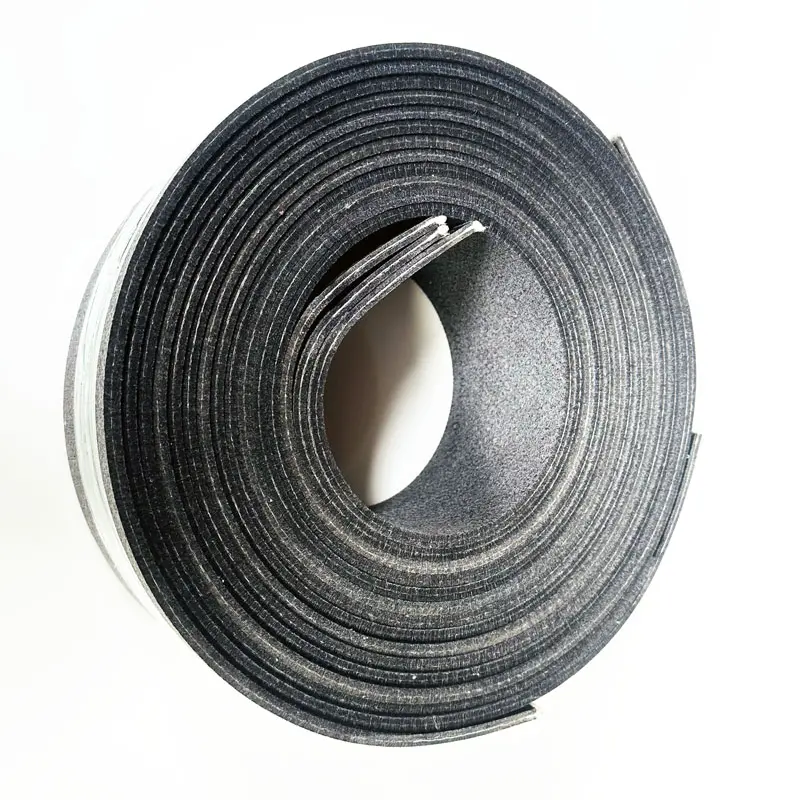
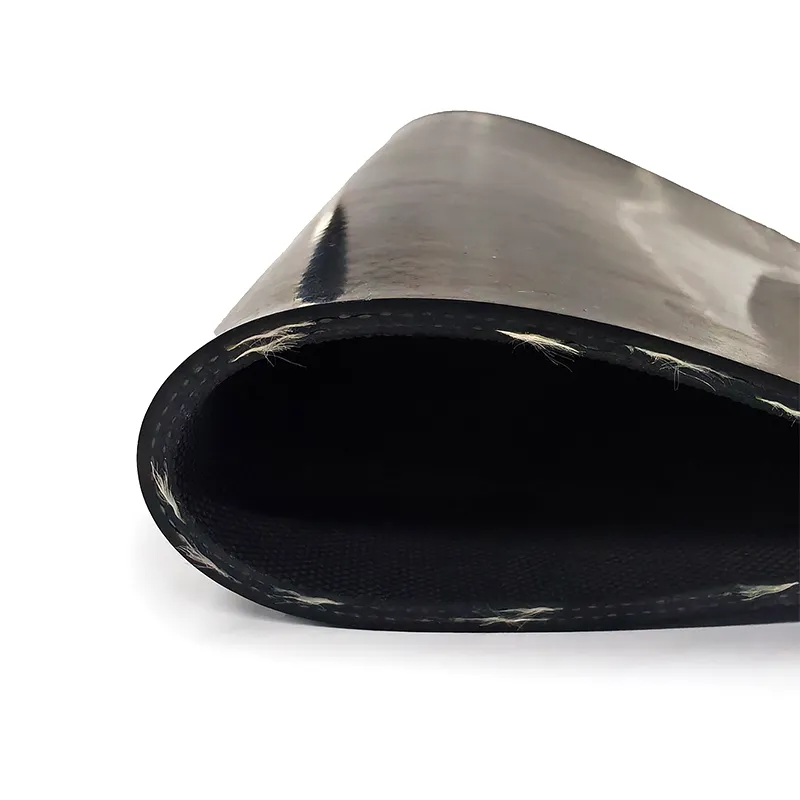
SHUNNAI provides Ore Dressing Conveyor Belt solutions for mining and mineral processing operations handling abrasive rocks, sharp-edged ores, and wet mineral materials. Belt selection depends on ore characteristics, conveying distance, impact loads, and site conditions. Buyers can choose from EP fabric, NN fabric, and steel cord constructions, with suitable cover compounds for different wear and moisture challenges.
Flame-Retardant and Anti-Static
Impact and Tear Resistant
Full Working Condition Adaptation for Underground and Surface Ore Dressing
Impact and Tear Resistant
Full Working Condition Adaptation for Underground and Surface Ore Dressing
The Ore Dressing Conveyor Belt product range is designed for mineral processing plants, coal mines, metal mines, open-pit mining operations, and other demanding bulk material transportation systems. Depending on operating conditions, available constructions include EP polyester fabric, NN nylon fabric, and steel cord carcasses, combined with wear-resistant rubber covers and application-specific compound options.
Mining conveyor belts must withstand more than continuous abrasion. Large ore lumps can create severe impact at loading points, sharp mineral edges can cut the belt cover, and long conveying distances place sustained tension on the carcass. Wet mineral processing may also expose belts to water, slurry, and corrosive substances. Underground coal mine applications require particular attention to flame-retardant and anti-static performance.
1. Safety Requirements for Mine Conveyors
For underground coal mines, flame-retardant and anti-static performance are important considerations when selecting conveyor belts. Belt friction, heat generation, and potential ignition sources must be managed as part of an overall mine safety system.
SHUNNAI can supply mining belt configurations designed for applicable flame-retardant and anti-static requirements. Depending on the product construction and intended use, buyers should confirm compliance with relevant standards, including MT/T 914 where applicable, as well as the required test reports and acceptance criteria.
Anti-static performance helps dissipate accumulated electrical charge, while flame-retardant compounds are designed to limit flame propagation under specified test conditions. These properties should be verified through documented testing rather than assumed from the belt material alone.
For surface mines and mineral processing plants, other selection priorities may include abrasion resistance, impact protection, weather resistance, and compatibility with the transported ore. The required combination depends on the specific conveyor location and operating environment.
2. Choose the Right Belt Carcass
The carcass determines much of a conveyor belt's tensile strength, elongation behavior, flexibility, and ability to accommodate loading conditions. Selecting the correct structure helps maintain stable operation across different mine layouts.
EP Polyester Fabric
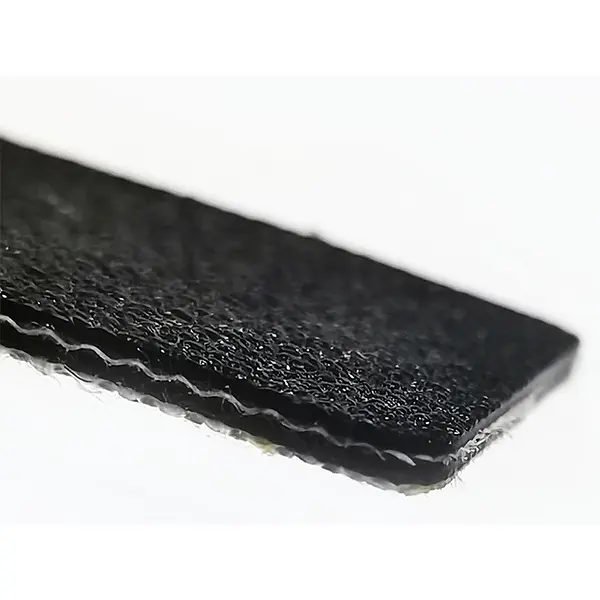
EP conveyor belts combine polyester warp yarns with nylon weft yarns. They generally offer low elongation under tension, good dimensional stability, and practical flexibility. This construction is suitable for many short- and medium-distance conveying applications in mineral processing plants and mine transfer systems.
NN Nylon Fabric
NN conveyor belts use nylon in both the warp and weft directions. Their flexibility and impact-handling characteristics can make them suitable for applications involving repeated loading and uneven material sizes. The final choice depends on required belt strength, troughing geometry, and operating tension.
Steel Cord Construction
Steel cord conveyor belts use parallel steel cords as the tensile reinforcement. They are designed for demanding conveying systems that require high tensile strength and low elongation, including long-distance transportation, high-capacity main haulage routes, and certain inclined shaft applications.
Steel cord construction is not automatically necessary for every mine. Belt selection should account for conveyor length, capacity, incline, starting and braking forces, pulley diameter, and the required safety factor. A properly engineered fabric belt may be more economical for shorter or less demanding conveying routes.
3. Match the Cover to Ore Conditions
The Ore Dressing Conveyor Belt is the first line of defense against abrasion, cutting, impact, moisture, and chemical exposure. Different mineral processing stages may therefore require different rubber compounds and cover thicknesses.
High-Abrasion Ore
Crushed rock, metal ore, and abrasive mineral particles can gradually wear down the belt cover. Wear-resistant rubber compounds are suitable for many continuous conveying applications where material repeatedly contacts the belt surface. Cover thickness should be selected according to ore abrasiveness, throughput, and expected service conditions.
Large and Sharp Ore Lumps
Heavy lumps falling from hoppers or crushers can puncture the cover or damage the carcass. A thicker top cover, an impact-resistant construction, and suitable loading-point protection can help manage these forces. Where sharp edges are common, cut resistance and tear resistance should be assessed alongside abrasion resistance.
Wet Slurry and Mineral Processing
Wet ore, mineral slurry, and washdown conditions can expose the belt to prolonged moisture and suspended particles. The appropriate belt should resist the actual working environment and maintain reliable bonding between its cover and carcass. Where acidic or alkaline substances are present, chemical compatibility must be confirmed before specifying a corrosion-resistant compound.
Outdoor Mining Conveyors
Open-pit mining and outdoor stockpiling systems may experience sunlight, temperature fluctuations, wind, and rain. Weather-resistant compounds can help reduce premature aging under these conditions. Cold-resistant formulations may also be considered for low-temperature operations, subject to the minimum operating temperature and belt flexibility requirements.
4. Solutions for Difficult Mineral Types
Some ores create unusual challenges that cannot be addressed by selecting a belt based on tensile strength alone. Particle shape, surface hardness, moisture, and chemical composition should all be considered.
Sheet-Like Mica Ore
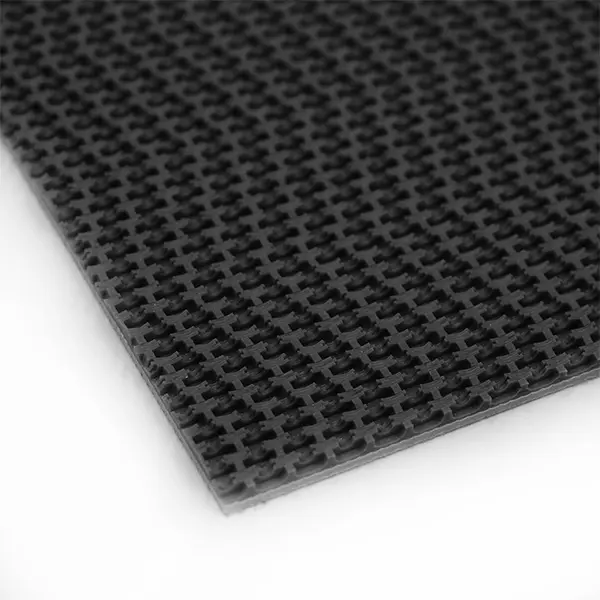
Mica-bearing materials can have thin, sharp edges that repeatedly cut and score the belt cover. A suitable cut-resistant rubber compound and appropriate cover thickness can help reduce surface damage. Surface patterns should be selected carefully to balance material grip, cleaning, and the risk of fine mineral particles accumulating in the pattern.
Gold Dredging and Wet Mineral Transport
Gold dredging and other wet mineral recovery operations may involve continuous exposure to water, sediment, and abrasive slurry. Suitable belt constructions should resist moisture penetration and maintain carcass-to-cover adhesion. Pulley alignment, drainage, belt tracking, and splice integrity are also important for reliable operation.
Sulfur-Bearing or Chemically Aggressive Ores
Some ores and processing fluids may contain acidic, alkaline, or other chemically aggressive components. Chemical-resistant rubber should be selected according to the actual concentration, temperature, and exposure duration. General acid- or alkali-resistant descriptions are not sufficient to establish compatibility with every mineral slurry.
5. Field Feedback from Mining Operations
Coal Mine in Shanxi
Equipment Section Chief Wang reported:
"Our main inclined shaft has a long transport distance and heavy load. The old canvas belt kept stretching and mis-tracking. After switching to SHUNNAI steel cord flame-retardant belt, it ran for more than two years without tension adjustment. Flame-retardant and anti-static tests passed every sampling inspection. Coal lumps did not damage it either—the carcass is very solid."
Mica Mine in Jiangxi
Production Manager Liu reported:
"Mica sheets are too sharp. Ordinary belts were cut all over within two or three months. The high cut-resistant formulation recommended by SHUNNAI has been used for more than half a year. The surface has only minor scratches, with no tearing. Fine powder does not accumulate on the belt surface either, saving a lot of manual cleaning."
Placer Gold Mine in Heilongjiang
Maintenance Worker Zhang reported:
"The gold dredge has a lot of water and mud. Belts soaked in water easily delaminate. SHUNNAI's water-resistant conveyor belt has been used for over a year. The splice has not opened, and the canvas layers have not deteriorated. Slurry does not cause slipping either, and gold recovery efficiency is stable."
These customer reports illustrate the importance of matching belt construction to actual mining conditions. Service life and operating results vary with installation quality, maintenance, material characteristics, and equipment configuration.
6. Inspection Points Before Installation
Proper installation and commissioning are essential for achieving the expected performance of an Ore Dressing Conveyor Belt. Before starting the line, buyers and maintenance teams should review the following items.
| Inspection Item | What to Check |
|---|---|
| Belt strength | Confirm the selected strength rating matches conveying tension, capacity, distance, and starting loads. |
| Loading points | Check drop height, chute alignment, impact protection, and the distribution of incoming ore. |
| Idlers and pulleys | Inspect alignment, rotation, surface condition, and compatibility with the specified belt construction. |
| Belt tracking | Check the belt path, loading symmetry, and potential causes of edge contact or mistracking. |
| Splice condition | Verify splice quality, dimensions, curing records where applicable, and compatibility with operating loads. |
| Safety requirements | Confirm applicable flame-retardant, anti-static, and other required test documentation. |
| Operating environment | Review temperature, moisture, sunlight, slurry exposure, and potential chemical contact. |
| Maintenance access | Ensure inspection points, cleaning equipment, and repair access are available along the conveyor route. |
These checks help identify installation and operating issues before they lead to excessive wear, mistracking, splice damage, or unplanned downtime.
7. Quality Documentation and Customization
SHUNNAI integrates conveyor belt development, production, and sales to support mining and mineral processing customers with different performance requirements. Customized options can include carcass type, tensile strength, cover thickness, rubber compound, belt dimensions, and splice method.
For mining projects, buyers should provide the ore type, particle size, maximum lump size, conveying distance, belt speed, throughput, incline, loading height, and working environment. For underground coal mine applications, the required safety standards and documentation should be identified before production.
SHUNNAI's quality management credentials include ISO 9001. The company also references FDA, MA, and CNAS-related qualifications; buyers should verify the certificate holder, validity, and applicable scope. These credentials should not be interpreted as proof that every mining conveyor belt carries every listed certification.
Depending on the product and order requirements, buyers can request relevant technical specifications, inspection records, test reports, and supporting documentation. Applicable requirements may include MT/T 914, GB/T 7984, or other standards relevant to the intended belt type and application. The exact standard and edition should be confirmed against the project specification and current regulations.
Frequently Asked Questions
1. How do I determine the required tensile strength of a mining conveyor belt?
The required strength depends on conveying distance, material throughput, conveyor incline, belt mass, operating tension, starting and braking forces, and system design. Steel cord or fabric carcass options should be evaluated using the conveyor's engineering calculations rather than distance alone.
2. Can one belt type handle both dry ore and wet slurry?
Some belt constructions can operate under both conditions, but suitability depends on the ore's abrasiveness, water exposure, chemical composition, and the required cleaning process. For mixed operating conditions, buyers should assess both cover wear resistance and resistance to moisture or chemical exposure.
3. What causes a mining conveyor belt to mistrack under heavy loads?
Common causes include uneven material loading, misaligned idlers or pulleys, incorrect belt tension, accumulated material, and structural alignment problems. Belt construction is only one factor; the conveyor system should be inspected to identify the actual cause.
4. Is a steel cord belt always better than an EP or NN belt?
No. Steel cord belts are suitable for applications requiring high tensile strength and low elongation. EP and NN fabric belts can be more practical for many shorter or less demanding conveying systems. The correct choice depends on the conveyor design, operating loads, maintenance requirements, and total ownership cost.
5. What information should be provided when ordering a replacement belt?
Provide the existing belt markings, carcass type, strength rating, width, length, cover thickness, splice details, and operating conditions. Photographs of the belt label and installation can help, but critical dimensions and technical specifications should be verified before production.
6. How should buyers verify flame-retardant and anti-static performance?
Request the applicable test reports and compliance documentation for the specific belt construction. Confirm that the standard, test method, product identification, and acceptance criteria match the intended underground mining application. General company certificates alone do not establish compliance for a particular belt.
Contact SHUNNAI
Looking for a conveyor belt for coal transportation, metal ore processing, mica mining, or wet mineral recovery?
Contact Tianjin Shunnai Conveyor Belt Manufacturing Co., Ltd. with your ore characteristics, conveying distance, required capacity, belt dimensions, and operating environment. SHUNNAI can help evaluate suitable carcass structures, cover compounds, and splice options for your mining conveyor system.
Share your project requirements to discuss a conveyor belt solution tailored to your operating conditions.
Send Inquiry
Contact Info
-
Address
No.129 Qingfeng Road, Jizhou District, Tianjin City, China
-
Tel
-
Email
If you have any inquiry about a quotation or cooperation, please feel free to email or use the following inquiry form. Our sales representative will contact you within 24 hours.
News Recommendations