180° Curved Conveyor
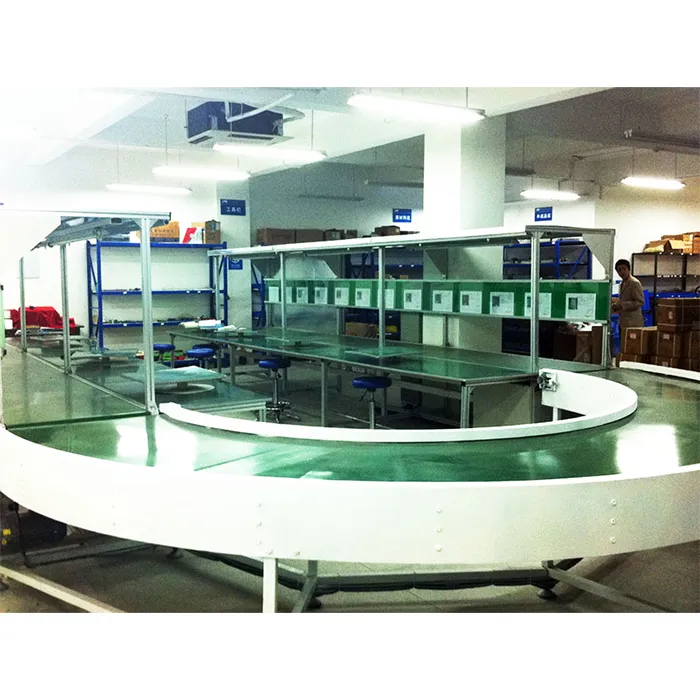
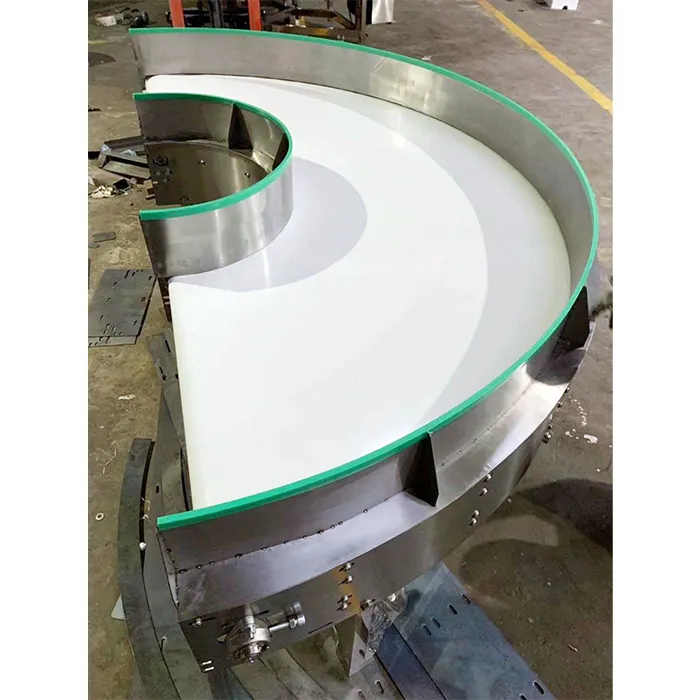
SHUNNAI provides customized 180° curved conveyor for production lines that need to change direction without extending the workshop footprint. With options including curved belts, slat chains, mesh chains and tapered rollers, each system can be configured around product dimensions, load requirements, line speed and transfer conditions. The design supports U-shaped layouts, parallel conveyor connections and return-flow operations in food processing, electronics assembly and logistics.
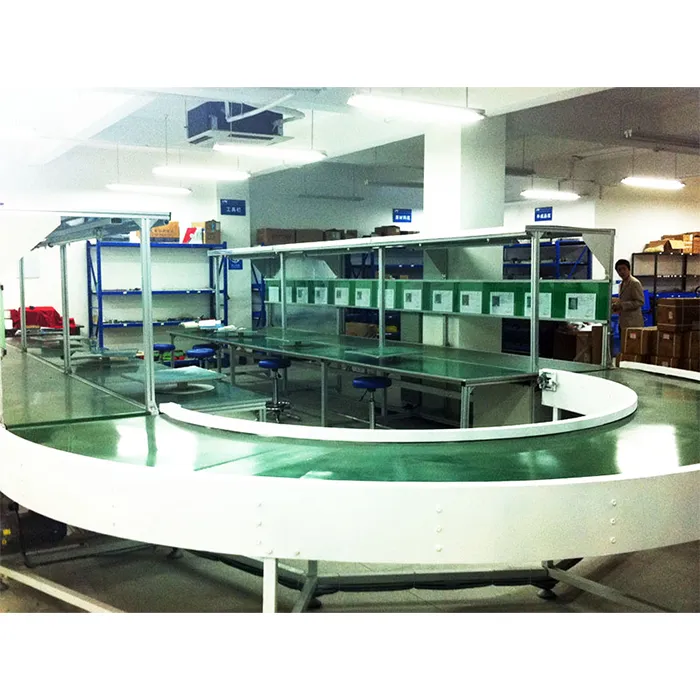
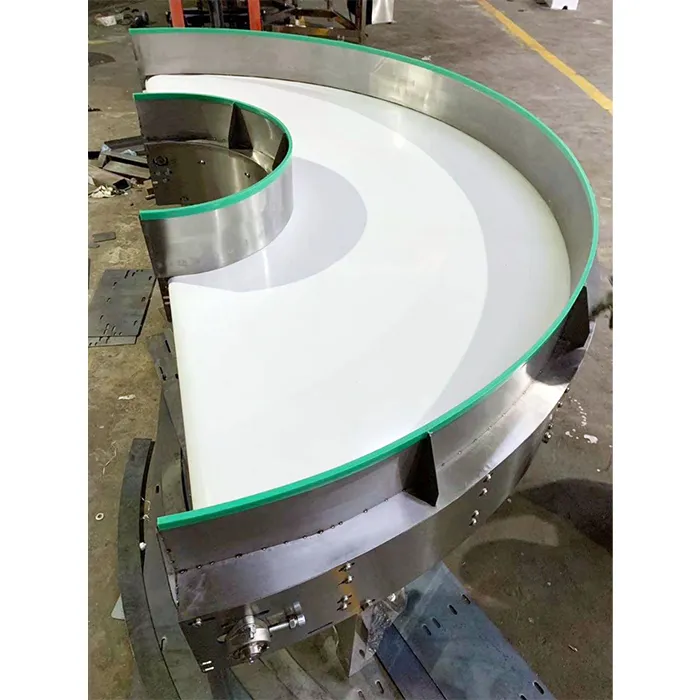
U-Turn and Return
U-Shaped Closed Loop
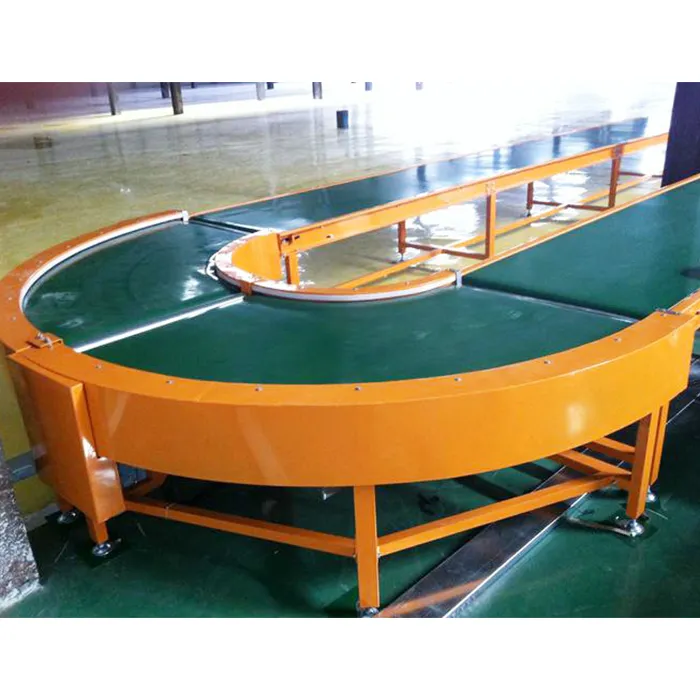
Multi-Level Circulation Connection
U-Shaped Closed Loop
Multi-Level Circulation Connection
Tianjin Shunnai Conveyor Belt Manufacturing Co., Ltd. is a China-based conveyor equipment manufacturer integrating research and development, design, production and sales. Since 2007, SHUNNAI has supplied conveyor belts and supporting conveying equipment for industrial production lines. Its 180° curved conveyor solutions are designed for production layouts that require materials to reverse direction within a limited floor area.
Depending on the product and operating conditions, the equipment can be configured with a curved belt, slat chain, mesh chain or tapered roller deck. The frame, drive system, guide rails and transition sections can be coordinated with the upstream and downstream conveyors. SHUNNAI helps buyers evaluate turning dimensions, product stability, conveying capacity and installation requirements before selecting a suitable configuration.
Plan the Return Path Before Installation
A 180-degree turn allows products to travel around a semicircular path and continue in the opposite direction. This arrangement is useful when a production line needs a longer conveying distance but the workshop cannot accommodate another full-length straight section. It can also connect parallel production lines, create U-shaped work cells or support circulation between different processing stages.
Before choosing a 180° curved conveyor, buyers should measure the available installation width, the required conveying height and the distance between the incoming and outgoing lines. The turning radius must suit the product dimensions and the equipment layout. Allowance should also be made for motor placement, guarding, inspection and routine maintenance. These checks help reduce costly adjustments after delivery.
Keep Products Stable Through the Turn
Turning stability depends on more than the conveyor's angle. During a 180-degree change of direction, the outer edge of the conveying path travels farther than the inner edge. A suitable differential-speed design helps accommodate this difference and reduces unwanted movement during the turn.
Depending on the selected structure, tapered rollers or tapered pulleys can provide different linear speeds across the conveying width. Belt geometry, side guides, guardrails and product spacing also influence how materials move through the curve. For loose, lightweight or easily tipped products, the design should be checked against actual product dimensions, weight, surface condition and operating speed.
When specifying a 180° curved conveyor, buyers should confirm how the machine will handle the smallest and largest products in the range, whether products can rotate or overlap, and whether the conveying surface provides enough support throughout the turn. These details are especially important for cartons, electronic components, bottles and irregularly shaped food products.
Select the Deck for the Product
The conveying surface affects product support, cleaning requirements, drainage and load handling. SHUNNAI can evaluate different deck options according to the material being conveyed and the process environment.
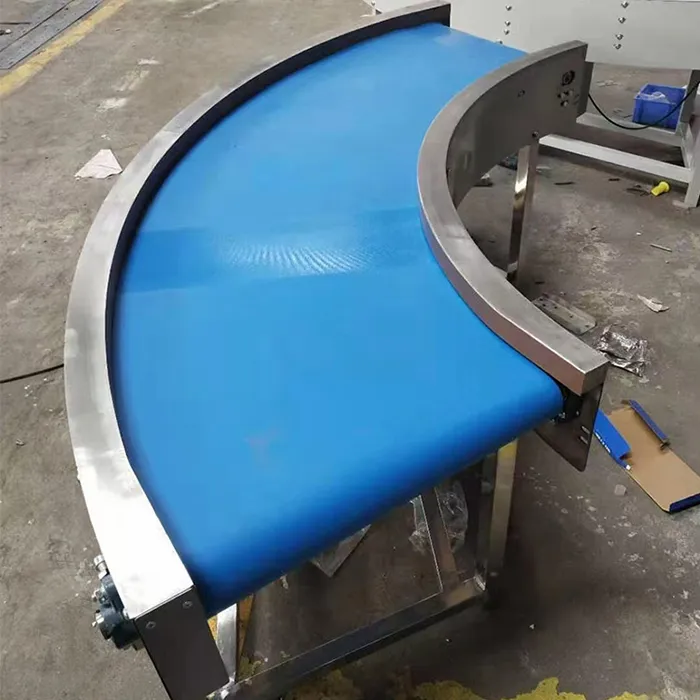
Belt Deck for Small or Delicate Items
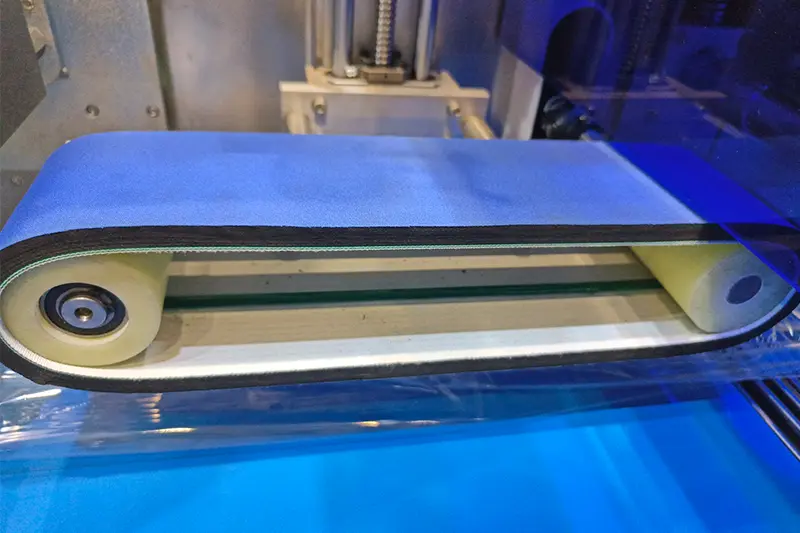
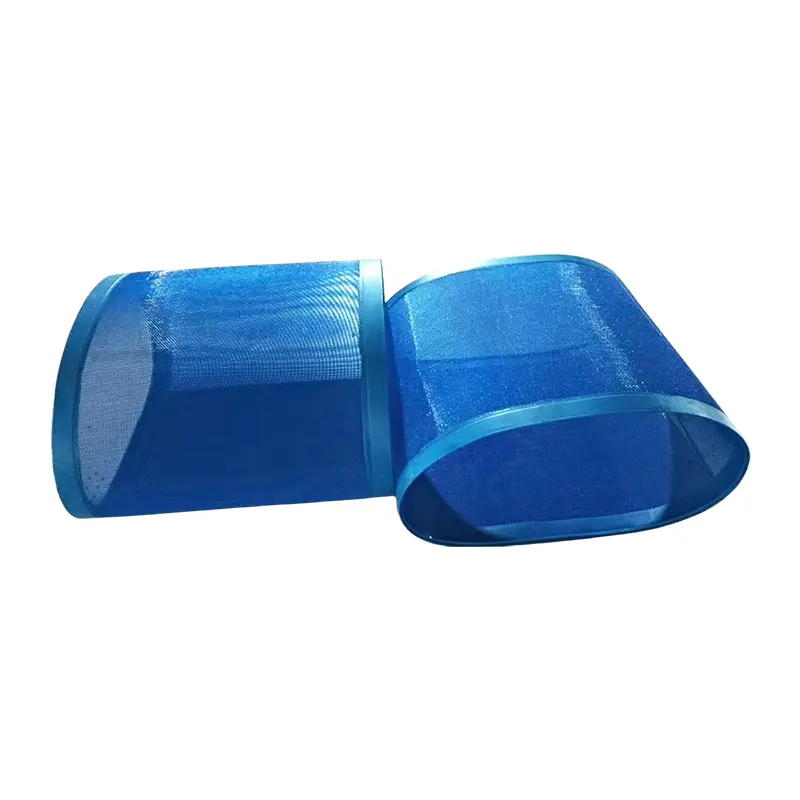
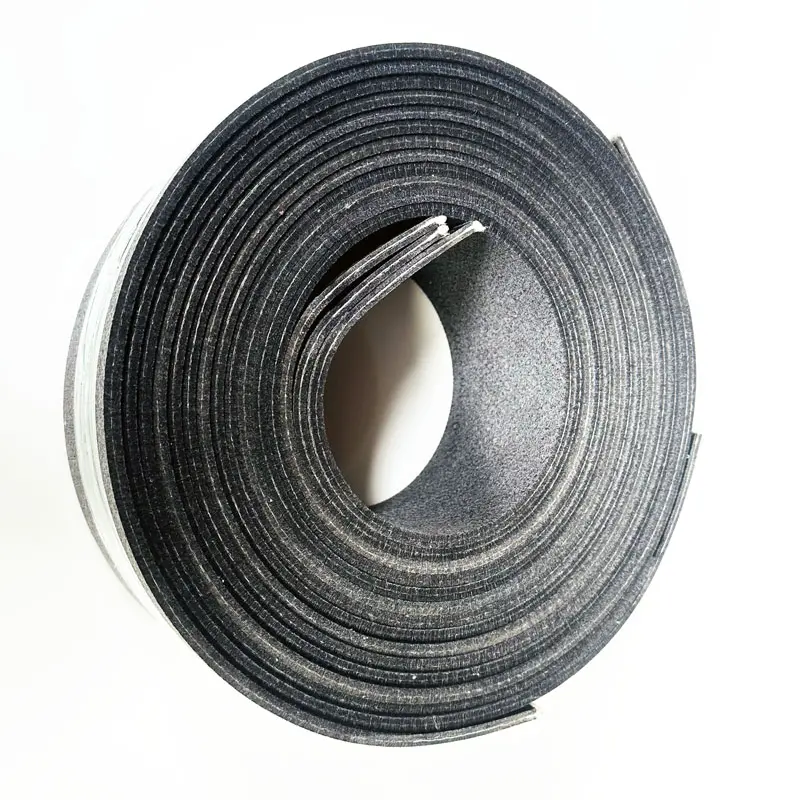
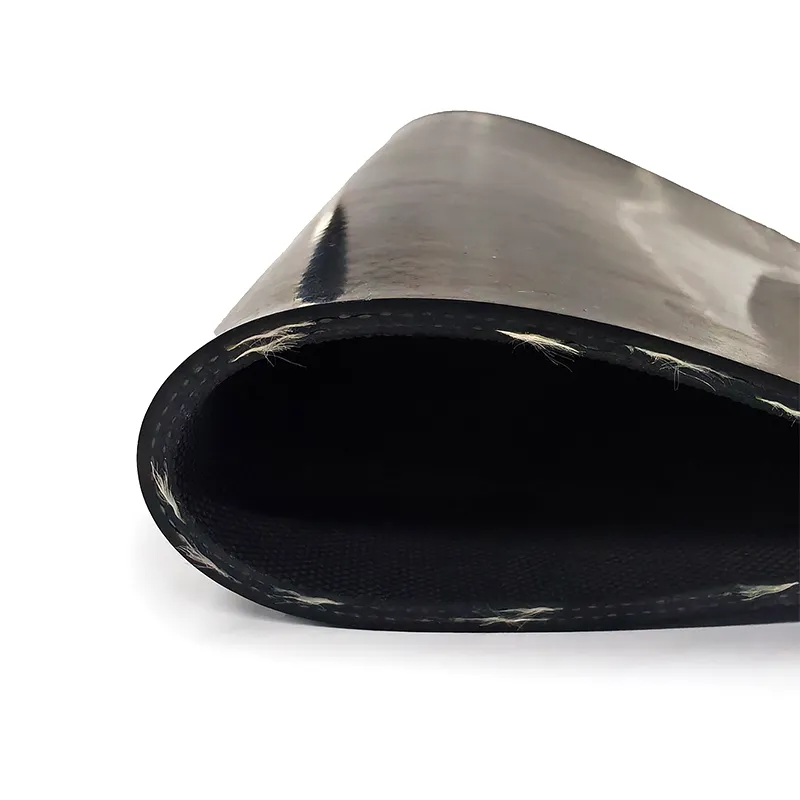
A curved belt can be considered for lightweight packages, electronic components and products that need continuous surface support. Belt material, surface texture and any required antistatic properties should be confirmed according to the application.
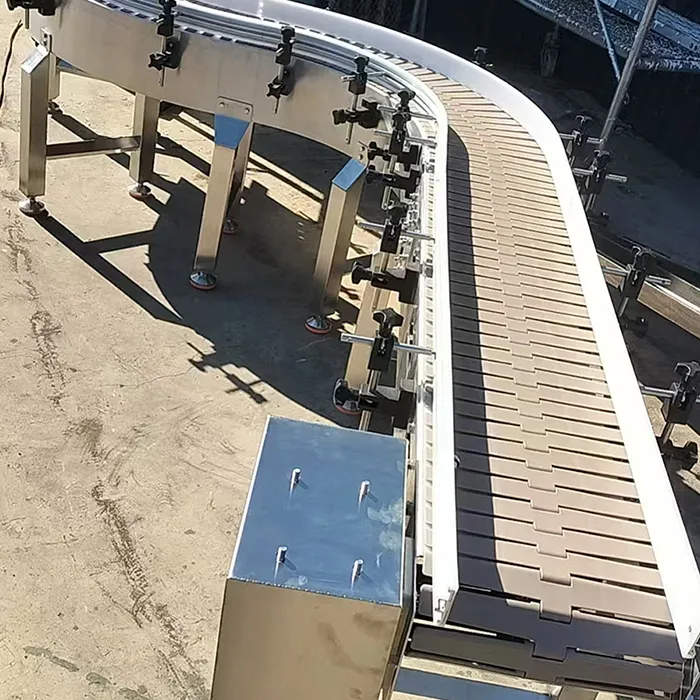
Slat Chain for Bottles and Rigid Containers
Plastic or stainless steel slat chains may suit bottles, cans and other rigid products. The chain width, support arrangement and guide clearance should be selected to prevent containers from tipping or contacting adjacent equipment during the turn.
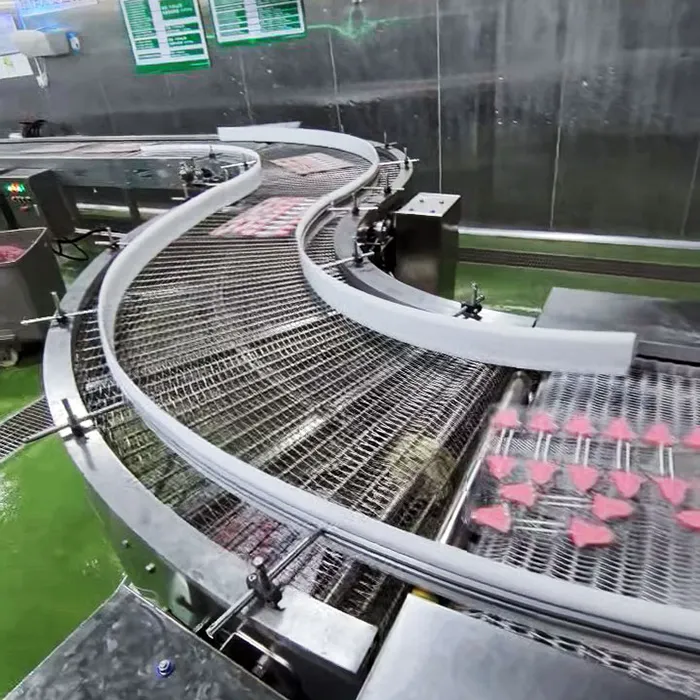
Mesh Chain for Airflow and Drainage
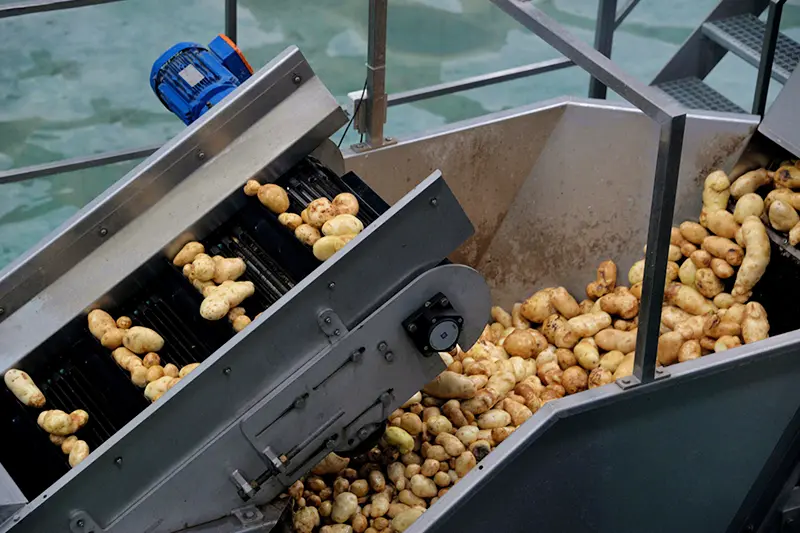
Open mesh conveying surfaces can be useful in applications where airflow, cooling or drainage is required, such as selected food-processing operations. Buyers should confirm the mesh opening, material compatibility, cleaning method and any hygiene requirements for the intended product.
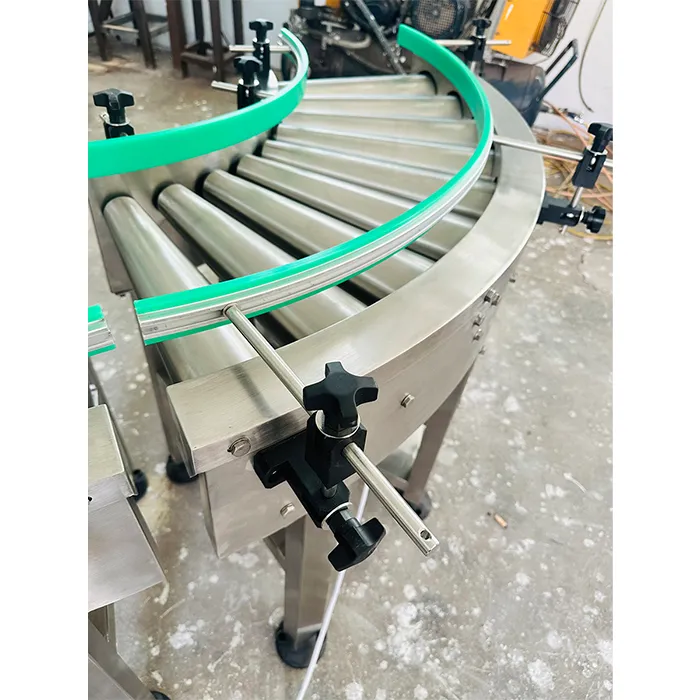
Tapered Rollers for Boxes and Totes
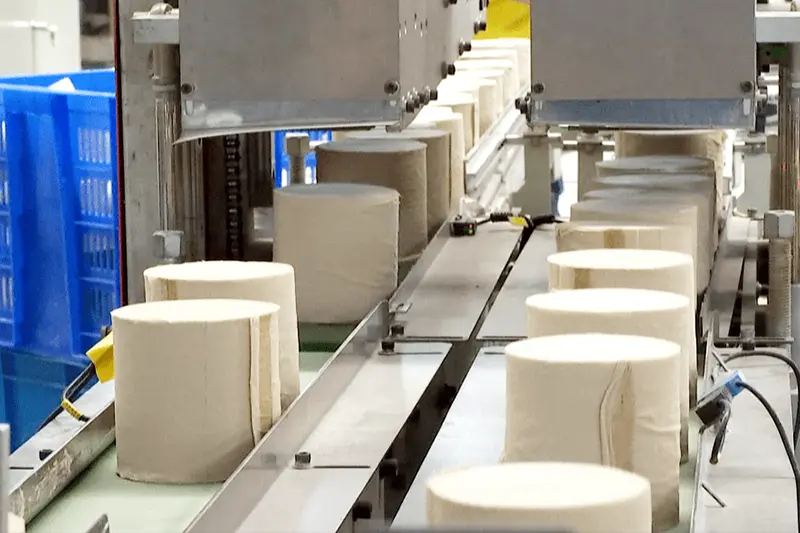
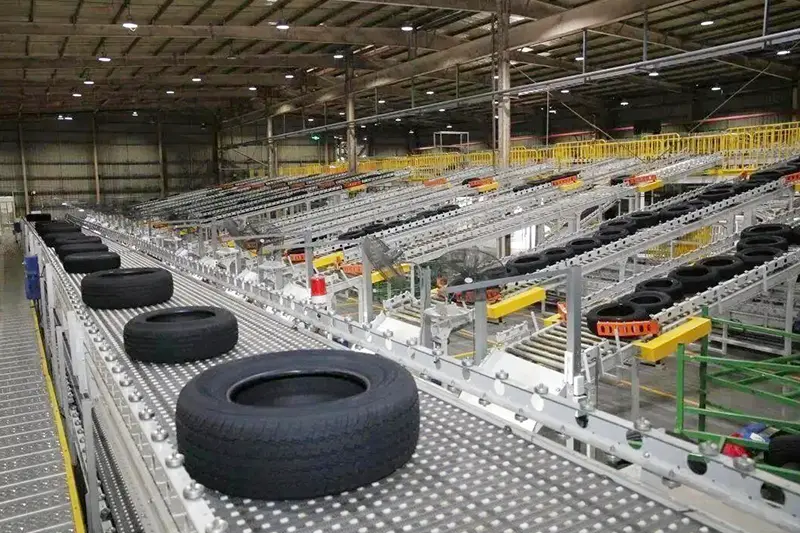
Tapered roller decks can be suitable for cartons, turnover boxes and certain logistics applications. The roller pitch, load capacity, box dimensions and bottom condition must be compatible with the conveying design to support smooth movement through the curve.
Connect the Curve to the Full Line
A curved section needs to work as part of the complete conveying system, not as an isolated machine. The inlet and outlet must align with adjacent conveyors in height, direction, speed and transfer distance. Poorly matched transitions may cause products to catch at gaps, rotate unexpectedly or accumulate at the entry to the curve.
For multi-level production lines, buyers should confirm the elevation difference and whether a separate lifting or lowering section is required. A 180-degree turn changes the conveying direction but does not, by itself, raise or lower products between levels. For parallel lines, the center distance, discharge orientation and available operator access should be checked together.
In cooling, inspection and packaging applications, the return path can increase the distance products travel without extending the workshop in one direction. The required conveying time and throughput should be calculated from the actual line speed and process needs rather than assumed from the turning angle alone.
Customer Feedback from Different Applications
Production Manager Chen, a food factory in Guangdong:
“The workshop is not long enough, and the cooling line could not be stretched out. We used SHUNNAI 180° mesh chain curved conveyors to make bread fold back and forth on the line. The cooling travel doubled, without occupying an extra square meter. The mesh chain drains and ventilates, preventing bottom moisture – very effective.”
Section Chief Wang, equipment, an electronics factory in Zhejiang:
“The upper and lower layers of the double-deck assembly line needed docking, which was previously manual. After installing SHUNNAI 180° belt curved conveyors, PCB boards automatically U-turn into the lower layer without manual intervention. The belt is gentle and does not damage boards. Anti-static treatment is also in place, and yield is stable.”
Equipment Supervisor Liu, a logistics distribution center in Shandong:
“The sorting line needs U-turn and return. Cartons are heavy, and the old belt curved conveyor always mis-tracked. SHUNNAI’s 180° roller curved conveyor has tapered rollers with very stable differential speed. Boxes do not fall or skew. Rollers are maintenance-free – after nearly a year, no repairs.”
Check Access, Cleaning and Wear
Maintenance access should be included in the layout review before the equipment is installed. The curved frame, drive components, belt or chain, rollers and guide rails may require inspection or adjustment over time. A design that leaves sufficient access around these parts can make routine service easier and reduce unnecessary line downtime.
In food-processing environments, check whether the selected deck and frame materials are compatible with the cleaning agents, moisture levels and cleaning procedures used at the site. Open mesh surfaces may help with drainage, but they do not automatically make a system suitable for every washdown or hygienic application. Food-contact materials and applicable documentation should be confirmed for the specific configuration.
For electronics and logistics lines, inspect belt tracking, roller condition, guide clearance, drive components and transfer points according to the equipment manual. If the product range changes, recheck the minimum and maximum dimensions, load distribution and conveying speed before increasing throughput.
Information to Prepare for a Quotation
To help SHUNNAI recommend a suitable 180° curved conveyor, buyers should provide the following information wherever possible:
Product details: Product type, length, width, height, weight, bottom shape, packaging material and the range of product sizes.
Line requirements: Required throughput, conveying speed, operating hours, inlet and outlet directions, conveyor height and the available installation space.
Deck and environment: Preferred belt, slat chain, mesh chain or roller surface; operating temperature; moisture or drainage requirements; and any antistatic or cleaning needs.
Integration details: Existing conveyor drawings, transfer heights, control requirements, power supply and the position of nearby equipment or operator access points.
Drawings, photographs and product samples can help clarify the operating conditions. Where the application involves fragile, unstable or unusually shaped products, a sample-based review may help identify potential transfer and turning issues before finalizing the design.
Manufacturing and Documentation
SHUNNAI has supplied conveyor belts and supporting conveying equipment since 2007. Its design process considers the material being conveyed, the required path, deck selection and connection with the existing line. Frame dimensions, conveying surface, guide arrangement and other configuration details can be discussed according to the project requirements.
SHUNNAI's company credentials include ISO 9001 and other stated certifications or qualifications, including FDA, MA and CNAS-related credentials. Because these have different scopes, buyers should request the relevant certificate copies and confirm their applicability to the specific equipment, materials and intended use. Product-specific documentation should be reviewed before placing an order where regulatory, food-contact or industry requirements apply.
Frequently Asked Questions
Can the conveyor handle products of different sizes?
It may be possible, but the smallest and largest products must be checked against the belt or roller width, guide clearance, turning radius and load limits. Share the product dimensions and weight range so the configuration can be evaluated.
Does a 180-degree turn automatically connect two different conveyor levels?
No. A 180-degree curve changes the direction of travel. If the inlet and outlet are at different heights, the layout may need a separate elevator, lowering section or other suitable transfer equipment.
Which deck is suitable for wet products?
A mesh chain may be suitable when drainage or airflow is needed, but the correct choice depends on the product, liquid type, cleaning procedure and material compatibility. Confirm the mesh opening and applicable material requirements before ordering.
Can the equipment be connected to an existing production line?
Yes, a project can be assessed for integration with existing conveyors. Provide the inlet and outlet heights, conveying direction, speed, transfer dimensions and available space so the interfaces can be reviewed.
What information is needed to estimate the price and lead time?
Provide the deck type, curve dimensions, conveying width, product load, required speed, frame material, control requirements and order quantity. Delivery timing should be confirmed after the configuration, drawings and production schedule are reviewed.
Discuss Your Conveyor Layout with SHUNNAI
If your production line requires a compact return path, parallel-line connection or a curved section for cooling, inspection or packaging, SHUNNAI can review the application details and recommend a suitable configuration. Send your product dimensions, target throughput, layout drawing and installation constraints to discuss deck selection, turning geometry and line integration.
Send Inquiry
Contact Info
-
Address
No.129 Qingfeng Road, Jizhou District, Tianjin City, China
-
Tel
-
Email
If you have any inquiry about a quotation or cooperation, please feel free to email or use the following inquiry form. Our sales representative will contact you within 24 hours.
News Recommendations