Mesh Chain Curved Conveyor
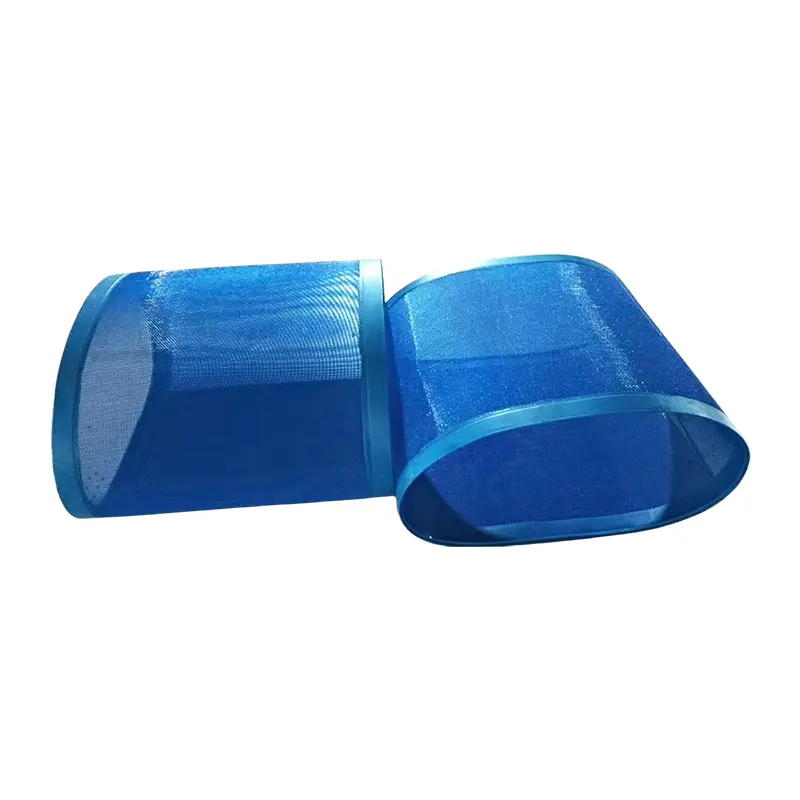
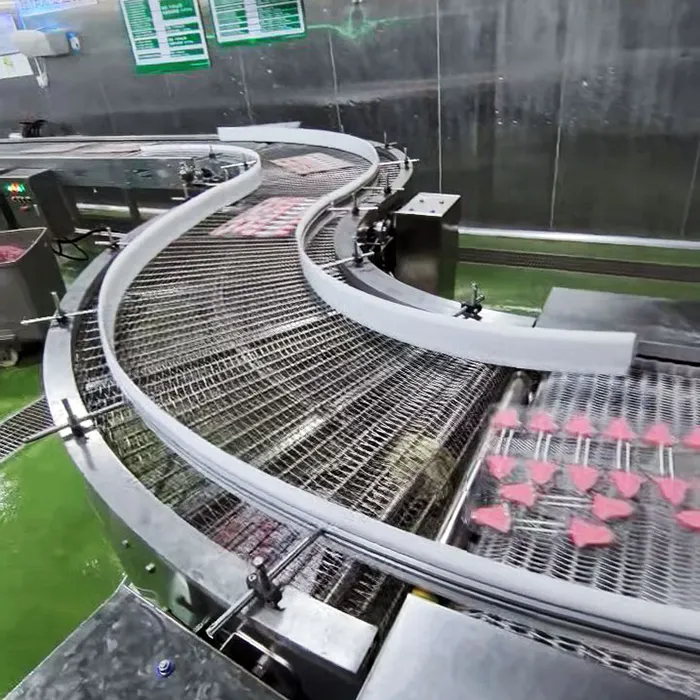
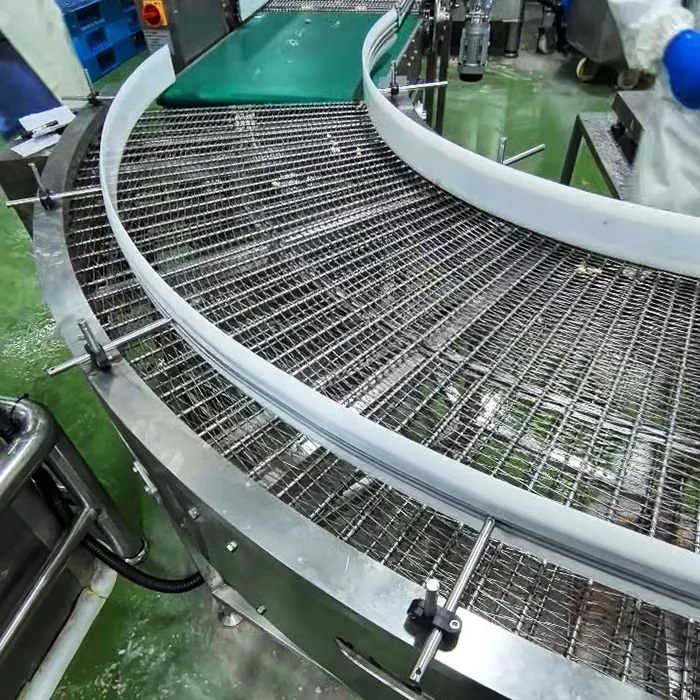
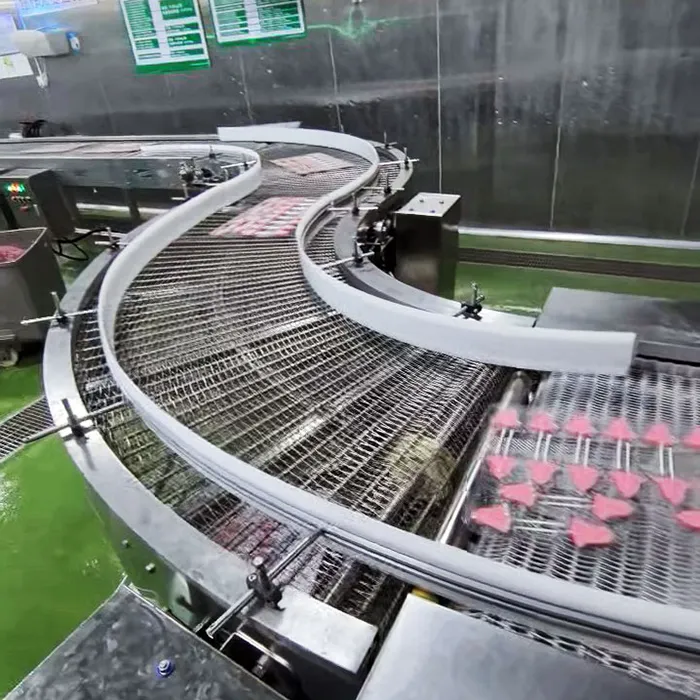
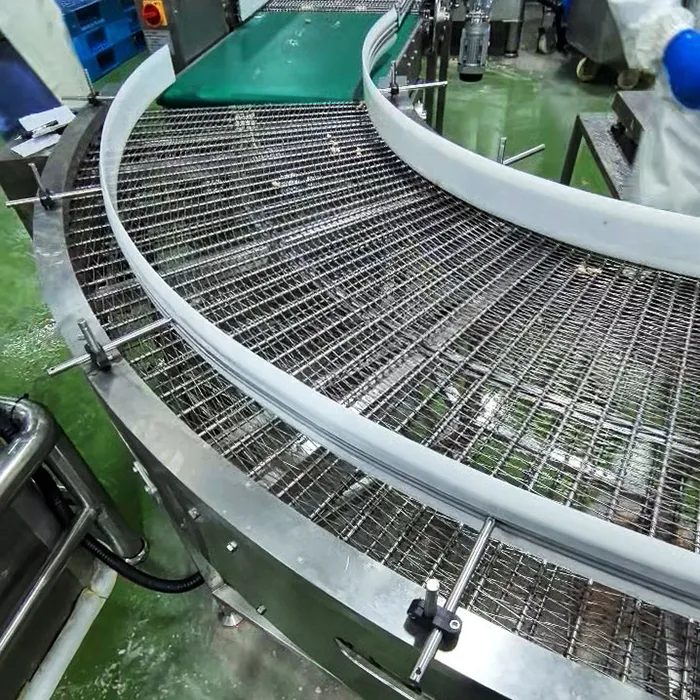
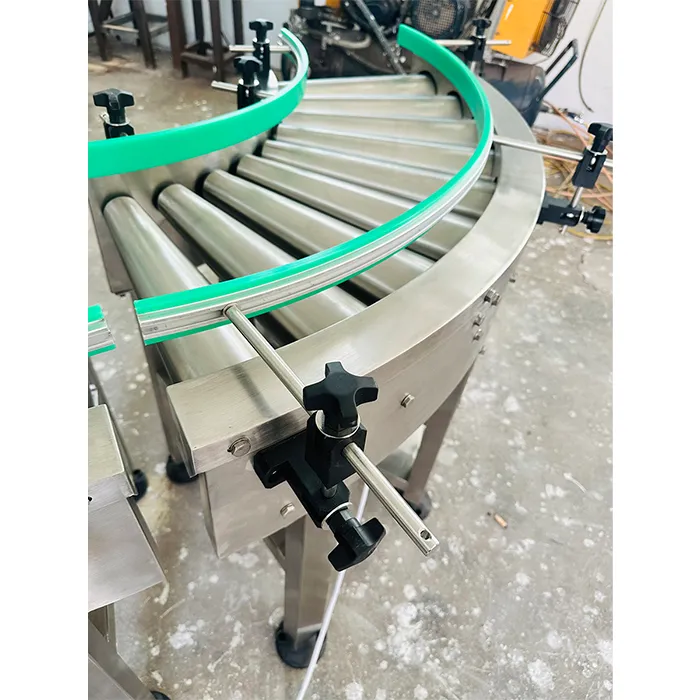
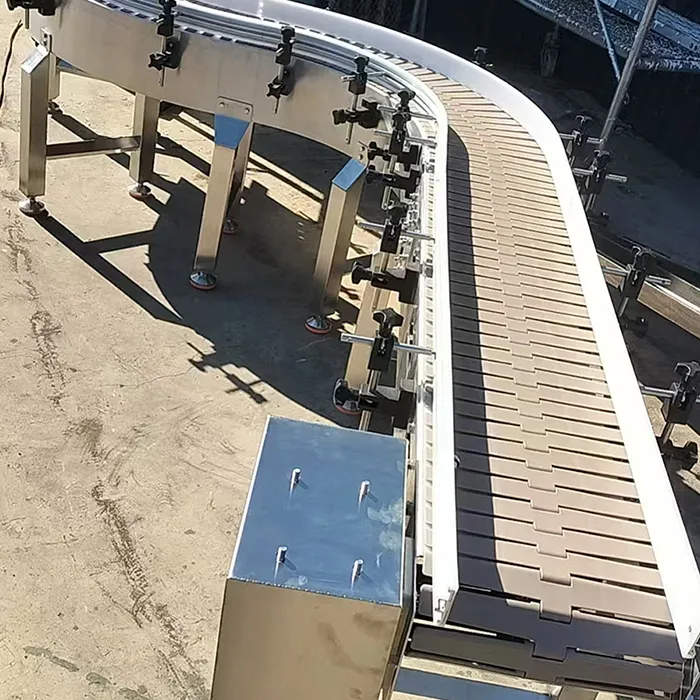
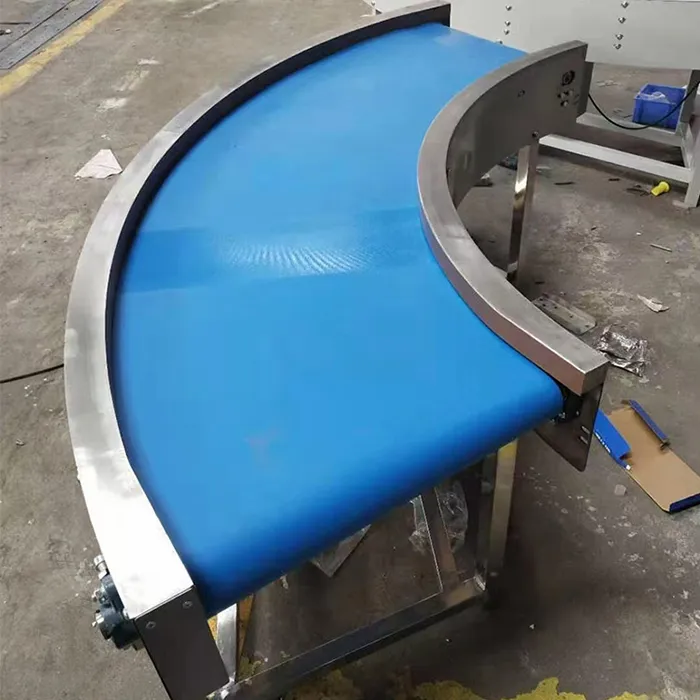
SHUNNAI Mesh Chain Curved Conveyor is designed for production lines that require directional transfer along with effective drainage, ventilation, or cooling support. Featuring modular plastic or stainless steel mesh chains, it helps move vegetables, seafood, bakery products, and other process materials through curved sections while allowing water, oil, or air to pass through the conveying surface.
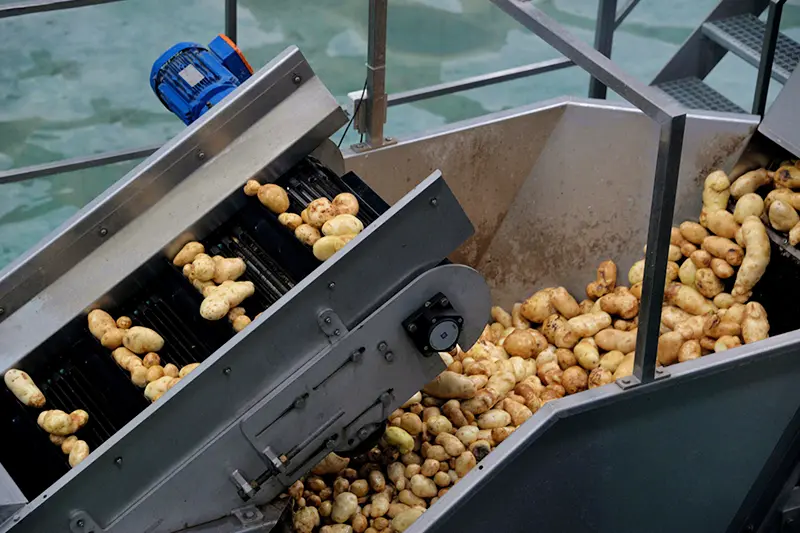
Mesh Open Surface for Draining
Ventilation and Cooling During Turning
Dedicated Curve for Continuous Food Processing Lines
Ventilation and Cooling During Turning
Dedicated Curve for Continuous Food Processing Lines
SHUNNAI is a conveyor equipment manufacturer based in Tianjin, China, with experience in conveyor belts and supporting equipment since 2007. A Mesh Chain Curved Conveyor combines directional transfer with an open conveying surface, allowing water, oil, and air to pass through the mesh during material movement.
Available with plastic or stainless steel modular chains, the system can be configured according to product characteristics, operating temperature, cleaning procedures, and production line requirements. SHUNNAI helps industrial buyers select suitable chain materials, mesh openings, drive components, and transfer arrangements for demanding processing environments.
Drainage During Material Transfer
In food processing, turning products between two conveyor sections can create problems beyond simple direction changes. Water from washed vegetables, residual oil from fried products, or heat trapped beneath freshly baked goods may affect the next production stage. A mesh conveying surface provides openings for liquids and air to pass through while products travel along the curved section.
For washed vegetables, the open surface helps reduce standing water on the conveying deck. In selected bakery applications, airflow around the product can support cooling before packaging. Seafood processing lines may also benefit from drainage after washing or thawing, depending on the process design. These effects depend on mesh opening size, product dimensions, loading density, airflow, and drainage conditions.
Unlike a solid conveying surface, a Mesh Chain Curved Conveyor can combine product transfer with drainage or ventilation where the process requires it. Buyers should evaluate whether the mesh openings support the product safely without allowing small pieces to fall through or become trapped.
Choose the Right Chain Material
Chain material affects operating temperature, chemical compatibility, cleaning requirements, load capacity, and maintenance. SHUNNAI offers plastic and stainless steel mesh chain options for different production conditions.
Plastic Chain for Wet Processing
PP or POM plastic mesh chains may suit fruit and vegetable washing, seafood handling, and other applications operating within the selected material's temperature and chemical limits. Their relatively low weight and operating noise can be useful in wet processing areas. The specific polymer grade should be checked for resistance to cleaning agents, moisture, impact, and repeated sanitation cycles.
Stainless Steel Chain for Higher Temperatures
Stainless steel mesh chains can be considered for selected drying, hot-product cooling, and oil-handling applications where higher temperatures or greater mechanical strength are required. Buyers should confirm the steel grade, corrosion resistance, working temperature, load requirements, and cleaning chemicals before selecting a chain.
For applications involving direct food contact, request documentation for the specific chain material and its intended use. General material descriptions alone do not establish compliance with every food-contact or hygiene requirement.
Mesh Openings and Product Support
Mesh opening size should be selected according to the smallest product dimension, the required drainage rate, and the support needed during turning. Openings that are too large may allow small products or fragments to fall through. Very small openings may restrict drainage or airflow and retain more residue during processing.
Product shape also matters. Leafy vegetables, whole fruit, fish, shrimp, bread, and packaged food have different support and handling requirements. For soft or irregular products, the chain surface and transfer points should be checked for snagging, pinching, and excessive movement. For hot products or heavier loads, chain strength and thermal suitability require additional review.
SHUNNAI can assess the required mesh configuration using product samples, dimensions, maximum unit weight, operating temperature, and process conditions. Where necessary, a product handling test can help determine whether the proposed mesh and guide arrangement is suitable before the conveyor is integrated into the full line.
Drive and Chain Guidance
The drive system must deliver consistent movement while the chain follows the curved frame. In a modular mesh chain conveyor, sprockets engage with the chain modules to transmit power. Proper sprocket alignment, chain tension, guide-rail clearance, and frame geometry are important for smooth operation.
The curved guides support the chain along its intended path, while correctly designed inlet and outlet transitions help reduce sudden product movement. If the chain is too tight, poorly aligned, or operated outside its design limits, wear and drive resistance may increase. Incorrect loading or unsuitable product spacing can also contribute to jamming.
When specifying a Mesh Chain Curved Conveyor, buyers should therefore check not only the chain material but also the drive arrangement, turning radius, load distribution, speed range, and compatibility with adjacent conveyor sections.
Cleaning and Routine Maintenance
Wet food-processing environments require a maintenance plan that considers both mechanical reliability and hygiene. An open mesh surface can improve access for cleaning, but the complete conveyor still needs inspection for residue, worn components, and areas where material may accumulate.
After cleaning: Follow the equipment manufacturer's sanitation procedure and verify that the chain, frame, and accessible contact surfaces are free from unacceptable residue before restarting production.
Inspect the chain: Look for damaged modules, worn pins, cracks, abnormal gaps, and uneven movement. Replace affected components according to the maintenance instructions.
Check sprockets and guides: Inspect sprocket engagement, guide-rail wear, alignment, and signs of excessive friction or abnormal noise.
Review drainage: Remove accumulated food particles and debris that could obstruct mesh openings or drainage areas.
Verify operating conditions: Confirm that the actual temperature, load, speed, and cleaning chemicals remain within the equipment's specified limits. Isolate the equipment from its power source before maintenance, following the site's lockout procedures.
Customer Applications
Fresh-Cut Vegetable Processing in Shandong
"Our fresh-cut vegetable line originally used belt turning. Water from the leaves accumulated on the belt surface, flowed everywhere, and vegetables easily rotted. After switching to SHUNNAI mesh chain curved conveyors, water drains directly through the mesh openings. Leaves stay dry, and the floor is clean. Draining happens while turning, saving a process step. After nearly a year, the mesh chain has not been replaced."
— Equipment Supervisor Liu, a vegetable processing plant in Shandong
Bakery Cooling in Fujian
"After bread comes out of the oven, it needs rapid cooling before packaging. We originally used a solid belt for turning, and the bottom always became moist. SHUNNAI’s mesh chain curved conveyor allows hot air to penetrate the bread bottom, cooling much faster and solving the moisture problem. The stainless steel mesh chain resists high temperatures – no problem even with baking trays. After more than half a year, operation is very stable."
— Production Manager Chen, a bakery in Fujian
Seafood Processing in Guangdong
"After fish and shrimp thawing, there is a lot of water. Belt curved conveyors slipped and grew mold. SHUNNAI’s plastic mesh chain curved conveyor is washable – daily high-pressure washing does not cause mold. Fish and shrimp drain through the mesh openings and do not soak in water. Sprocket drive is very stable – no mis-tracking or chain jamming. Maintenance is also simple. Last time we replaced two mesh plates in ten minutes."
— Equipment Section Chief Wang, a seafood processing company in Guangdong
Configuration Options for Different Lines
A suitable conveyor configuration depends on the production process rather than the turning angle alone. SHUNNAI can assess the following factors when developing a solution:
Conveying direction: Specify the required turning angle, clockwise or counterclockwise travel where applicable, and the positions of the inlet and outlet.
Chain specification: Select a suitable modular chain material, mesh opening, chain width, and supporting structure based on the product and working environment.
Production capacity: Provide the target throughput, product spacing, maximum load, and required line speed to help determine the drive configuration.
Process integration: Identify whether the curved section is used for drainage, cooling, washing, drying, or simple transfer, and confirm the requirements of connected equipment.
Installation conditions: Share the available floor space, conveyor elevations, surrounding equipment, cleaning access, and relevant safety requirements.
Straight mesh chain conveyors, belt conveyors, and slat chain conveyors can be considered for connection where their dimensions, transfer characteristics, and operating speeds are compatible. Non-standard layouts should be reviewed against the actual installation drawing.
Manufacturing and Quality Assurance
Tianjin Shunnai Conveyor Belt Manufacturing Co., Ltd. has worked in conveyor belts and supporting equipment since 2007. Its capabilities in R&D, design, production, and sales support customized conveying equipment for different material-handling and processing requirements.
SHUNNAI identifies FDA, MA, CNAS, and ISO 9001 among its quality and compliance credentials. Buyers should verify the exact certificate holder, issuing body, validity, and scope of each credential. FDA-related documentation, in particular, should be checked for its actual regulatory meaning and relevance to the selected conveyor or material; these credentials should not be taken to mean that every complete machine is independently FDA-approved.
For project evaluation, buyers can request the proposed chain material, applicable technical specifications, equipment drawings, maintenance recommendations, and supporting documents relevant to the intended application.
Frequently Asked Questions
Will small products fall through the mesh openings?
They may if the openings are larger than the product's supporting dimensions or if the product can deform during transfer. Provide the smallest product size and shape so the mesh opening and support arrangement can be evaluated.
Can the chain withstand repeated cleaning?
This depends on the chain material, cleaning chemicals, water temperature, pressure, and cleaning frequency. Confirm compatibility with the selected PP, POM, or stainless steel grade and follow the manufacturer's cleaning instructions.
Does an open mesh surface eliminate the need for a separate cooling or drainage station?
Not necessarily. It may contribute to cooling or drainage during conveying, but the result depends on product temperature, airflow, residence time, loading density, and drainage capacity. Process testing may be needed to determine whether a separate station is still required.
Can individual chain modules be replaced?
Many modular chain designs allow damaged sections to be replaced locally rather than changing the entire chain. The replacement method and repair time depend on the specific chain construction, accessibility, and maintenance procedure.
What should be supplied when requesting a customized quotation?
Provide product dimensions, maximum unit weight, required throughput, operating temperature, moisture or oil conditions, cleaning method, turning angle, available installation space, and connection heights. A layout drawing or photographs of the existing line can help clarify the requirements.
Discuss Your Processing Requirements
Selecting the right curved conveyor involves balancing drainage, ventilation, product support, material compatibility, and operating reliability. SHUNNAI works with industrial buyers to review these requirements and determine a suitable chain configuration for the intended production process.
Contact SHUNNAI with your product specifications, process conditions, and conveyor layout to discuss a customized mesh chain conveying solution for your facility.
Send Inquiry
Contact Info
-
Address
No.129 Qingfeng Road, Jizhou District, Tianjin City, China
-
Tel
-
Email
If you have any inquiry about a quotation or cooperation, please feel free to email or use the following inquiry form. Our sales representative will contact you within 24 hours.
News Recommendations