Slat Chain Curved Conveyor
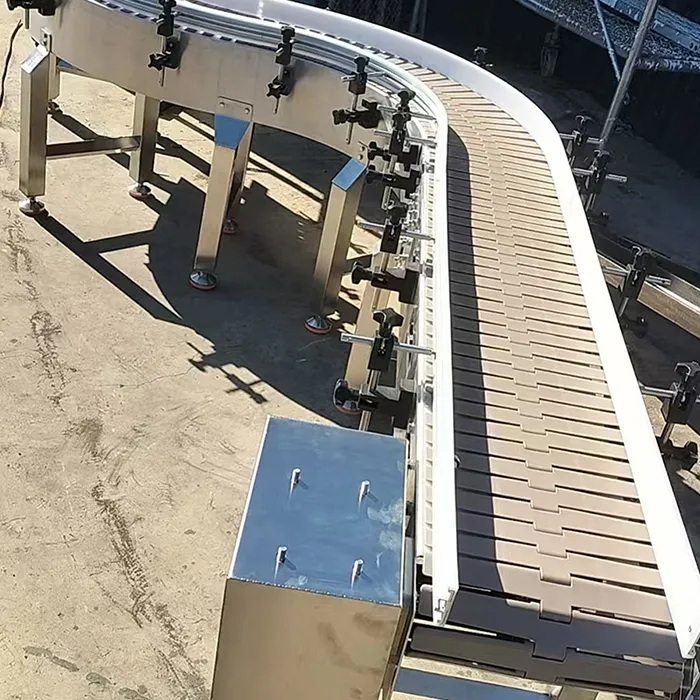
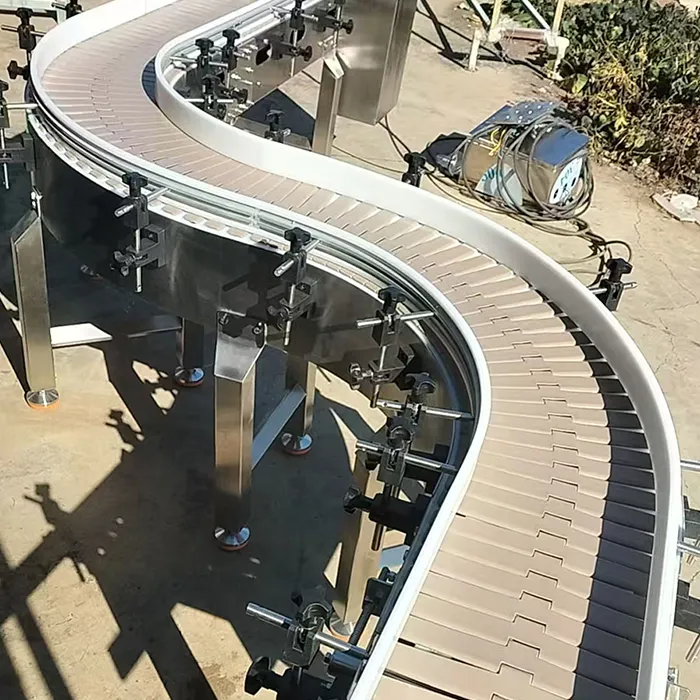
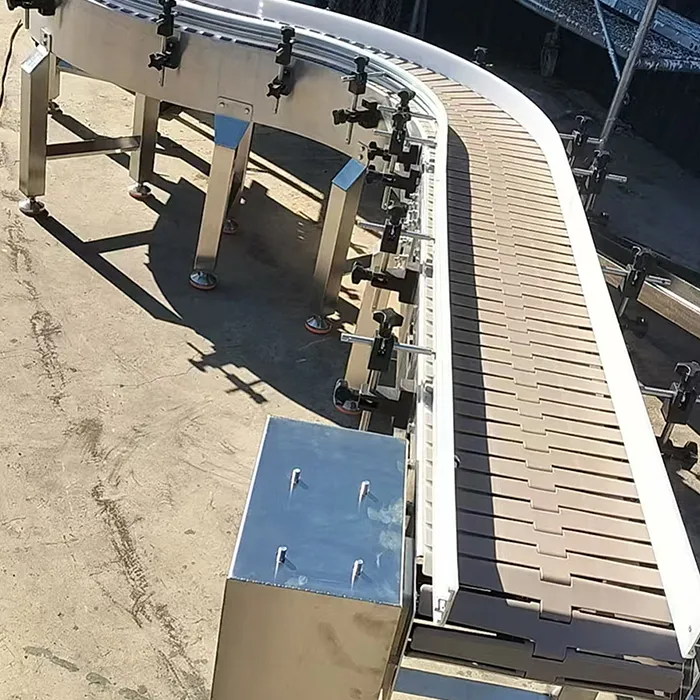
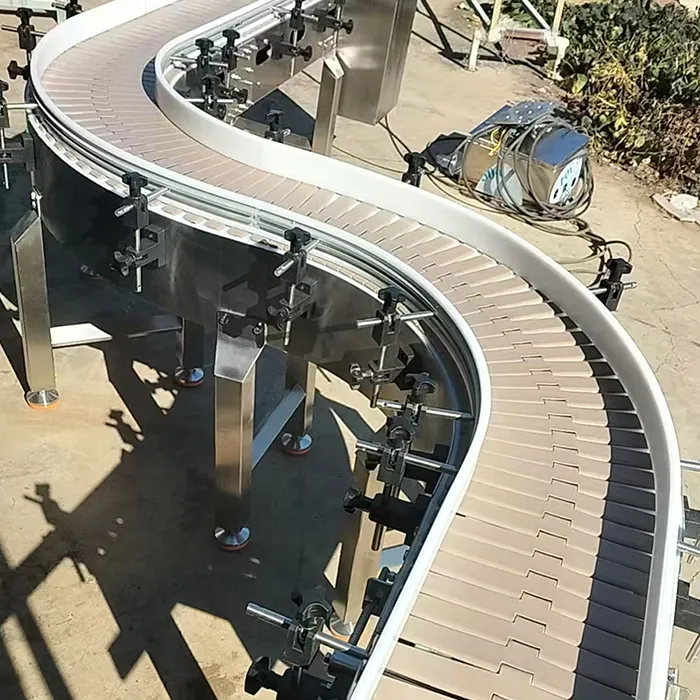
SHUNNAI Slat Chain Curved Conveyor is designed to transfer bottles, cans, cartons, and other packaged products through curved sections of automated production lines. Its modular hard-top chain and sprocket drive support stable conveying, while plastic and stainless steel chain options accommodate different load, hygiene, and operating requirements.
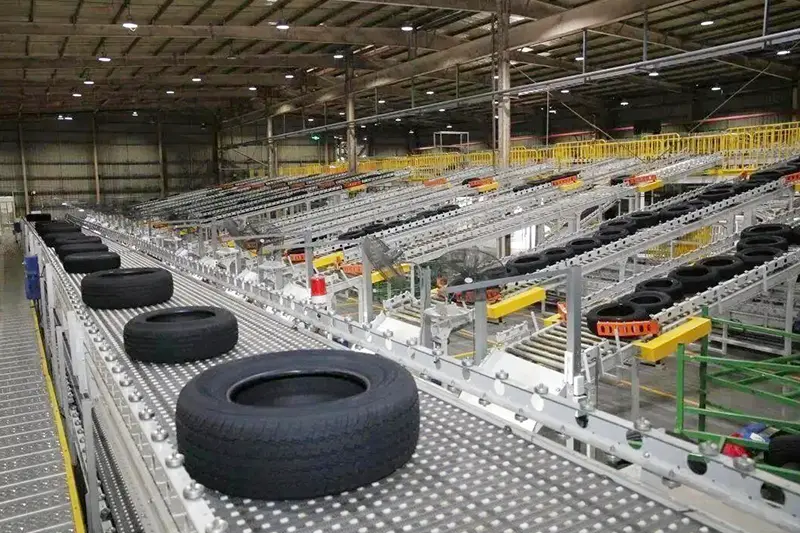
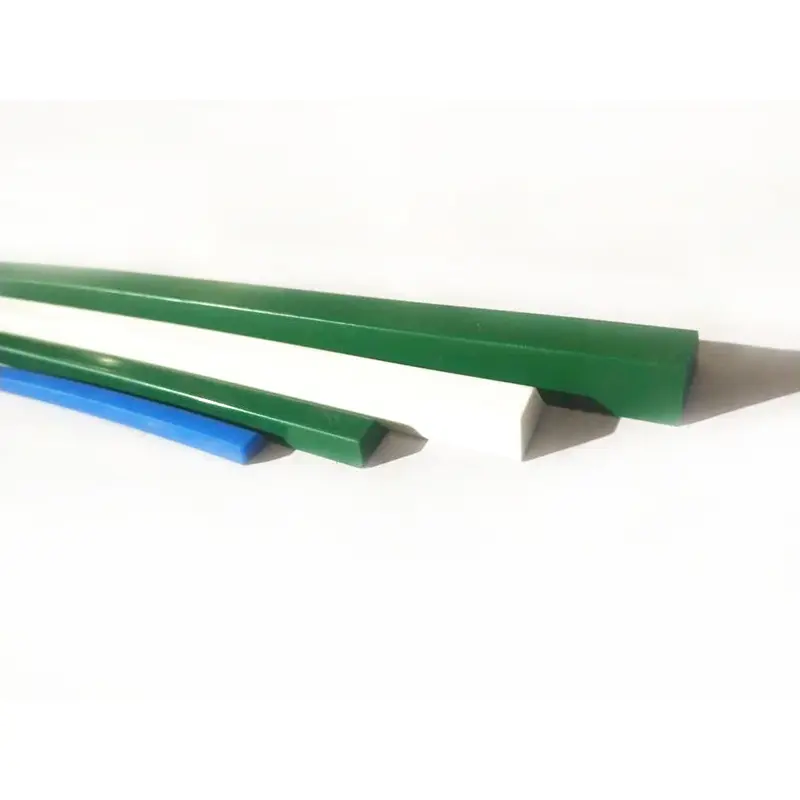
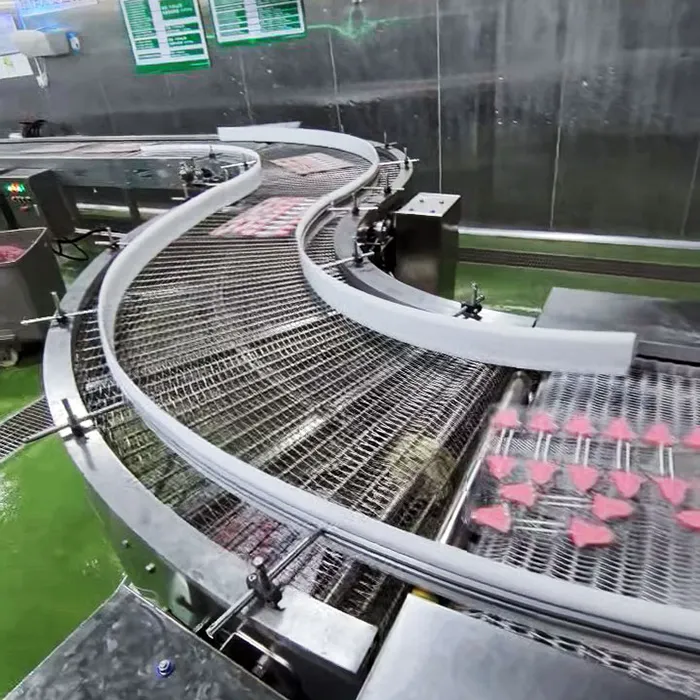
Hard Plate Surface for Heavy-Duty Turning
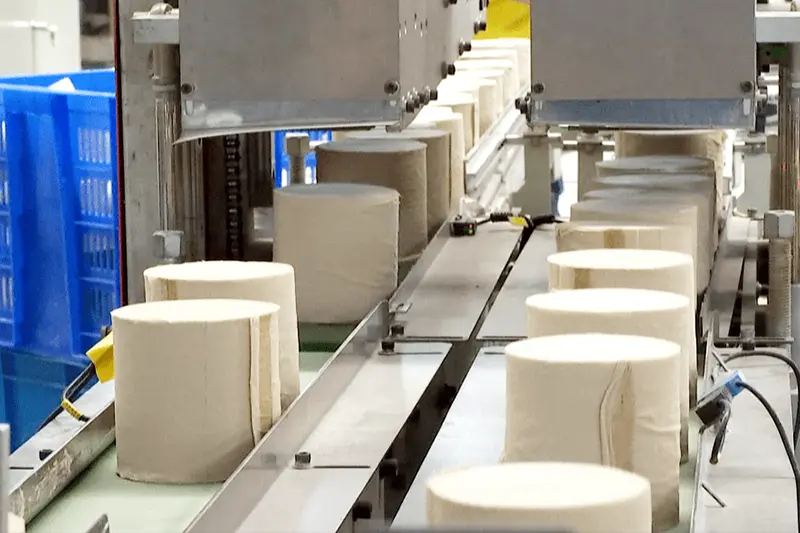
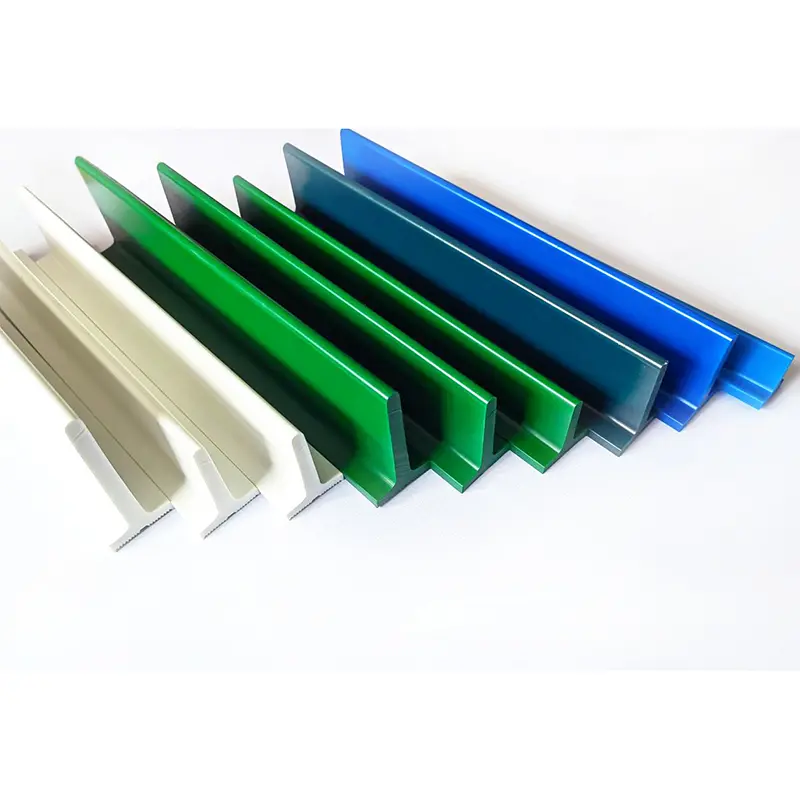
Sprocket Engagement Prevents Mis-Tracking
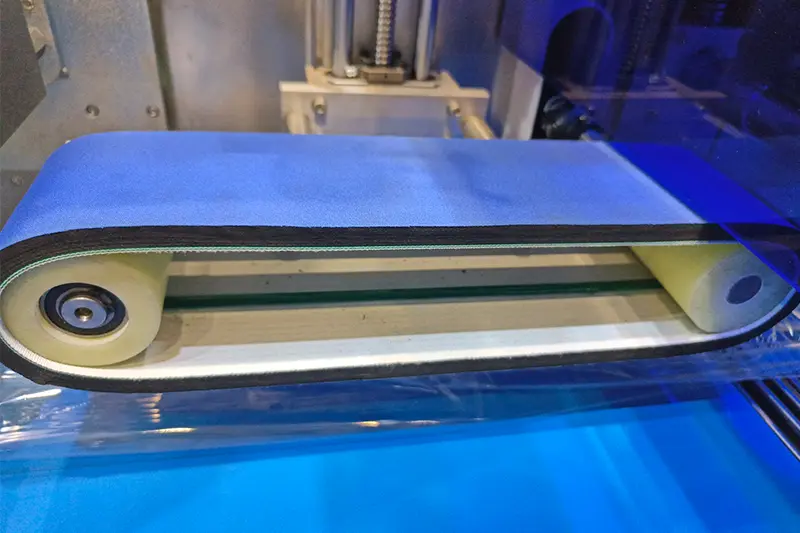
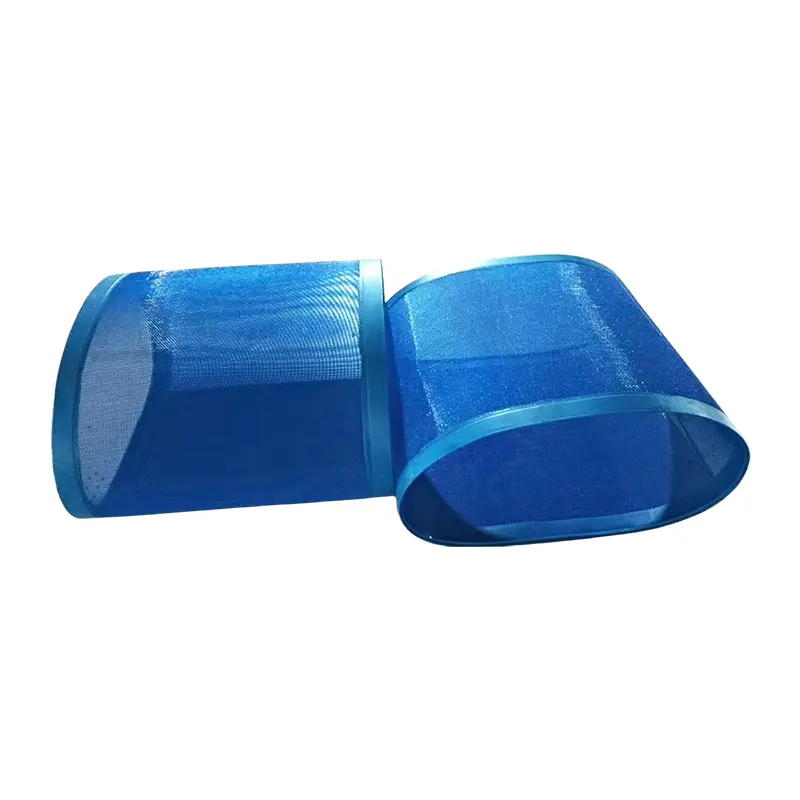
For Clean Workshop Applications
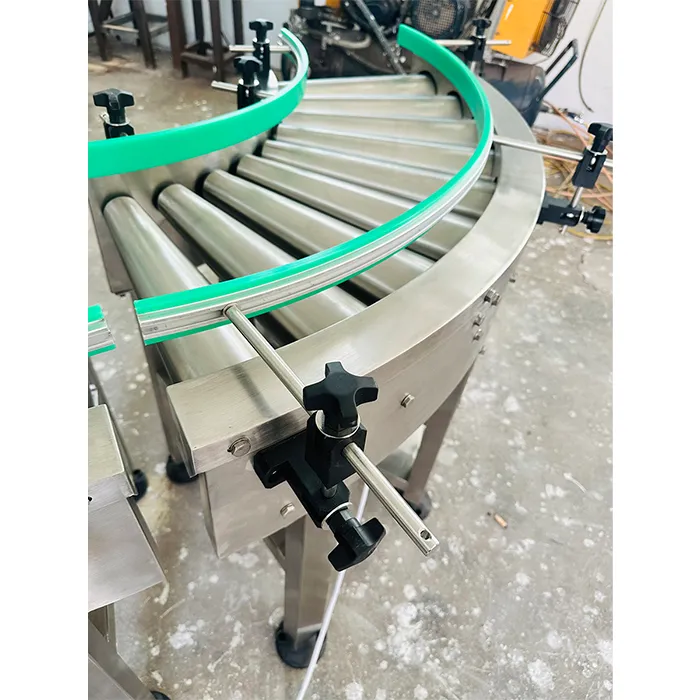
Sprocket Engagement Prevents Mis-Tracking
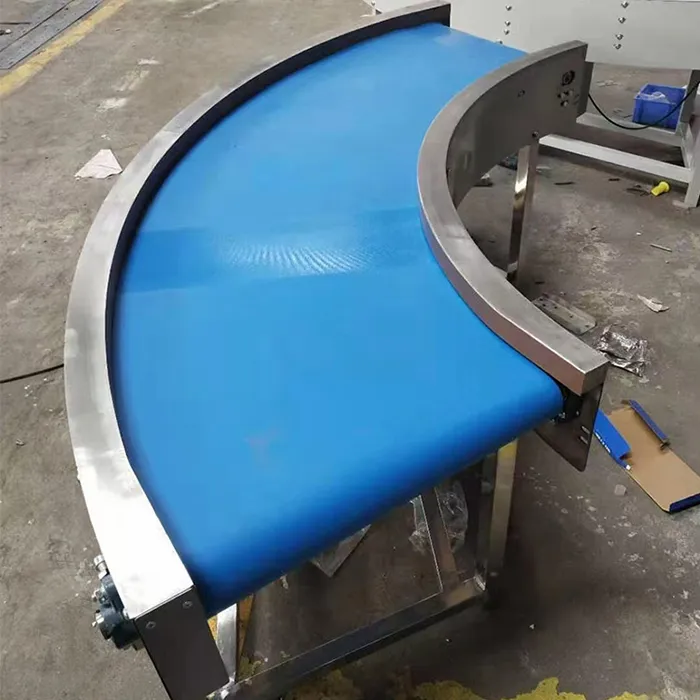
For Clean Workshop Applications
The Slat Chain Curved Conveyor is designed for production lines that need to transfer bottles, cans, cartons, containers, and other regular-shaped products around corners without relying on a flexible belt surface. Its modular hard-top chain, curved guide track, sprocket drive, and protective frame work together to support controlled material movement through a turning section.
Buyers can choose plastic or stainless steel slat chains according to load, temperature, cleaning procedures, and operating environment. Standard 90° and 180° layouts, as well as customized turning angles, are available to help connect existing conveyor sections and make better use of workshop space.
Products That Suit This Conveyor
A curved conveyor section must suit the shape, base dimensions, weight, and movement of the products it carries. The rigid, connected plates used in a Slat Chain Curved Conveyor provide a continuous supporting surface for items that need more stable contact than a flexible belt may offer in a turning section.
Typical applications include bottled beverages, metal cans, packaged food, pharmaceutical cartons, personal care containers, and selected industrial components. It can be useful where products arrive in a consistent orientation and need to change direction between filling, labeling, packaging, inspection, or downstream handling equipment.
Product stability still depends on the conveyor width, turning radius, chain speed, guide-rail position, and the dimensions of the items being transferred. For small containers or products with a narrow base, buyers should check the chain surface and side-clearance design to reduce the risk of tipping or catching. Irregular, unstable, or very tall products may require additional guiding or a different conveying arrangement.
Choosing the Right Chain Material
The chain material affects load capacity, noise, cleaning routines, wear resistance, and the conveyor's suitability for the operating environment. SHUNNAI offers plastic and stainless steel options, with the final selection based on actual working conditions rather than material preference alone.
Plastic slat chain
Plastic chains made from suitable engineering materials, such as POM or PP where applicable, are commonly considered for beverage packaging, food handling, pharmaceutical packaging, and daily chemical production. They can offer relatively quiet operation and a lightweight modular structure. Buyers should confirm the specific polymer grade, chemical compatibility, temperature range, and food-contact documentation required for their application. Washability depends on the chain design and the cleaning chemicals, water pressure, and temperature used.
Stainless steel slat chain
Stainless steel is worth considering for applications involving heavier products, higher operating temperatures, impact exposure, or demanding industrial environments. Its suitability depends on the stainless steel grade, chain construction, load distribution, and exposure to moisture or chemicals. For corrosive cleaning agents or frequent washdown, confirm the material grade and maintenance requirements before ordering.
Both options use a modular construction that can simplify localized repairs. Depending on the chain design, a damaged section may be replaced without changing the entire conveyor assembly. Ask the supplier to confirm spare-part availability, compatible chain specifications, and the recommended repair procedure.
Layout Details to Confirm Before Ordering
A successful installation depends on more than the turning angle. When specifying a Slat Chain Curved Conveyor, buyers should provide the following information so the conveyor can be matched to the production line:
Product details: Share the product dimensions, base shape, individual weight, packaging material, and whether items are conveyed separately or in groups.
Line speed and capacity: Provide the required throughput, upstream conveyor speed, and downstream equipment requirements. These details help determine the drive arrangement and operating speed.
Turning geometry: Confirm whether the layout requires a 90° turn, a 180° turn, or a non-standard angle. Available floor space, turning radius, conveyor width, and product stability all influence the final configuration.
Connection points: Specify the inlet and outlet heights, conveying direction, adjacent conveyor type, and available installation space. Transfer gaps and height differences should be checked against the smallest product being handled.
Working environment: State the operating temperature, cleaning method, moisture exposure, and any hygiene or material-documentation requirements. This information helps determine the appropriate chain material and frame configuration.
Keeping the Turning Section Reliable
A curved section can become a production bottleneck if the chain, guides, drive, or product guides are not matched to the operating conditions. Routine inspection helps identify wear before it interrupts the line.
Check the chain plates and connecting pins for damage, inspect sprockets and wear strips for uneven wear, and remove debris that may interfere with chain movement. Guide rails should remain securely fixed and positioned to control products without creating excessive friction. Drive components and lubrication points, where applicable, should be maintained according to the equipment manufacturer's instructions.
After installation or maintenance, run the conveyor under controlled conditions before returning it to full production. Observe product spacing, chain movement, transfer points, and the behavior of items at both ends of the curve. For a Slat Chain Curved Conveyor operating in a high-throughput line, periodic checks of chain wear and drive performance can help reduce unplanned stoppages.
Customer Feedback from Production Lines
Beverage filling company in Guangdong
“Our mineral water line produces tens of thousands of bottles per hour. We originally used belt turning, and bottles kept crowding and falling. After switching to SHUNNAI slat chain curved conveyors, sprocket drive is very stable. Bottles turn one by one without falling. Plastic slat chains are washable – daily washing leaves no dirt. After nearly two years, no plate replacement.”
Food canning factory in Jiangsu
“Cans are relatively heavy. Belt curved conveyors could not drive them and kept slipping. SHUNNAI’s stainless steel slat chain curved conveyor has strong load capacity, and cans run smoothly. The curved track design is good – no can jamming. Maintenance is also simple. When one slat chain plate was damaged, the worker replaced it in ten minutes.”
Pharmaceutical company in Shandong
“Medicine box conveying requires cleanliness with no dead corners. SHUNNAI’s plastic slat chain curved conveyor has a flat surface – rinses clean instantly, meeting GMP requirements. After more than half a year, no mis-tracking at the curve, and medicine boxes do not jam in gaps. Connecting with the straight slat chain conveyor is smooth, improving overall line automation.”
Quality Documents and Project Requirements
SHUNNAI's stated company credentials include FDA, MA, CNAS, and ISO 9001-related qualifications or documentation. The applicable scope should be confirmed for the specific company entity, product, and intended market before purchase. These credentials should not automatically be interpreted as proof that every conveyor configuration or component has separate product approval.
For food, beverage, or pharmaceutical projects, buyers should identify the documentation required for chain materials, product-contact surfaces, cleaning compatibility, and quality management. If the conveyor will be integrated into a larger production system, also confirm the electrical, guarding, and safety requirements applicable to the complete installation.
Frequently Asked Questions
Can the conveyor handle bottles of different sizes on the same line?
It may be possible if the chain width, guide-rail adjustment, turning radius, and operating speed accommodate the full product range. Share the smallest and largest bottle dimensions and base shapes so the configuration can be evaluated.
Is a plastic chain suitable for a heavy product?
Suitability depends on the chain series, support structure, operating conditions, and load distribution. Do not select a chain based on material alone; confirm the rated operating limits with the supplier using the actual product weight and required throughput.
Can the curved section connect to an existing straight conveyor?
Yes, a compatible curved section can be designed to connect with straight conveyors. The connection should be checked for conveying height, chain type, width, speed, travel direction, and transfer gaps before manufacturing.
What information is needed for a custom turning angle?
Provide a layout drawing or available installation dimensions, the required turning angle, conveyor width, inlet and outlet directions, product dimensions, and target throughput. A layout review can then establish whether the proposed radius and transfer arrangement are practical.
What spare parts should be kept on site?
Commonly considered spares include compatible chain modules, connecting pins, wear strips, and selected drive components. The recommended inventory depends on the conveyor model, operating hours, production criticality, and expected replacement lead time.
Plan Your Conveyor Layout with SHUNNAI
SHUNNAI has worked in conveyor manufacturing and related equipment since 2007. Rather than selecting a curved section by angle alone, buyers should match the chain material, conveying width, radius, drive system, and transfer details to the products and line conditions. For a Slat Chain Curved Conveyor project, provide your product dimensions, load, required throughput, turning angle, workshop layout, and cleaning requirements to help determine a suitable configuration.
Contact SHUNNAI to discuss a custom conveyor layout, chain material options, connection dimensions, and the documentation needed for your application.
Send Inquiry
Contact Info
-
Address
No.129 Qingfeng Road, Jizhou District, Tianjin City, China
-
Tel
-
Email
If you have any inquiry about a quotation or cooperation, please feel free to email or use the following inquiry form. Our sales representative will contact you within 24 hours.
News Recommendations