





Roller Curved Conveyor
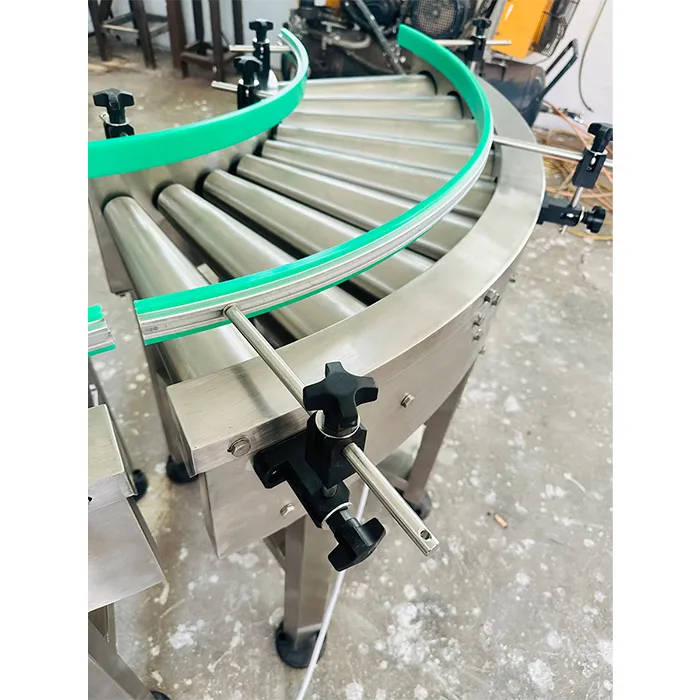
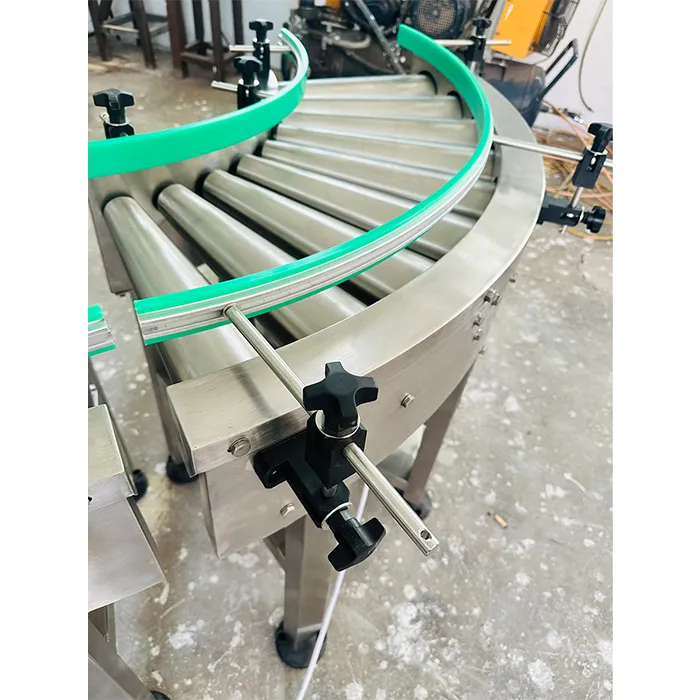
SHUNNAI Roller Curved Conveyor is designed for transferring rigid cartons, plastic totes, and packaged goods through curved sections in logistics, warehousing, and manufacturing facilities. With tapered rollers to support controlled turning, it can be configured with powered or gravity-fed operation according to throughput and handling requirements.
Tapered Roller Differential Speed Turning
Permeable and Maintenance-Free
Dedicated Curve for Cartons and Turnover Boxes
Permeable and Maintenance-Free
Dedicated Curve for Cartons and Turnover Boxes
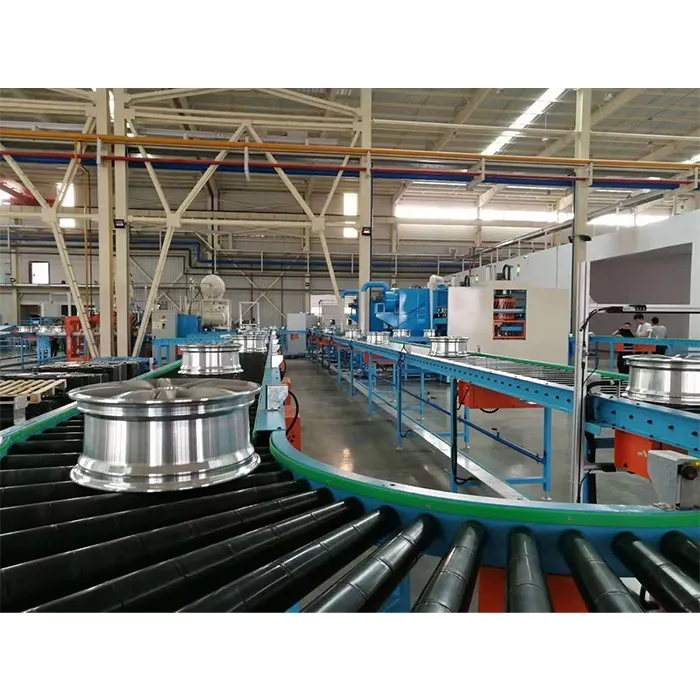
Integrating R&D, design, production, and sales, the company provides conveying solutions for logistics distribution, beverage packaging, daily chemical manufacturing, and industrial material handling. A Roller Curved Conveyor is designed to move rigid, flat-bottomed products around a curved route while maintaining a controlled transfer between conveyor sections.
Available in powered and gravity-fed configurations, it can be equipped with galvanized steel, stainless steel, or rubber-coated rollers according to the load, operating environment, and product surface. SHUNNAI helps buyers assess carton dimensions, unit weight, roller spacing, conveying speed, and installation requirements to develop a configuration suited to the actual production line.
Products That Work Well on Rollers
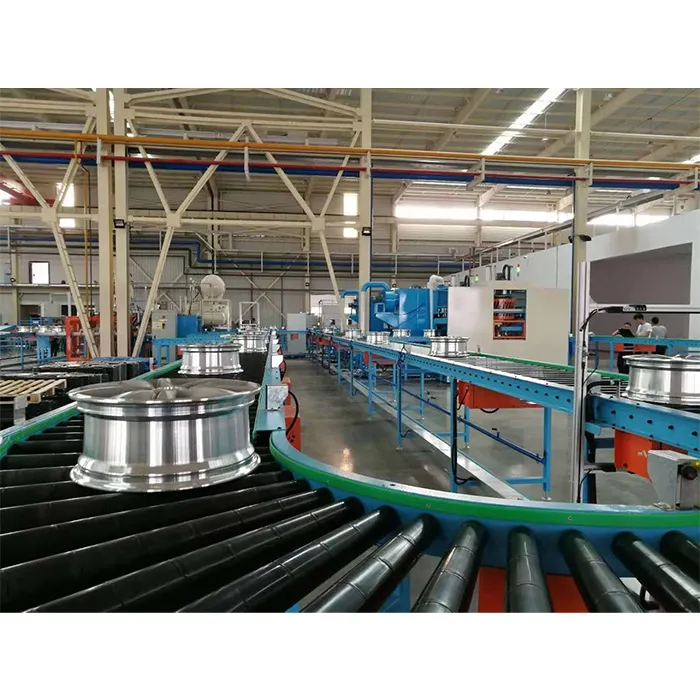
Roller conveying is particularly useful when products have a stable base that can bridge the gaps between adjacent rollers. Typical applications include shipping cartons, plastic totes, rigid trays, boxed beverages, and selected industrial components. These products can maintain contact with multiple rollers as they move through the curved section.
Product dimensions and bottom construction are important when choosing a roller system. A rigid carton may travel smoothly, while a soft bag, flexible package, or narrow item may become trapped between rollers. Cylindrical products also require careful assessment because their shape can affect rolling stability and orientation.
Before selecting a Roller Curved Conveyor, buyers should provide the smallest and largest package dimensions, the maximum unit weight, the condition of the bottom surface, and the required conveying direction. These details help determine whether roller conveying is appropriate and whether additional side guides or product-control features are needed.
Roller Spacing and Load Capacity
Roller spacing affects product support, transfer continuity, and the ability to move cartons through the curve. If the rollers are too far apart, a short carton may lose stable contact or become stuck. Closer spacing can improve support for smaller products, but it also affects the number of rollers, equipment cost, and maintenance requirements.
Load capacity must be evaluated across the complete conveyor structure, not just an individual roller. Roller diameter, tube wall thickness, shaft design, bearing capacity, frame strength, and the distribution of the load all influence performance. For heavier cartons or industrial workpieces, SHUNNAI can assess the required roller specifications and supporting frame based on the actual operating conditions.
The design should also account for how products enter and leave the curved section. Transfer gaps, height differences, and changes in conveying speed can cause carton impacts or unstable movement. Matching these dimensions with the connected equipment helps maintain a consistent material flow.
Powered or Gravity-Fed Operation
Powered Roller Configuration
Powered configurations use a suitable drive arrangement, such as chain, timing belt, or other compatible transmission components, to move products through the curved section. They are useful for automated packaging lines, distribution centers, and conveying systems that require controlled movement and coordination with upstream or downstream equipment. Drive selection should consider the total load, required speed, duty cycle, and control system.
Gravity or Manual Transfer
Unpowered rollers can suit short-distance transfer points, loading areas, and applications where products can move through gravity or manual pushing. The installation angle, product weight, roller resistance, and operator handling requirements must be checked before selecting this option. Gravity conveying is not appropriate for every product or layout, particularly where controlled stopping or precise positioning is necessary.
When comparing the two configurations, buyers should consider more than the initial purchase price. Automation requirements, labor availability, product spacing, line throughput, and the need to stop or accumulate cartons all influence the appropriate solution.
Roller Materials for Different Environments
The roller surface should match the conveyed product and the conditions in which the equipment operates. SHUNNAI can evaluate several common material options.
Galvanized Carbon Steel
Galvanized carbon steel rollers are a practical option for many general packaging and warehouse applications. They provide a metal conveying surface for routine carton handling, subject to the specified load and environmental conditions. Prolonged moisture exposure, aggressive cleaning chemicals, and damaged protective coatings should be considered when evaluating corrosion resistance.
Stainless Steel
Stainless steel rollers can be considered for areas requiring improved corrosion resistance or frequent cleaning. The appropriate grade should be selected according to moisture exposure, cleaning chemicals, temperature, and hygiene requirements. Buyers should confirm the suitability of the complete assembly, including shafts, bearings, fasteners, and frame materials.
Rubber-Coated Rollers
Rubber-coated rollers may help improve grip, reduce direct metal contact, and protect selected product surfaces. They can be useful when handling cartons or components that require additional traction or reduced surface marking. Coating hardness, wear resistance, chemical compatibility, and operating temperature should be confirmed for the intended application.
Keeping Cartons Stable Through the Curve
A curved roller section must accommodate the different travel distances of the inner and outer sides of a product. SHUNNAI uses tapered rollers where the conveyor design requires differential surface speeds. The larger outer diameter and smaller inner diameter help the outer side travel faster than the inner side, supporting the product's movement along the curve.
Stable turning also depends on carton dimensions, weight distribution, roller surface condition, conveying speed, and guide-rail arrangement. A high center of gravity, unevenly loaded carton, or poorly positioned product may still shift during transfer. Side guides and suitable entry and exit transitions can help control product movement when properly designed.
For automated lines, the curved section should be evaluated together with the straight conveyors, sorters, lifts, and packaging machines connected to it. Consistent transfer heights and compatible conveying speeds help reduce impacts, carton accumulation, and unnecessary interruptions.
Customer Applications
E-Commerce Distribution Center in Zhejiang
"Our distribution center handles hundreds of thousands of cartons daily. We originally used belt curved conveyors, and boxes kept mis-tracking and jamming on the guardrails. After switching to SHUNNAI roller curved conveyors, the tapered rollers guide the boxes through by themselves – no mis-tracking, no jamming. The rollers are open, so paper dust and debris fall through, and the floor is much cleaner. After nearly two years, almost no repairs."
— Equipment Supervisor Liu, an e-commerce distribution center in Zhejiang
Beverage Packaging Line in Guangdong
"Whole cartons of beverages used to turn on slat chain conveyors, which were costly and afraid of water. SHUNNAI recommended stainless steel roller curved conveyors – no rust when washed, boxes run smoothly. No belts, no tracking adjustment, maintenance is worry-free. This line runs over ten hours a day, and after more than half a year, no failures."
— Production Manager Chen, a beverage company in Guangdong
Daily Chemical Packaging in Shandong
"Personal care products in cartons turn at the end of the line. Boxes vary in weight, and the old belt conveyor slipped. SHUNNAI’s roller curved conveyor has no problem with the load – heavy boxes run stably. The open deck does not hold water, making workshop washing convenient. The rollers are galvanized, and after more than half a year, no rust – more durable than expected."
— Equipment Section Chief Wang, a daily chemical packaging plant in Shandong
Installation and Operating Checks
A roller conveyor should be integrated into the production line with attention to access, product movement, and maintenance space. Before confirming a design, buyers should review the following points.
Conveyor geometry: Confirm the turning angle, inner and outer radii, conveying width, overall dimensions, and connection heights.
Product stability: Check the carton's base dimensions, rigidity, center of gravity, and maximum unit weight. Identify products that may require additional side guidance.
Drive and controls: Specify whether powered or unpowered operation is required, along with the desired speed, start-stop sequence, and interface with adjacent equipment.
Work environment: Identify moisture, dust, cleaning chemicals, temperature, and other factors that could affect the rollers, bearings, frame, and drive components.
Service access: Allow sufficient space for inspecting rollers, cleaning debris, accessing the drive system, and replacing worn components.
Manufacturing and Quality Support
Tianjin Shunnai Conveyor Belt Manufacturing Co., Ltd. has specialized in conveyor belts and supporting equipment since 2007. Its integrated R&D, design, production, and sales capabilities support customized conveying solutions for different industrial applications.
SHUNNAI identifies FDA, MA, CNAS, and ISO 9001 among its quality and compliance credentials. Buyers should verify the relevant certificate holder, issuing body, validity, and scope before procurement. These credentials should not be interpreted as proof that every roller conveyor or its individual components are automatically certified or approved for every application.
For project evaluation, buyers can request equipment drawings, roller material specifications, load-related design information, drive configuration details, and maintenance recommendations applicable to the proposed system.
Frequently Asked Questions
Can a roller conveyor transport cartons with different weights?
Yes, if the conveyor is designed for the actual load range. Buyers should provide both the lightest and heaviest cartons, their dimensions, and how the load is distributed. Very light cartons may require a different drive or roller arrangement than heavy cases.
What happens if a carton is shorter than the roller spacing?
The carton may not receive sufficient support as it moves between rollers. Roller spacing should be selected according to the smallest carton dimensions and its base rigidity to maintain stable contact through the curve.
Can the conveyor run continuously over multiple shifts?
Continuous operation depends on the duty rating of the drive system, bearing specifications, load, speed, environment, and maintenance schedule. Buyers should state the expected daily operating hours so the equipment can be evaluated for the intended duty cycle.
How can noise during conveying be reduced?
Noise may result from carton impacts, loose components, bearing wear, chain or transmission movement, and contact with guide rails. Appropriate roller selection, correct alignment, suitable speed, and optional rubber-coated rollers may help reduce noise depending on the cause.
Can this equipment handle loose materials or soft bags?
Conventional roller conveyors are generally better suited to rigid products with stable bases. Loose bulk materials may fall through the roller gaps, while soft bags may sag or become trapped. A belt, mesh chain, or another conveying surface may be more appropriate for those products.
Request a Suitable Roller Layout
Selecting a curved roller system requires a clear understanding of the product, load, transfer speed, and surrounding equipment. SHUNNAI works with industrial buyers to evaluate these conditions and determine suitable roller materials, spacing, drive options, and connection dimensions.
Contact SHUNNAI with your carton sizes, maximum load, required throughput, operating environment, and layout drawing to discuss a roller conveying solution for your packaging or distribution line.
Send Inquiry
Contact Info
-
Address
No.129 Qingfeng Road, Jizhou District, Tianjin City, China
-
Tel
-
Email
If you have any inquiry about a quotation or cooperation, please feel free to email or use the following inquiry form. Our sales representative will contact you within 24 hours.
News Recommendations



