





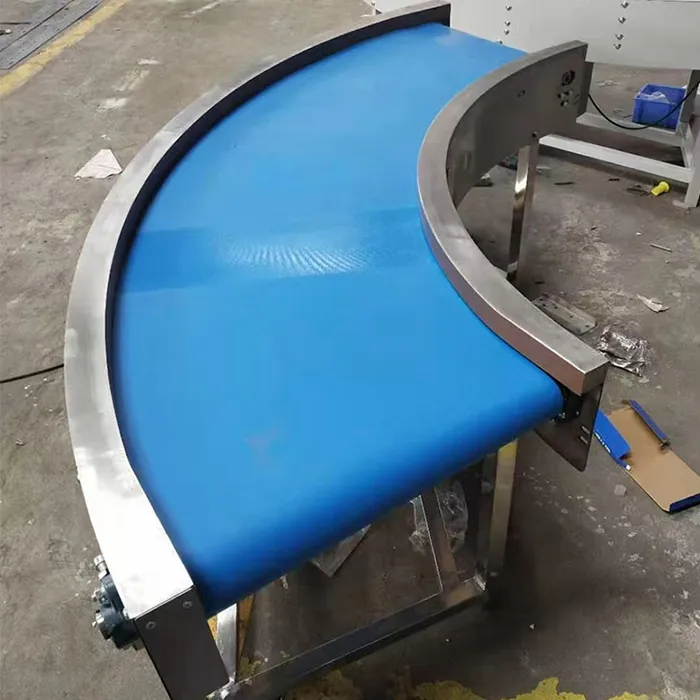
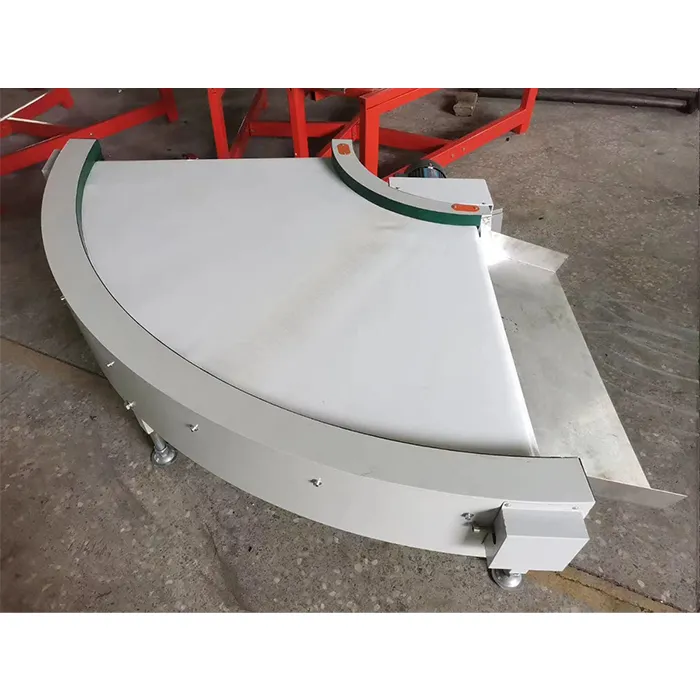
Belt Curved Conveyor
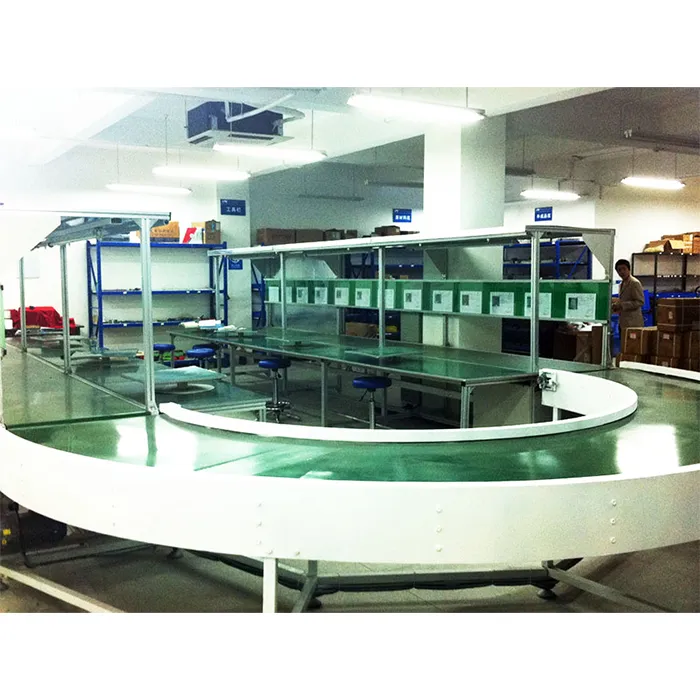
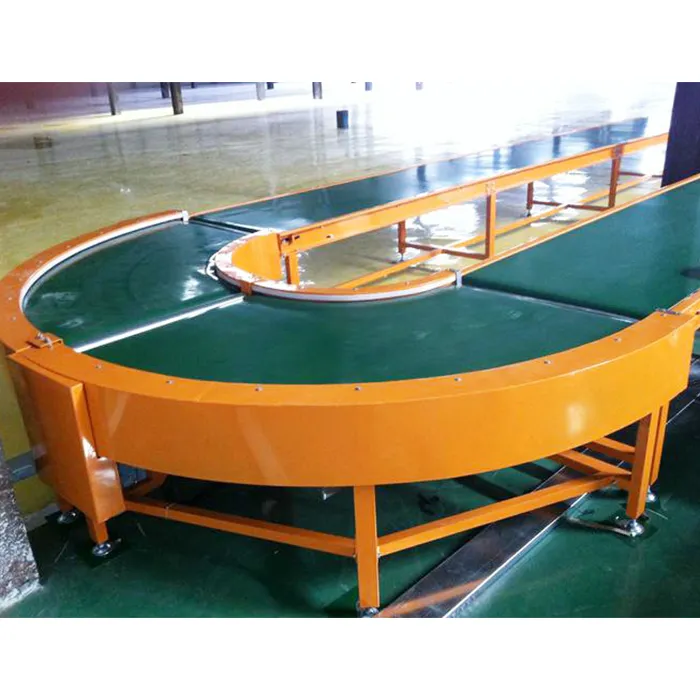
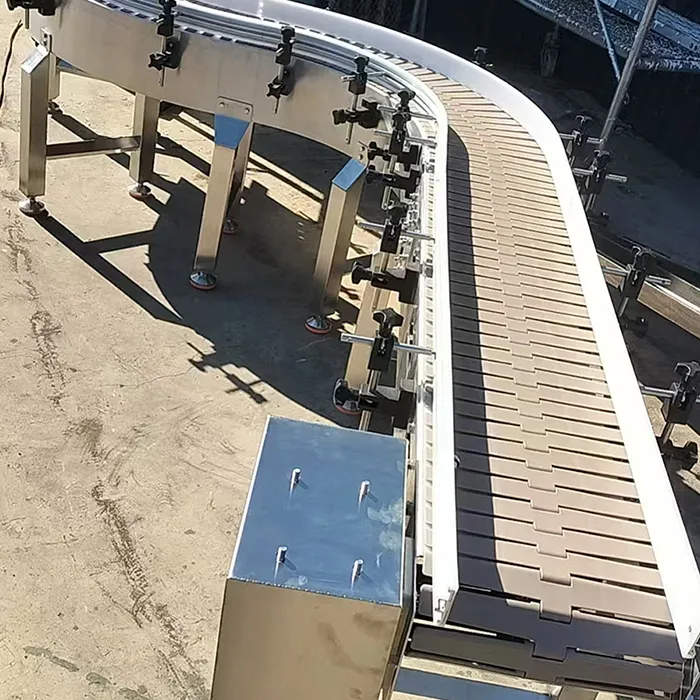
SHUNNAI Belt Curved Conveyor is designed to redirect products around corners while maintaining continuous material flow in automated production lines. Featuring a curved belt, tapered rollers, and belt-guiding components, it can be configured for cartons, parcels, bottles, electronic components, and other suitable products.
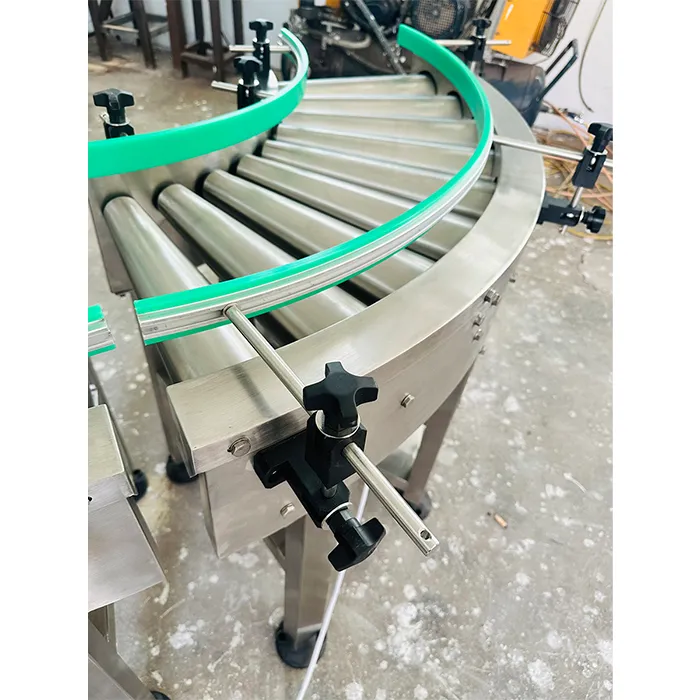
Tapered Rollers Prevent Mis-Tracking
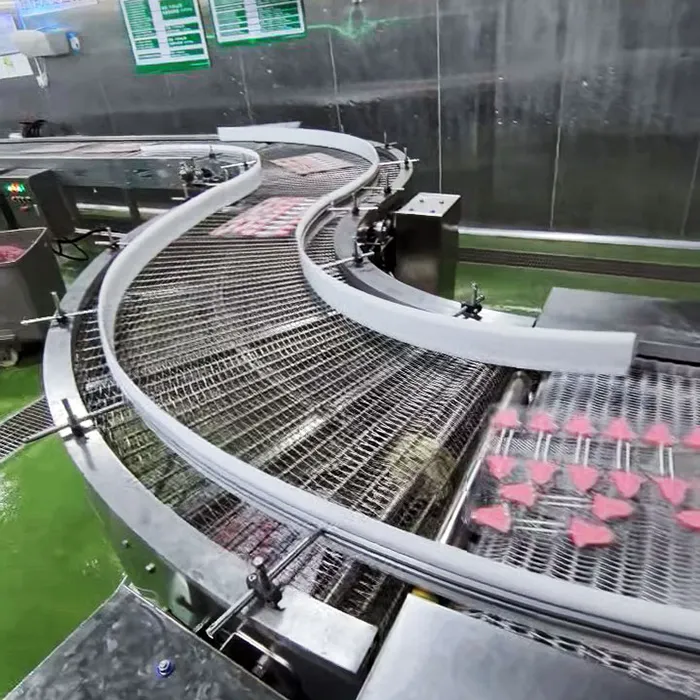
Sector-Shaped Belt for Smooth Turning
Right-Angle Turnaround and Compact Layout
Sector-Shaped Belt for Smooth Turning
Right-Angle Turnaround and Compact Layout
SHUNNAI designs the Belt Curved Conveyor for production lines that need to change direction while maintaining continuous product movement. With a curved belt, tapered rollers, guide components, and a variable-frequency drive system, it can transfer cartons, packages, bottles, electronic components, and other suitable products around corners.
Different belt materials, turning radii, and connection layouts can be selected according to product dimensions, operating conditions, and available floor space. Standard right-angle turns, U-turn layouts, and customized angles help manufacturers connect separate process stages and reduce unnecessary manual handling.
Make Better Use of Factory Floor Space
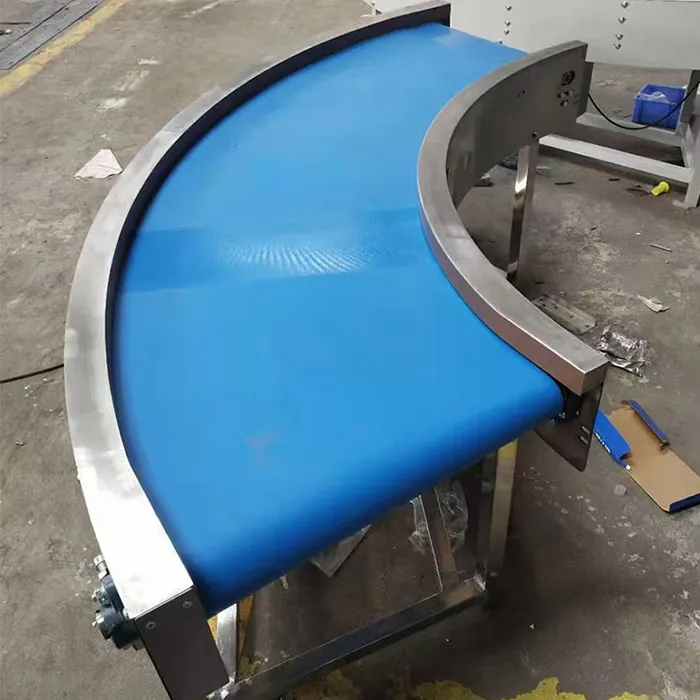
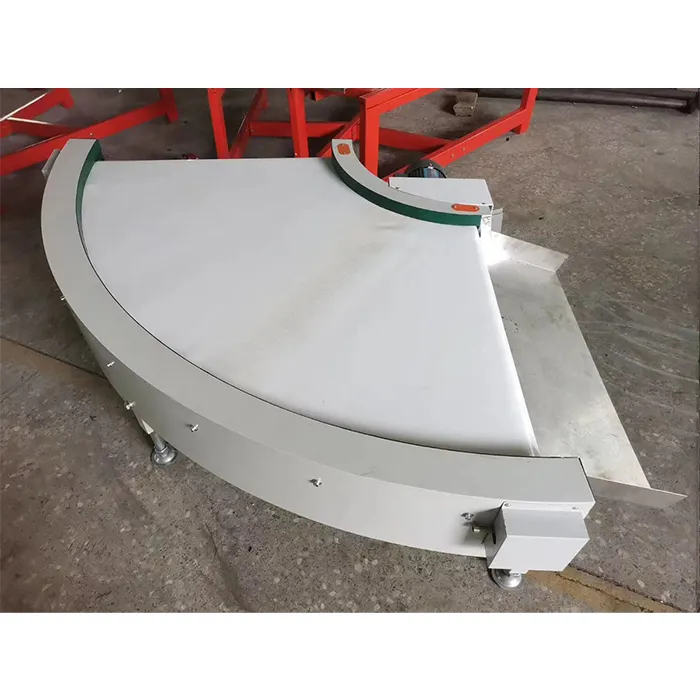
In many factories, filling, packaging, inspection, and sorting equipment cannot be arranged in one straight line. Columns, walls, existing machinery, and operator access routes can make a direct conveyor connection impractical. A curved section allows products to change direction without requiring a separate manual transfer point, helping businesses make better use of the available floor area.
A Belt Curved Conveyor can support L-shaped, U-shaped, and other customized conveying layouts. It is particularly useful when upgrading an existing workshop, connecting equipment installed at different orientations, or routing packages around fixed obstacles. The final design should account for maintenance access, operator walkways, and the space required for product entry and discharge, not just the curve itself.
For projects with limited installation space, SHUNNAI can evaluate compact-radius configurations and, where the product and transfer conditions permit, knife-edge transfer arrangements. These options have different operating limits, so the product dimensions, load, and required transfer gap should be reviewed before the layout is finalized.
Match the Belt to the Product
Belt material and surface properties influence product grip, cleanability, wear resistance, and suitability for different working environments. Choosing a belt based on the application helps reduce slipping, product movement, and unnecessary maintenance.
PVC and PU belts
PVC belts are commonly considered for general packaging, cartons, and light material handling. PU belts may be suitable for applications requiring particular surface, cleaning, or food-contact properties, provided the selected belt grade meets the relevant requirements. For food or pharmaceutical production, buyers should confirm the exact belt material documentation, chemical compatibility, and cleaning procedure instead of assuming that every PVC or PU belt is suitable for direct product contact.
Anti-static belt options
Electronics assembly and handling processes may require belts with specified electrostatic properties. If electronic components or circuit boards are being transferred, confirm the required surface resistance, grounding arrangement, and electrostatic-control procedures with the supplier. An anti-static belt should be selected against the actual process requirement rather than treated as a universal solution for every electronic product.
Frame and roller configuration
Frame construction, roller geometry, guide components, and drive settings need to work together. Stainless steel construction may be considered for certain washdown or corrosion-exposed environments, while other applications may use a different frame material. The appropriate choice depends on the load, cleaning agents, moisture exposure, and surrounding equipment.
How the Curve Controls Product Movement
Unlike a straight conveyor, a curved section must accommodate differences in travel distance between its inner and outer sides. SHUNNAI uses tapered rollers and a belt designed for curved travel to help the conveying surface follow the intended path. Guide components help maintain belt alignment, while the drive system allows the operating speed to be adjusted to the production process.
Product stability also depends on the shape of the item, its base dimensions, weight distribution, spacing, and speed through the turn. Excessive speed, crowded products, or an unsuitable turning radius can cause packages to shift or press against the guides. The inlet and outlet transitions should therefore be checked alongside the curve, especially when handling small packages, narrow cartons, or products that are easy to tip.
For demanding applications, provide sample product dimensions and the required throughput so the supplier can assess belt width, turning radius, guide-rail position, and operating speed. These details are more useful for selecting the right configuration than choosing a curve based on angle alone.
Where Curved Conveying Is Used
SHUNNAI curved conveyor systems can be configured for different product-handling environments, subject to the selected belt material and equipment design.
Food and beverage packaging: Connect filling, labeling, packing, and case-handling stages for suitable bottles, cans, trays, and packaged products. Belt material and cleaning compatibility should be confirmed for the intended hygiene conditions.
E-commerce and logistics: Route parcels between conveyor lines, scanning stations, and sorting areas when the layout requires a directional change. Package size, bottom surface, and spacing affect transfer reliability.
Electronics and light manufacturing: Connect assembly and inspection stations while helping products follow a controlled path through compact layouts. Anti-static belt options may be considered when specified by the process.
Pharmaceutical and daily chemical packaging: Transfer medicine boxes, personal care products, and other packaged goods between process stages. Buyers should confirm the required material documents, cleaning practices, and applicable equipment standards.
Fruit and vegetable processing: Connect selected washing, sorting, drying, and packing stages where the belt surface, moisture exposure, and cleaning requirements are compatible with the application.
Project Examples from Different Industries
Food packaging company in Guangdong
“Our workshop has many columns. Straight conveyors could not get around them, and we relied on manual box handling. After installing SHUNNAI right-angle curved conveyors, boxes go directly from the filling line to the packaging line without manual intervention. The tapered rollers are indeed stable – after more than half a year, no mis-tracking. The PU belt is washable, making workshop cleaning convenient.”
E-commerce distribution center in Zhejiang
“The distribution center has tight space, and the sorting chutes and unloading area are not on the same line. SHUNNAI made several small-radius curved conveyors for us – small footprint, parcels turn smoothly. The knife-edge transition has never jammed small items, and scanning recognition rate improved. After nearly a year, no failures.”
Electronics factory in Jiangsu
“The PCB assembly line needs to turn. We previously used flat belts for turning, and boards always drifted to one side and hit the guardrail. SHUNNAI’s curved conveyor is equipped with guide strips and a tapered belt – boards run straight, no hitting or jamming. The anti-static belt also prevents electrostatic damage, and line yield is stable.”
Planning a Retrofit or New Installation
Adding a curve to an existing line requires checking the connection conditions on both sides. Before requesting a quotation, prepare a simple layout drawing showing the available floor area, conveyor direction, inlet and outlet heights, and nearby equipment. If a drawing is unavailable, clear photographs and basic measurements can help establish the installation constraints.
Buyers should also provide the product length, width, height, weight, base shape, and target throughput. These details help determine whether a standard-radius curve, compact-radius design, or knife-edge transfer is appropriate. For lines with multiple product sizes, include the smallest and largest items so the guides and transfer points can be evaluated against the full product range.
For connection to an existing conveyor, confirm the belt type, conveyor width, speed range, transfer gap, and control requirements. A curved unit should be evaluated as part of the complete line so that products can move between equipment without unnecessary accumulation or abrupt changes in handling conditions.
Quality and Documentation
SHUNNAI identifies FDA, MA, CNAS, and ISO 9001 among its company credentials or relevant documentation. Buyers should verify the certificate holder, issuing organization, validity, and scope of each document before relying on it for procurement or compliance decisions. These credentials should not be interpreted as automatic product-level approval for every conveyor model or configuration.
For projects involving food, pharmaceutical, or export-market requirements, clarify whether material declarations, cleaning compatibility information, quality-management documents, or other supporting records are required. Electrical controls, guarding, and machinery safety should also be checked against the regulations applicable to the destination market and the complete installed system.
Frequently Asked Questions
How do I decide between a standard curve and a compact design?
Start with the available floor space, product dimensions, load, and required throughput. A compact design can reduce the footprint, but it may limit the products that can be conveyed reliably. The turning radius should be assessed against the actual product and transfer conditions.
Can the conveyor handle products with different widths?
It may be possible when the belt width, guide arrangement, and turning geometry accommodate the full product range. Provide the minimum and maximum product dimensions and explain whether products run individually or in groups. A trial or layout review may be needed for unusually shaped or unstable items.
When is a knife-edge transfer appropriate?
Knife-edge transfer can help bridge a small transfer gap for products that need close support between conveyor sections. It is generally more appropriate for compatible small or light products than for heavy, sharp, or irregular loads. Confirm product stability and the equipment's transfer limitations before specifying this option.
What should I check if products move outward during a turn?
Review the operating speed, turning radius, product spacing, guide-rail position, belt condition, and product base shape. Overcrowding or an unsuitable curve can contribute to product movement even when the belt itself is tracking correctly. The full transfer path should be inspected before changing speed or guides.
Can one conveyor be used for both dry and wet production areas?
That depends on the belt material, frame construction, bearings, drive components, cleaning chemicals, and exposure to moisture. A configuration intended for dry packaging should not automatically be assumed suitable for washdown. Describe the cleaning frequency and operating environment when requesting a design.
Discuss Your Application with SHUNNAI
With conveyor manufacturing experience dating back to 2007, SHUNNAI provides configurable conveying equipment for industrial production and material-handling applications. The right solution depends on product characteristics, turning geometry, belt selection, speed, and the layout of connected equipment.
If you are planning a new line or upgrading an existing workshop, share your product dimensions, load, target throughput, turning angle, available installation space, and cleaning or electrostatic-control requirements. SHUNNAI can use these details to evaluate a suitable Belt Curved Conveyor configuration and discuss belt options, connection points, and project documentation.
Contact SHUNNAI to discuss your conveyor layout and application requirements.
Send Inquiry
Contact Info
-
Address
No.129 Qingfeng Road, Jizhou District, Tianjin City, China
-
Tel
-
Email
If you have any inquiry about a quotation or cooperation, please feel free to email or use the following inquiry form. Our sales representative will contact you within 24 hours.
News Recommendations



