90° Curved Conveyor
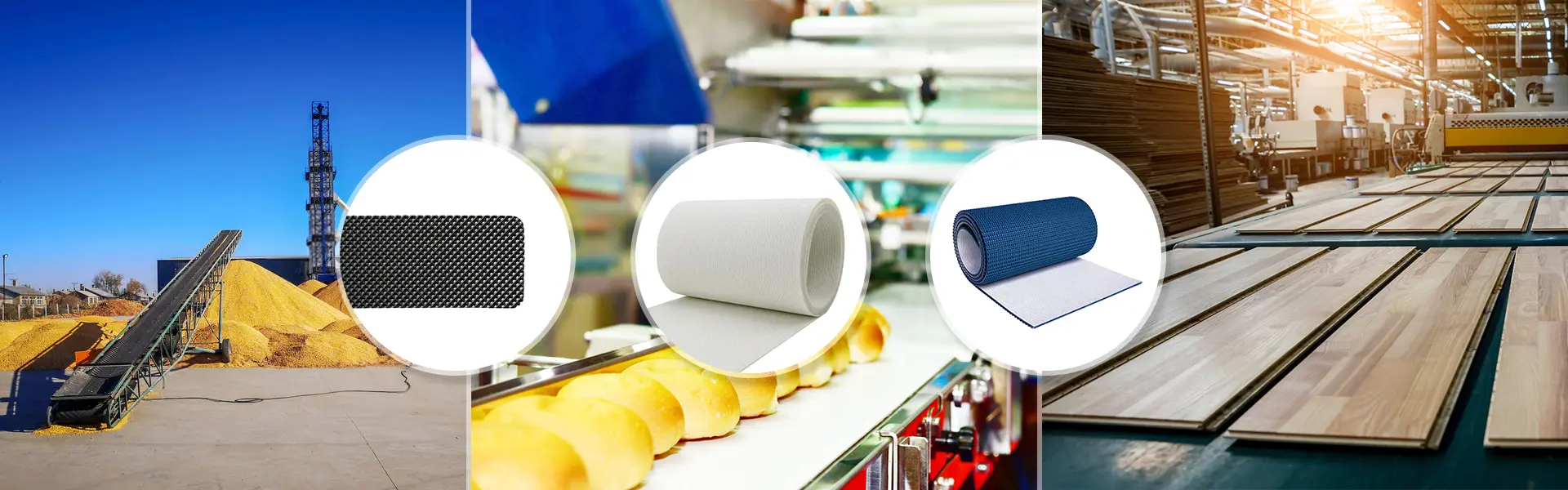
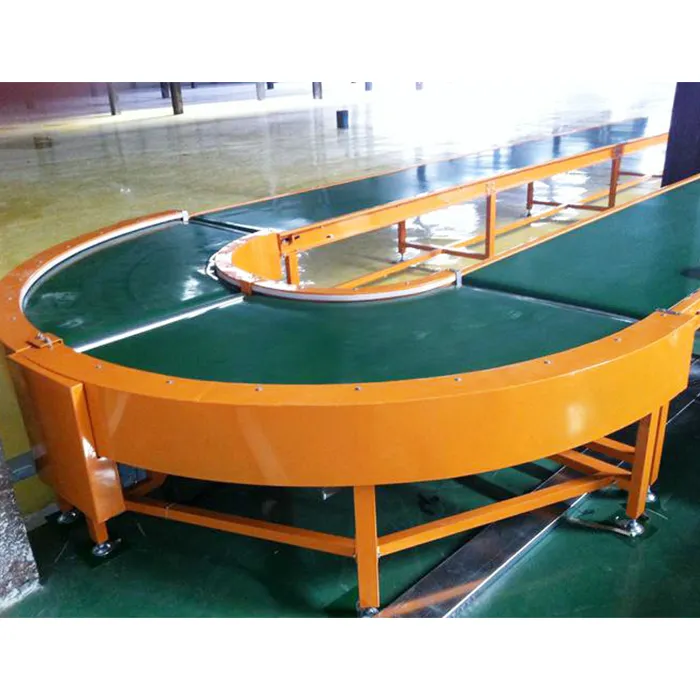
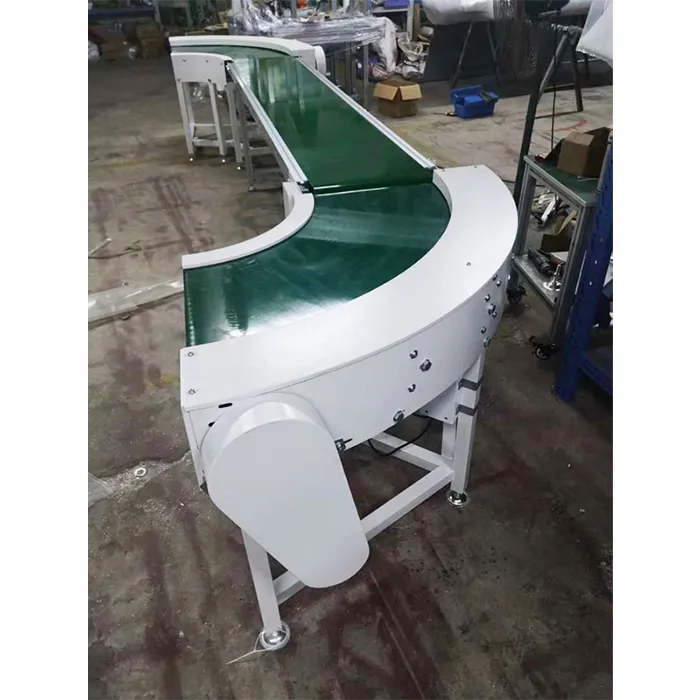
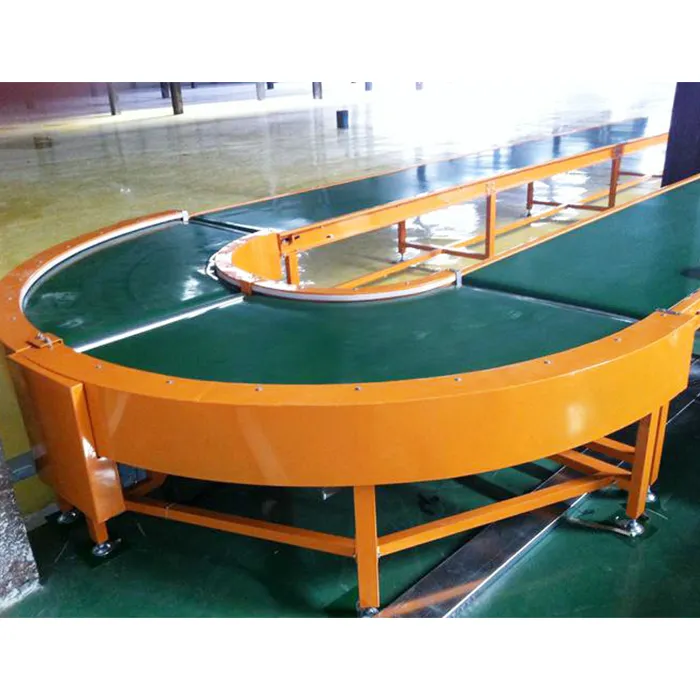
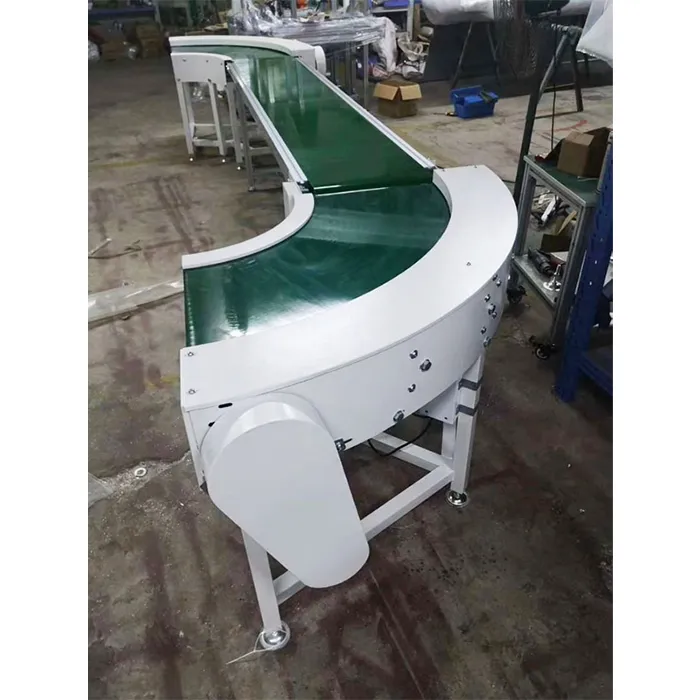
SHUNNAI 90° curved conveyor is designed to connect conveyor lines at right angles, helping manufacturers optimize floor space and maintain continuous material flow. Available with belt, slat chain, roller, or mesh chain conveying surfaces, it can be configured for cartons, packages, containers, and process materials according to specific handling requirements.
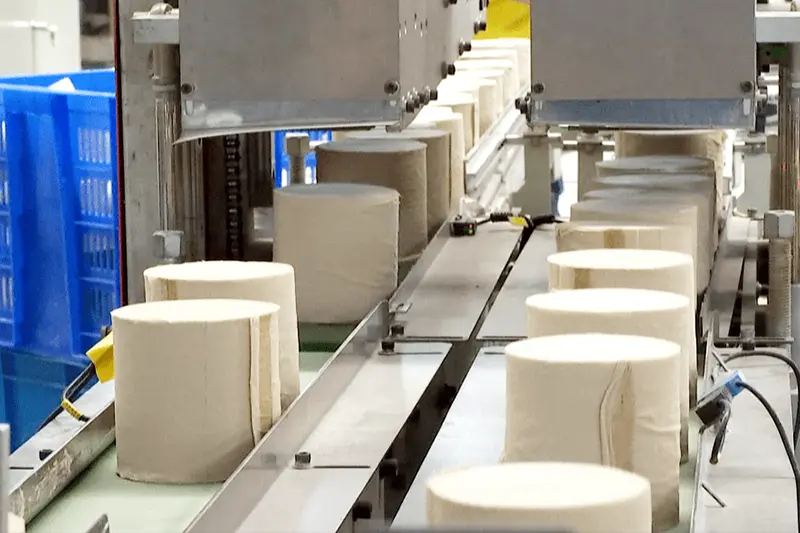
Right-Angle Turning
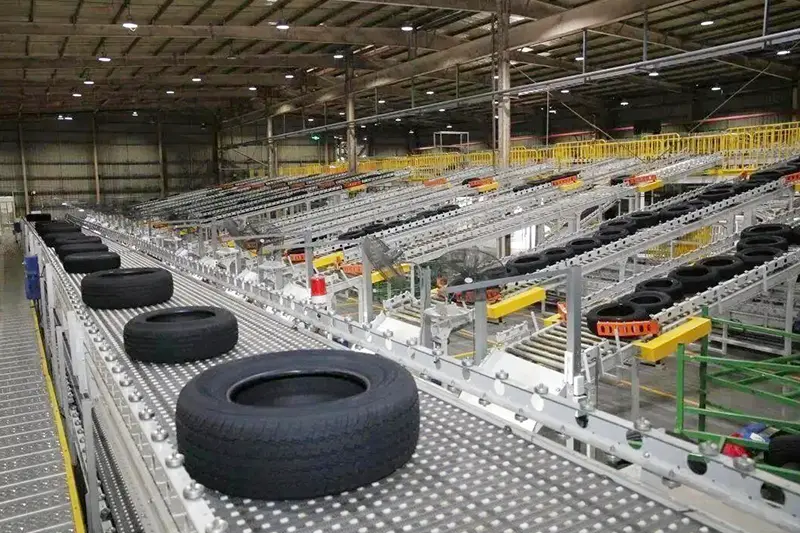
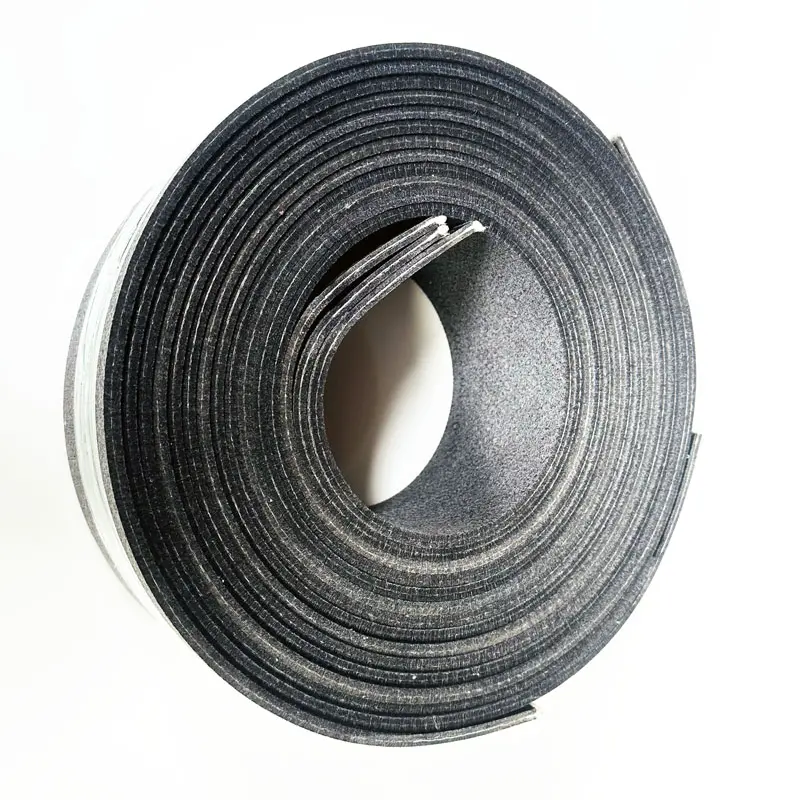
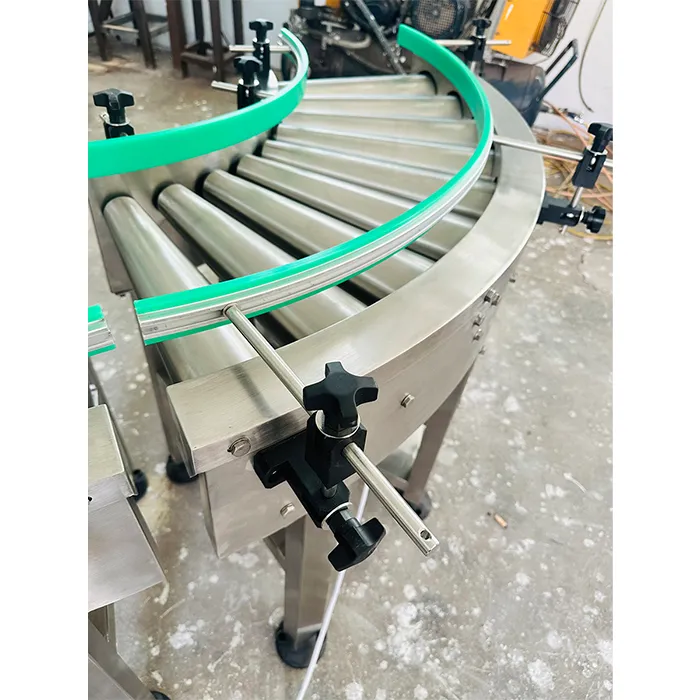
Tapered Roller Differential Speed
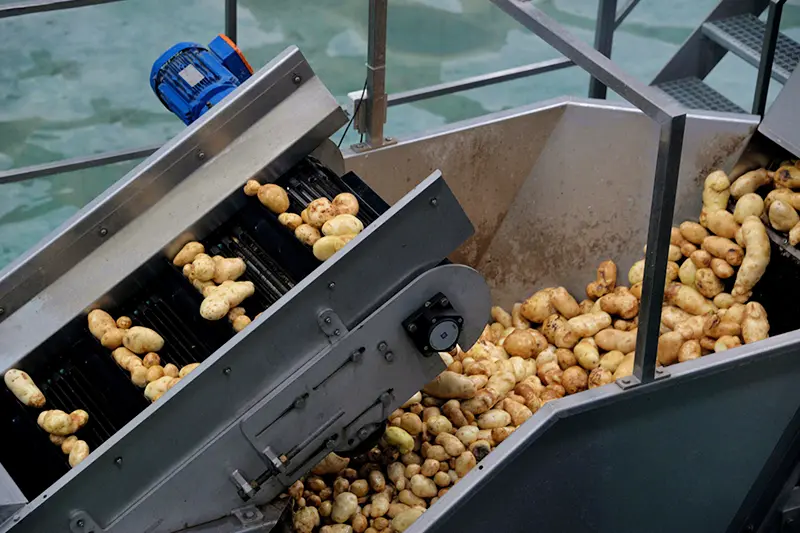
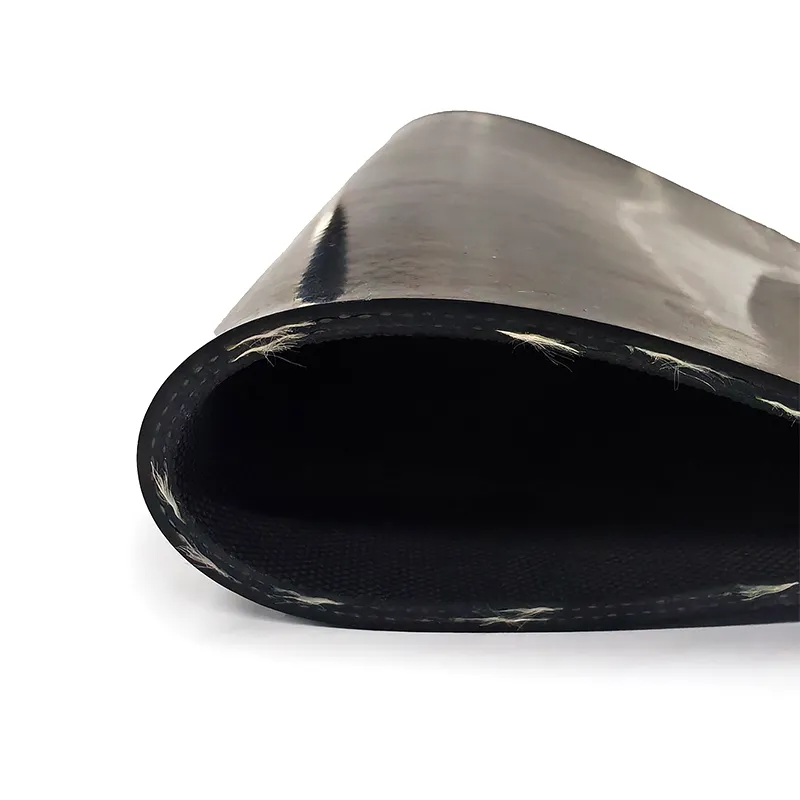
Seamless Connection for L-Shaped Production Lines
Tapered Roller Differential Speed
Seamless Connection for L-Shaped Production Lines
A 90° curved conveyor helps connect two conveyor sections arranged at a right angle, allowing products to change direction without manual transfer. Depending on the application, SHUNNAI can configure belt, slat chain, roller, or mesh chain conveying surfaces to handle different product sizes, weights, and operating conditions.
With a focus on smooth transfers, suitable guiding structures, and practical maintenance, SHUNNAI develops turning solutions for production lines with limited floor space and changing material-handling requirements.
Where a Curved Conveyor Fits
Production layouts do not always allow materials to travel in a straight line. Columns, machine positions, safety aisles, and limited floor space can require a conveyor route to change direction. A 90° curved conveyor provides a practical connection between perpendicular conveying sections while reducing the need for manual handling or additional transfer stations.
Typical applications include moving cartons from packaging machines to case-sealing equipment, transferring parcels toward sorting lines, connecting assembly stations, and conveying containers between processing stages. The appropriate configuration depends on the product's dimensions, bottom surface, weight, stability, and required throughput. For fragile products or items with a high center of gravity, the turning speed and guiding arrangement should be evaluated before installation.
Match the Conveyor Surface to the Product
The conveying surface directly affects product stability, transfer efficiency, cleaning requirements, and maintenance. SHUNNAI offers different deck configurations to suit common industrial handling conditions.
Belt Surface for Packaged Goods
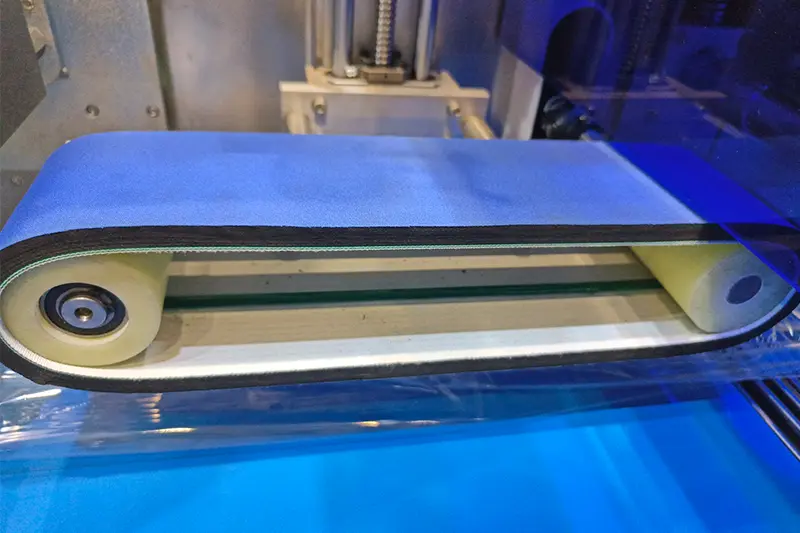
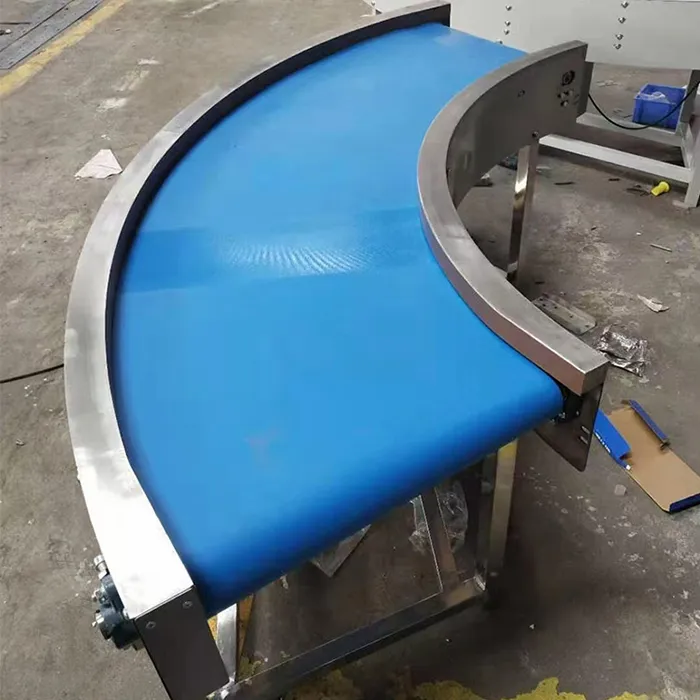
Belt-type configurations are suitable for cartons, bags, small packages, and many finished products with relatively flat bottoms. PVC or PU belts can be selected according to the working environment, cleaning procedures, and product-contact requirements. Food-contact suitability should be confirmed for the specific belt material and application.
Slat Chain for Containers and Workpieces
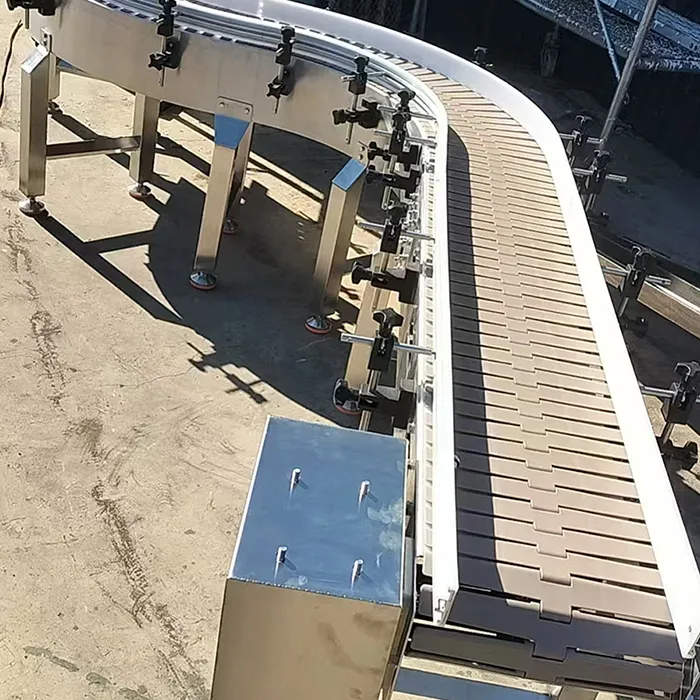
Slat chain configurations are suitable for bottles, cans, containers, and selected heavier workpieces. The rigid conveying surface supports controlled movement through the turn. Chain material, slat width, and guide design should be selected according to the load, temperature, and operating environment.
Roller Surface for Cartons and Totes
Roller-type systems can handle suitable cartons, turnover boxes, and other products with stable contact surfaces. Tapered rollers help accommodate the difference in travel distance between the inner and outer sides of the curve. Product dimensions and bottom rigidity should be checked to ensure that items remain properly supported throughout the turn.
Mesh Chain for Drainage and Airflow
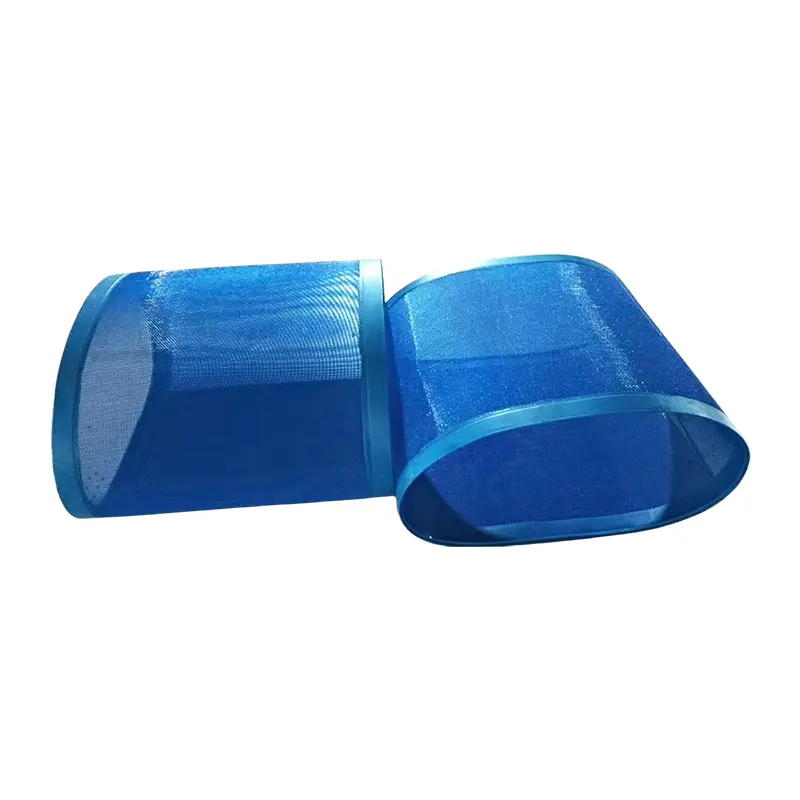
Mesh chain configurations are useful where the process requires airflow or drainage, such as selected cooling, washing, and food-processing operations. Mesh opening, belt material, temperature resistance, and cleaning access should be confirmed according to the actual process.
How the Turning Mechanism Works
During a right-angle turn, the outer side of a product follows a longer path than the inner side. If both sides move at an unsuitable relative speed, products may rotate excessively, drift, collide, or become unstable. SHUNNAI can use tapered rollers or tapered pulleys, depending on the conveyor design, to create different linear speeds across the curved conveying path.
The larger outer diameter and smaller inner diameter of the tapered components help match the different travel distances along the curve. The final result also depends on belt tension, friction, product geometry, load distribution, and operating speed. Guide rails, transition plates, and suitable side clearances provide additional control as products enter and leave the turning section.
When selecting a 90° curved conveyor, buyers should evaluate the complete transfer process rather than the turning angle alone. The entry and exit heights, connection gaps, conveyor speed, and available space all influence whether products can pass through the curve consistently.
Installation Details to Confirm
A well-matched conveyor should fit the existing line without creating unnecessary transfer points or restricting operator access. Before production, buyers should confirm the following details with the supplier:
Turning radius: The inner and outer radii must accommodate the product dimensions and the available installation area.
Entry and exit height: Connection dimensions should match the upstream and downstream conveyors to reduce gaps, steps, and transfer problems.
Product clearance: The conveyor width and guide-rail spacing should allow products to travel through the curve without striking the frame or adjacent items.
Operating speed: Throughput requirements should be considered alongside product stability, spacing, and the performance of connected equipment.
Working environment: Belt material, frame material, cleaning method, temperature, moisture, and electrostatic requirements should be specified before the design is finalized.
Customer Applications in Production Lines
Food Packaging Line in Guangdong
"Our workshop has many columns. Straight conveyors could not get around them, and we relied on manual box handling. After installing SHUNNAI 90° curved conveyors, boxes go directly from the filling line to the packaging line without manual intervention. The tapered rollers are indeed stable – after more than half a year, no mis-tracking. The PU belt is washable, making workshop cleaning convenient."
— Production Manager Chen, a food packaging company in Guangdong
E-Commerce Distribution Center in Zhejiang
"The distribution center has tight space, and the sorting chutes and unloading area are not on the same line. SHUNNAI made several 90° curved conveyors for us – small footprint, parcels turn smoothly. After nearly a year, no failures, and maintenance is simple."
— Equipment Supervisor Liu, an e-commerce distribution center in Zhejiang
Electronics Assembly Line in Jiangsu
"The PCB assembly line needs right-angle turning. We previously used flat belts for turning, and boards always drifted to one side and hit the guardrail. SHUNNAI’s 90° curved conveyor is equipped with a tapered belt and guide strips – boards run straight, no hitting or jamming. The anti-static belt also prevents electrostatic damage, and line yield is stable."
— Equipment Section Chief Wang, an electronics factory in Jiangsu
Maintenance Checks for Stable Operation
Regular inspection helps identify wear and transfer problems before they interrupt production. Maintenance frequency should be adjusted to the operating hours, load, environment, and manufacturer's instructions.
Inspect the conveying surface: Check belts, slats, rollers, or mesh sections for wear, damage, contamination, and abnormal movement.
Check the turning area: Look for product accumulation, unusual friction, loose guide rails, and signs of contact between products and the frame.
Review the drive system: Inspect the motor, transmission components, belt tension, chain condition, and operating noise according to the equipment manual.
Keep transfers clear: Remove debris from the inlet, outlet, and transition areas. Confirm that adjacent conveyor sections remain correctly aligned.
Verify safety devices: Check guards, emergency stops, and other installed safety components before returning the equipment to service.
SHUNNAI Manufacturing and Quality Support
Tianjin Shunnai Conveyor Belt Manufacturing Co., Ltd. has specialized in conveyor belts and related conveying equipment since 2007. Its integrated capabilities in design, production, and sales support the development of configurations for different materials, line layouts, and operating conditions.
SHUNNAI's quality and compliance credentials include ISO 9001 and the FDA, MA, and CNAS credentials stated for its business. Buyers should confirm the exact certificate holder, scope, validity, and applicability to the specific conveyor or component before placing an order. These credentials should not be interpreted as automatic product approval or certification of every conveyor configuration.
For customized projects, buyers can provide product dimensions, maximum unit weight, required throughput, turning direction, available floor space, and the heights of connected conveyor sections. SHUNNAI can use these details to assess the suitable conveying surface, turning structure, guide arrangement, and connection dimensions.
Frequently Asked Questions
Can the conveyor handle products of different sizes?
It may be possible, provided the selected conveying width, turning radius, guide spacing, and support surface accommodate the full range of product dimensions. Buyers should provide the smallest and largest product sizes for design review.
How do I choose the correct turning radius?
The radius depends on product length and width, orientation during transfer, conveyor width, and available installation space. Long or unstable products may require a larger radius or additional guidance to maintain their position.
Can the curved section connect to an existing conveyor?
Yes, subject to compatibility checks. The entry and exit heights, conveying width, speed, transfer direction, control system, and connection clearances should be confirmed before manufacturing.
Is a mesh chain suitable for wet processing areas?
A mesh chain may be suitable where drainage and airflow are required. The selected chain and frame materials must also match the cleaning chemicals, moisture level, temperature, and hygiene requirements of the application.
What information is needed for a quotation?
Provide the product type, dimensions, maximum weight, required output per minute or hour, conveying surface preference, turning direction, available footprint, connection heights, and working environment. Drawings, photographs, and details of the existing line can help reduce design uncertainty.
Request a Conveyor Configuration
Choosing the right turning equipment requires more than specifying a 90-degree angle. Product stability, surface material, line speed, transition dimensions, and available space all affect the final configuration. SHUNNAI works with industrial buyers to review these operating conditions and identify a suitable conveyor arrangement.
Contact SHUNNAI with your product specifications, layout drawing, and conveying requirements to discuss a customized curved conveyor solution for your production line.
Send Inquiry
Contact Info
-
Address
No.129 Qingfeng Road, Jizhou District, Tianjin City, China
-
Tel
-
Email
If you have any inquiry about a quotation or cooperation, please feel free to email or use the following inquiry form. Our sales representative will contact you within 24 hours.
News Recommendations